It may or may not surprise you to know that I’m a lousy reader. I’ve always loved books, but I’ve always struggled with them too. Not with understanding them, but with concentrating on them. When I talk with my friends that aren’t interested in books, I get the impression that they think I’m good at reading. Since I love books, they imagine that I spend all my free time reading and that I’ve read many books in my life. Sadly, neither are true. I’ve mentioned this before on this blog—but I’m not a good reader at all. I just enjoy reading.
I have friends—especially from my Publishing MA—that are true bookworms. People that read in excess of 50 books a year on top of living a busy life. People that have read books in a single sitting. People that re-read books. People that can read a page a minute. The kind of readers that folks sometimes mistake me for. They’re lean, industrious, red-blooded thoroughbreds with bellies full of fire, and I’m a pregnant sloth with irritable bowel syndrome.
In 2010, my family and I went on vacation to Tunisia (a few months before the revolution that ousted Ben Ali, in fact). While there, my mother ended up reading all of the books she’d packed for the week within a few days. We were relaxing on the beach and she asked me if she could borrow one of mine. So I handed her my copy of The Outsider by Albert Camus, which I’d just finished (it’s set in neighboring Algeria, so I figured this was sort of getting into the atmosphere a little!). An hour later, my mom returned the book to me, saying it was one of the greatest novels she’d ever read. It’s a slim volume, but I could never do that. It’s the reason I never re-read books; I have this sense of time slipping by and a realization that I’m only capable of reading a very limited number of books in my lifetime.

I’m not sure where my issue stems from, as my reading level is never consistent. Some days it can take me 3 minutes to finish a page, some days it can take me 10. Aside from speed, there’s also my sense of engagement. Some days I feel like I can focus on the text alright, but most days it’s a real struggle. My mind seems to tear itself away from the page no matter how hard I try. I’ll be occupied with thoughts about my personal life, day-dreaming about something random, or simply zoning out like a moron. Sometimes I’ll be thinking about the book itself; the protagonist will be in a sticky situation and I’ll start imagining how on Earth they’ll make it out alive, instead of just reading and finding out. I can’t rationalize any of it. I just know that whatever the interruption is, it creeps up on me and snatches me out of my focus, despite me telling myself a few minutes prior, “Ok, focus on this page with everything you’ve got!”.
I don’t believe there’s any one answer, but I sometimes wonder if context plays a factor. Life is a series of peaks and troughs, and it makes sense to me that if I’m in a trough, then I’m probably more likely to experience difficulty focusing on something. So far, I’ve had a shit summer. 2023 is already a year I want to leave behind. So perhaps the fact I’m more worried and stressed than usual is making it harder for me to concentrate, but I think context—while relevant—is insufficient. I have had periods where my reading focus has been alright—but more often than not I struggle.
On a more positive note, however, the one thing I’ve really improved upon is my commitment. Before 2017, I’d read sporadically. I’d take long gaps between books, gaps that often lasted several months, and sometimes even a year. I didn’t take it seriously and usually waited for the mood to strike me. Part of the problem was that if I ended up reading a book that I didn’t vibe with, I wouldn’t just DNF it and move onto a new one. Instead, I’d gradually stop reading it until I forgot about it. If a book bored me, it would often diminish my appetite for reading in general. I’ve always been particularly sensitive about leaving things unfinished. Being unable to finish a book gave me a strong sense of failure, which is why I was so hesitant to draw a line under it and move onto a new one. Instead of DNF-ing a book I wasn’t enjoying, I’d just find excuses not to read it, leaving it—and my reading—in limbo, because I couldn’t bring myself to admit failure. That all changed in 2017, when I experienced this huge surge in motivation for reading (and just being productive in general). This was also around the same time that my antidepressants started taking effect. Since then, I’ve always had a book on the go, taking no gaps, and treating reading as just a fundamental part of my lifestyle. I’ve found the strength to power through books I wasn’t overly enjoying and the conviction to DNF books that just weren’t for me. I’ve enjoyed reading so many different kinds of books in the past 6 years, but I still struggle to read at a good pace. If I could just concentrate better, things would be exactly the way I want them.

This week, I finished Before They Are Hanged by Joe Abercrombie. It’s the second novel in an epic fantasy trilogy, and a real chonker at 570 pages in length. After I finished it, I thought about how this was a new venture in my reading history. It’s the kind of book I was always curious about but never believed I could read. I could see myself buying a book like this as a teenager, really enjoying the first 50 pages or so, but then falling off. That sorta thing happened a lot. I’d get consumed with football, video games, social media, and various distractions that required nothing of my poor attention-span. It was so much easier to be passive, forget about life, and pass time with those little dopamine fixes that yielded immediate gratification but contributed to an overall sense of unhappiness. Again, I wouldn’t consciously abandon these books, but I’d drift away from them, and the longer the break I took from reading, the harder I’d find it to continue. I remember when I was 21, I started reading the first book in George R.R. Martin’s A Song of Ice and Fire series, A Game of Thrones. At no point was I bored of it. I remember enjoying the writing style and feeling engaged with the plot—but life got in the way, and once I’d stopped, I found it impossible to start up again.
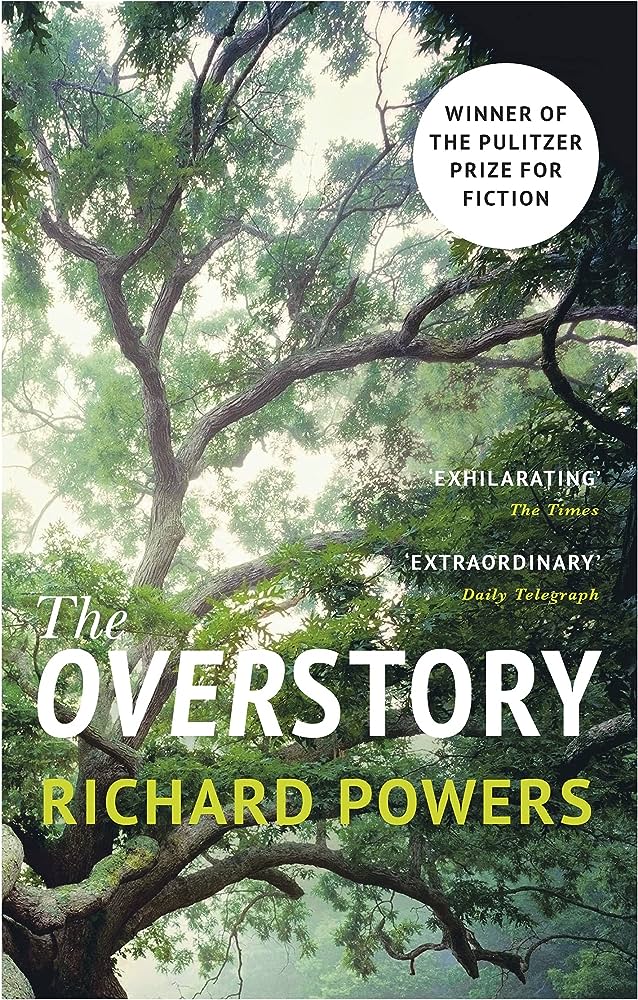
At first, its beautiful, understated cover with the golden dragon made me excited to pick it up and read it, but once it started to sit neglected on my bookshelf, I began to regard it with a mixture of guilt and exhaustion. I was in my third year of undergrad. Everyone was listening to “Summertime Sadness” and “Royals”. The demands of my assignments asserted themselves. I was building things in Minecraft, watching Chelsea games, and binging The Walking Dead. I had no sense of discipline or time management whatsoever. And it’s because of experiences such as the one I had with A Game of Thrones that I’ve always avoided series, especially if the books in the series are all chonkers the way they tend to be in the high fantasy genre. When I recommitted to reading in the spring of 2017—excited, but also nervous about whether I’d be able to stick at it—I decided to read only standalone novels. Now and then I’d try a book around the 500-page mark if it greatly interested me, like I did with The Overstory, but never if it was part of a series.

So, I’m proud of myself for finishing the first two volumes of The First Law trilogy, The Blade Itself and Before They Are Hanged (both certified chonkers). I’m not happy with how long it took me to read them, but I know that if I’d bought these books as a teenager, or in my early 20s, then I’d never have kept at them. There’s a good chance that if I’d bought The Blade Itself before 2017, then it would have ended up as one of my bookcase’s fabled white whales. As I mentioned earlier in this post, I’ve always been especially uncomfortable with the idea of leaving something unfinished. No matter what it is, I like to see it through, even if doing so yields no benefit. I’m not sure where this comes from exactly, but I’ve always treated completion as a reward unto itself—which I know evokes something dangerously close to sunk cost fallacy. But it’s the truth—I find it difficult to be at peace with the idea of changing course and leaving original targets unfulfilled.
What this means is that while I agonize over unfinished projects, I also experience an immense feeling of satisfaction when I finally complete a project that looked like it might be dead in the water. I’ve written about this before, when I created a book for my friends documenting all the places we went for food during the summer of 2015. I’d spent the whole summer taking photos of everywhere we went, writing down every meal we had, and recording everything that happened while we were there. I got to work as soon as the summer ended, but after writing about half the book or so, my motivation waned, and I lost interest. After leaving it for several months, I went back to continue my work on it only to discover that I’d lost a bunch of text I’d written due to a website error. I fell into a hopeless depression over the project and assumed I’d never finish it. It tortured me for years, but during the pandemic, I randomly got this surge of motivation to rewrite the lost passages and then continue where I left off. I couldn’t believe it when I actually finished the book! I felt for sure that I didn’t have it in me to revive that old project. But it was so satisfying to vanquish that old ghost, and when I visited my friends in Houston, TX last summer, I finally got to see it in print.
In the context of reading, I’ve had a couple of instances where something similar happened. A white whale is defined as an objective that you chase obsessively but is very difficult to achieve. It’s important to the definition that it’s an obsession; that it’s a little irrational, a little consuming, that it can’t really be explained. That it’s unlikely—but not impossible—that you’ll achieve it. And so that’s why I refer to books that I struggle with over and over, that it looks like I’ll never finish, as white whale books. In my definition, a white whale book is one that you attempt on several occasions—a book you’ve failed at reading at least once before trying again from scratch.
My first white whale was The Unifying Force by James Luceno, the 19th and final volume in The New Jedi Order series of Star Wars novels. I think I was about 13 or 14 when I read this. It’s similar in page count to Before They Are Hanged, and at the time I bought it I’d never read anything that long before. It felt like a step up from what I was reading at the time, including other Star Wars books (which I always picked up randomly and read out of order). I tried it several times but never got past the first 50 pages or so. It’s telling that now, almost 20 years later, the only part of the novel I remember that well is the opening chapter. The novel begins with these POWs escaping a penal colony on the tropical planet of Selvaris, and it’s a great opening hook. I could so easily visualize this humid jungle, the prisoners playing sabacc on their lunch break, the 4 escapees sneaking through a hidden tunnel, the swoop bikes that were left waiting for them by their allies, the violent chase that ensued when the prison guards discovered something was wrong, the organic vehicles and bioships pursuing the swoops through the jungle, and the Millenium Falcon finally rescuing the sole survivor—and with him the key information contained in the encrypted mathematical code he and his comrades committed to memory. I remember each time I read the novel’s opening line, “Selvaris, faintly green against a sweep of white-hot stars, and with only a tiny moon for companionship, looked like the loneliest of planets,” I nervously hoped that it would be the last time I’d do so, that this time I’d be able to finish the book. I didn’t really believe I’d ever do it, but on my third attempt, I was able to get a healthy rhythm going and finished it.
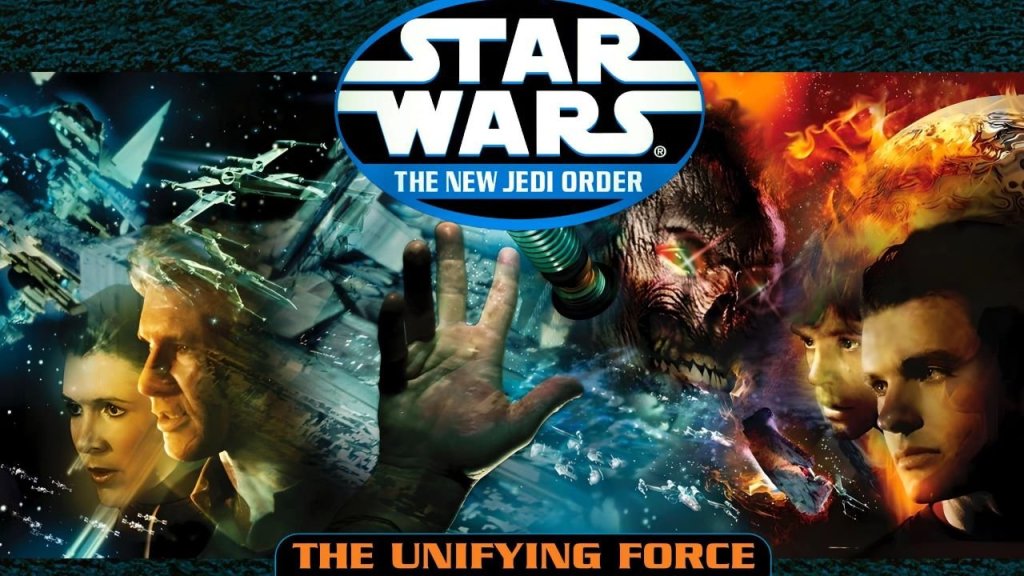
I’ve always fondly remembered The Unifying Force—not just for being an enjoyable read—but for being a significant moment in my reading history. I was proud of myself after finishing it, and I felt that I’d proven to myself that I had the stamina for longer books. Since then, I’ve read a few books that are considered difficult in terms of comprehension, and yet I’ve always been more proud to have read this one Star Wars novel. And that’s because my struggles with reading have always had more to do with focus, time management, motivation, fatigue, outside distractions, and my attention span than they have the actual content of books. One of my favorite novels of all time is William Faulkner’s The Sound and the Fury, but it’s not a white whale because I read it on my first attempt, at a good pace, and without any difficulty. Not knowing the deeper meaning of the text was, in some ways, part of the fun. It was like a puzzle. And being aware of its reputation as a challenging book, I found that I was more at peace with not understanding everything. As long as I grasped enough to stay engaged, that’s all that mattered, and so I didn’t spend too much time rereading passages and trying desperately to decipher them. I’d say the most incomprehensible book I’ve ever read is Hopscotch by Julio Cortazar. Unlike The Sound and the Fury, I didn’t enjoy it, but for some reason I powered through and ended up finishing it, so that can’t be considered a white whale either. There are books I’ve DNF’d that I wish I’d finished, notably Swann’s Way by Marcel Proust, To Kill a Mockingbird by Harper Lee, or Look Homeward, Angel by Thomas Wolfe. But they can’t be considered white whale books, because I had no special obsession with any of them and I gave up after one attempt. A white whale is something you keep coming back to, that drives you a little crazy the way the restaurant travelogue I wrote for my friends did when I left it unfinished for 6 years.
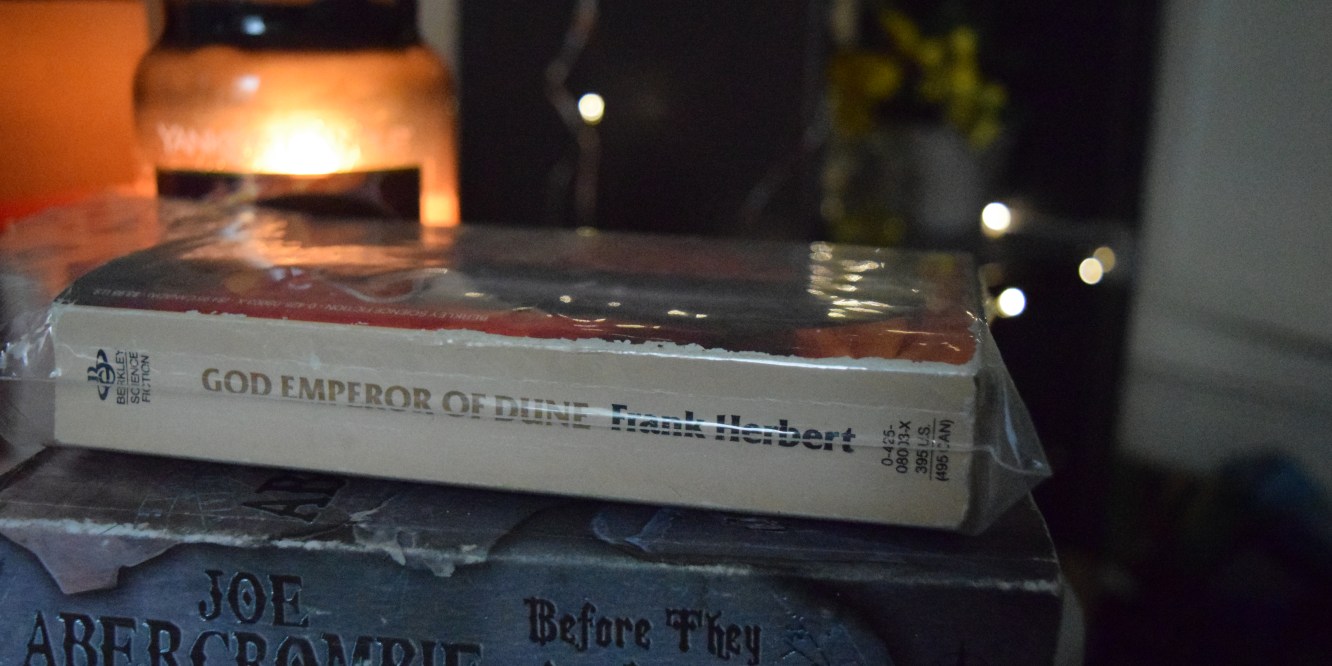
This year, I finished what is easily my biggest white whale book—God Emperor of Dune by Frank Herbert. When I was 14, my English teacher told me I had to grow out of Star Wars novels. I knew I liked science fiction, so I asked my uncle what the great books of the genre were. We were in the now-defunct bookstore chain Borders (the closest thing the U.K. has ever had to a Barnes & Noble), and he pointed out the Dune saga by Frank Herbert. I was immediately awestruck by the strange and unique imagery of the saga’s book covers—all of them depicting these colossal sandworms, these gargantuan behemoths juxtaposed with the comparative smallness of the human race. This was the far, far, far future—as remote from our real world in its culture, society, ecology, religion, and way of life as possible. The covers really conveyed the series’ otherworldliness, and so I plunged headfirst into Herbert’s bizarre world. I read the first three novels in the series—Dune, Dune Messiah, and Children of Dune—but I could never get past the fourth, God Emperor of Dune.
It was the volume I was most anticipating, because the cover was the most strange and otherworldly of them all, as was the premise of the book. I think if you had all the books in the Dune saga in front of you, your eye would instantly be drawn to God Emperor of Dune. The premise and structure of the book, how it reads, is different from the first three entries of the series. Dune, Dune Messiah, and Children of Dune are often referred to as a trilogy, and they flow into each other seamlessly. By the end of Children of Dune, the story and character arcs that began with the first novel have all been wrapped up. Even though Dune Messiah thematically deconstructs Dune in many ways, it bridges it nicely with Children of Dune where everything is paid off. Together they form a singular narrative—the story of Paul Atreides. On the surface, this narrative has all the qualities of an adventure, and I think this helped me to stay engaged as a teenager. At that age, the deep subtext would have flown right over my head. It’s kinda similar to when I read The Sound and the Fury, in that the surface level was interesting enough that I was able to stay engaged, but I didn’t understand everything that the author was trying to convey.
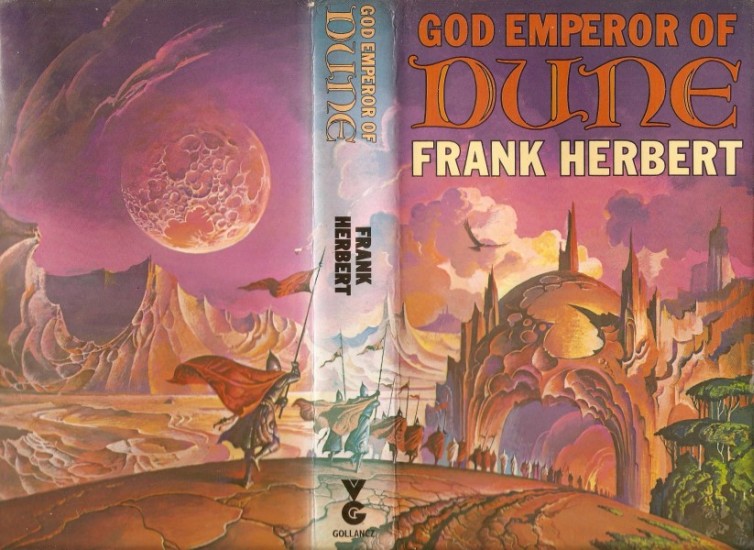
In God Emperor of Dune, that surface level reads less like an adventure. There are definitely a couple of thrilling moments—like that crazy ending—but in general the tone is a lot more meditative, with less action and more dialogue. The first three Dune novels were already quite high concept, but God Emperor of Dune somehow cranks the dial up even further, and reads mostly like a discussion of ideas. That’s not a criticism by the way—it’s fascinating, and so damn imaginative. And the plot is stitched with just enough action and intrigue to keep you going. It’s a really unique book and I understand why some people say that it’s the best in the series. But I think its greater emphasis on philosophy rather than plot meant that I struggled with it as a teenager. I just wasn’t a mature or patient enough reader at the time to truly appreciate this book. I couldn’t understand the complex ideas that, in the fourth book, take a much greater precedence than the previous three. To add to that, there’s a huge time jump from Children of Dune to God Emperor of Dune. Like, thousands and thousands of years. So, there are new characters and new problems, rather than an escalation of existing ones. The stakes have to be built back up. I think that’s probably also part of the reason why I struggled. I’m sure there must have been slow or difficult passages in Dune Messiah and Children of Dune, but I probably found it easier to power through because I was already so invested in the characters and their struggles. With God Emperor of Dune, you don’t have that same sense of momentum.
Much like my experience with The Unifying Force, I became extremely familiar with the first chapter. It’s actually a similar opening. Both novels begin with a chase, with escapees being picked off by the pursuers one by one until the chapter ends with the sole survivor making it to safety. I started God Emperor of Dune many times as a teenager, but I never got very far with it. Something easier would always steal my time. It became my biggest reading regret, until I decided last year to have another crack at it. Denis Villeneuve’s masterful adaptation of Dune in 2021 had single-handedly resurrected my interest in the franchise. For months after I watched it in the cinema, I was still mentally on Arrakis. I decided to pick up exactly where I left off, only I ordered a new copy of the book instead of the one I’d attempted and failed so many times as a teenager. I thought the cover of my old copy was kinda dull, so I went on eBay and bought the one I’d always wanted, which is the 1982 Berkley trade paperback illustrated by Vincente di Fate. It’s quite a striking image, and like good book covers do, it gave me that extra motivation to pick up the book and read it. Even after all this time, the first chapter was clear in my mind. It was the only thing I remembered, and I remembered it vividly. Siona and the rebels, running through a forest and hotly pursued by these giant, genetically-engineered wolves after having broken into the God Emperor’s fortress and stolen his journals. Just like the prison break of The Unifying Force, I could visualize it so easily. I finally finished the book at the beginning of this year, and it was such a satisfying feeling. On top of that, it’s a great novel that’s unlike anything I’ve ever read before. I’m not sure it could ever translate well to the screen, but I’d be very curious to see what that would look like. If anyone can do it, Villeneuve can.
That’s it from me today. Let me know in the comments what white whale books have dogged you down the years!
See more:

 TumbleweedWrites