
One of the more persistent questions thrown at authors is “Where do you get your ideas from?”. So much so, in fact, that it’s become something of a point of ridicule in the writing community. A cliché often met with rolled eyes or pained smiles, as the recipient scrambles towards either feigned humility or a profound soundbite.
Ultimately, it’s not something quantifiable. But I do understand where the question comes from.
I’m a big fan of Frank Herbert’s Dune saga. I read the first three novels as a teenager, and while I enjoyed them, I know for a fact that a lot of it went over my head. I’ve come back to the franchise as an adult, continuing where I left off. I understood more of the subtext this time around, but I still sought out thorough deep-dives online to help me get my head around the more complex aspects of Herbert’s world. All I could think as I took in all the layers was “Fuck me, where did all that come from?”
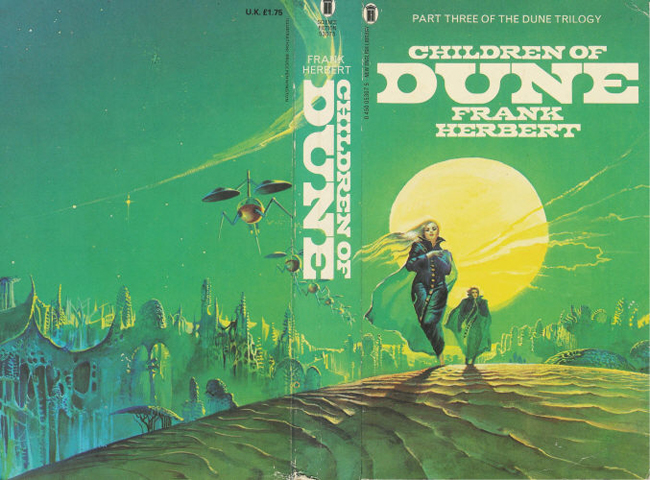
It’s a reaction that makes sense. No doubt you’ve thought the same thing when faced with a work of art that strikes you as genius. It’s a normal reaction. That said, I’d still never ask Frank Herbert where he gets his ideas from. I mean, he’s dead for a start. But there could never be a satisfying or meaningful answer to the question. At best we know where some ideas come from. Certain characters, plot events, or settings. For example, the harsh desert planet of Arrakis was inspired in part by Herbert’s research into an agricultural experiment in the 1950s about the introduction of European beach grass to shifting sand dunes in Oregon, and the potential destructive power these dunes had when blown eastward by Pacific coastal winds toward local communities. The hope was that the beach grass would stabilize these dunes and mitigate their destructive potential.
But that’s not what people mean when they ask authors where they get their ideas from. Usually, the question is directed at the totality of the author’s work and their creative process. Ultimately, the question is “How do you do what you do?”.
And I do think it’s natural to marvel at the work of artists this way. We marvel at their ideas because they are not ours. They come from someone else’s vision—someone who sees things differently than we do because they’re their own person, with their own internal life, their own personal history, their own perspective. And their ideas reflect that otherness; that separate, independent existence. As for where those ideas come from, it can never be one place. Personal experiences, dreams, gossip, news stories, what-if scenarios, and—perhaps the most obvious source—other ideas. That last one is an answer that authors don’t want to give and readers don’t want to hear. We don’t like to hear it because it demystifies our idea of genius and seems to diminish the accomplishments of our favorite artists. But the truth is that—as great as they are—Sally Rooney is not just Sally Rooney and Cormac McCarthy is not just Cormac McCarthy. They’re every writer that came before them. They’re their editors, their friends, their lovers, and their mentors.
The truth is that ideas come from everywhere and nowhere all at once.
We’re uncomfortable—perhaps naturally—with the idea of our questions having no simple answer, or worse—no answer at all. You need only look at any discussion about anything to see how much we crave simplicity and how much we resist nuance.
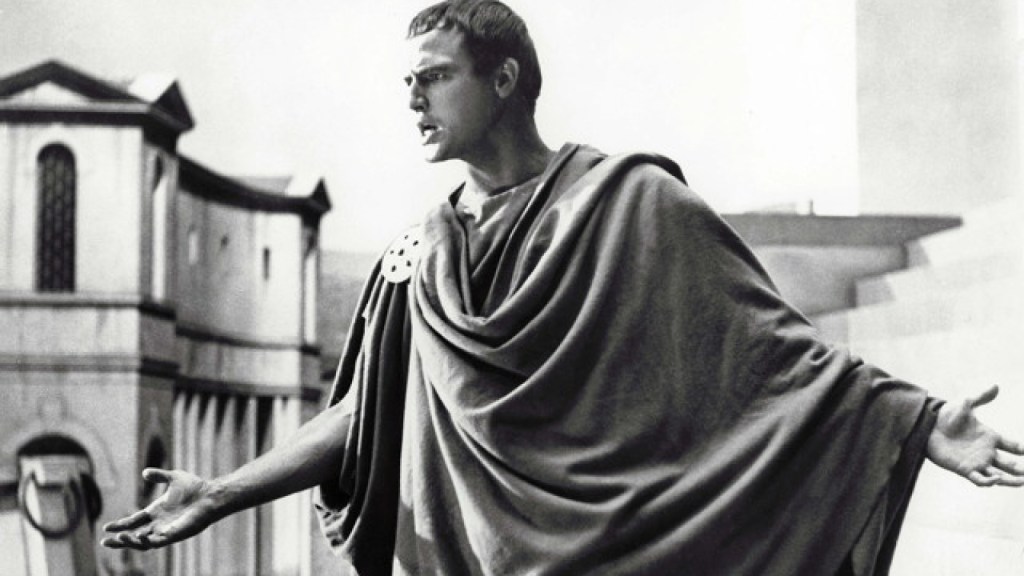
So far I’ve discussed the question in the context of it being posed to a critically-acclaimed artist, by someone familiar with their work. In the sense that we marvel at Mark Antony’s speech in Shakespeare’s Julius Caesar, the bridge in Taylor Swift’s “Champagne Problems”, the final line of F. Scott Fitzgerald’s The Great Gatsby, the evocative imagery of Robert Frost’s “Stopping by Woods on a Snowy Evening”. The way we go “My goodness! How did they do that?” when something resonates with us deeply.
But the question of where ideas come from doesn’t just belong to this context. So far I’ve used the word “author” rather than “writer” in this post, and really that’s quite limiting. An author is someone that’s published something—a text that’s on public record. A writer is simply anyone that writes. If you write anything at all, you’re a writer—it shouldn’t be treated as a weighty label to be feared, embarrassed about, or impressed by.
As a kid I wrote all sorts of batshit crazy fiction. When I was 11, I filled several spiral-bound notepads with installments of a long, ultimately unfinished novel about me and my school friends traveling the galaxy; being separated from our parents and raised by aliens on Jupiter, exploring ancient temples on Pluto, escaping supernovas, navigating wormholes, rafting through subterranean rapids populated with baryonyx, exploring a treehouse city above the clouds, and so on and so on. I wrote murder mysteries, high fantasy, science fiction, gothic fiction, comedy sketches, nature poetry, wholesome Christmas stories, hormone-fueled smut, Star Wars fan fiction, and damn near everything in between. I wrote about myself and my friends, but I also wrote about wizards, robots, and mythical creatures. I lifted heavily from books I’d read, video games I’d played, movies I’d seen. There was little in the way of thematic or stylistic consistency, and what I wrote for the most part reflected whatever interested me at that moment.
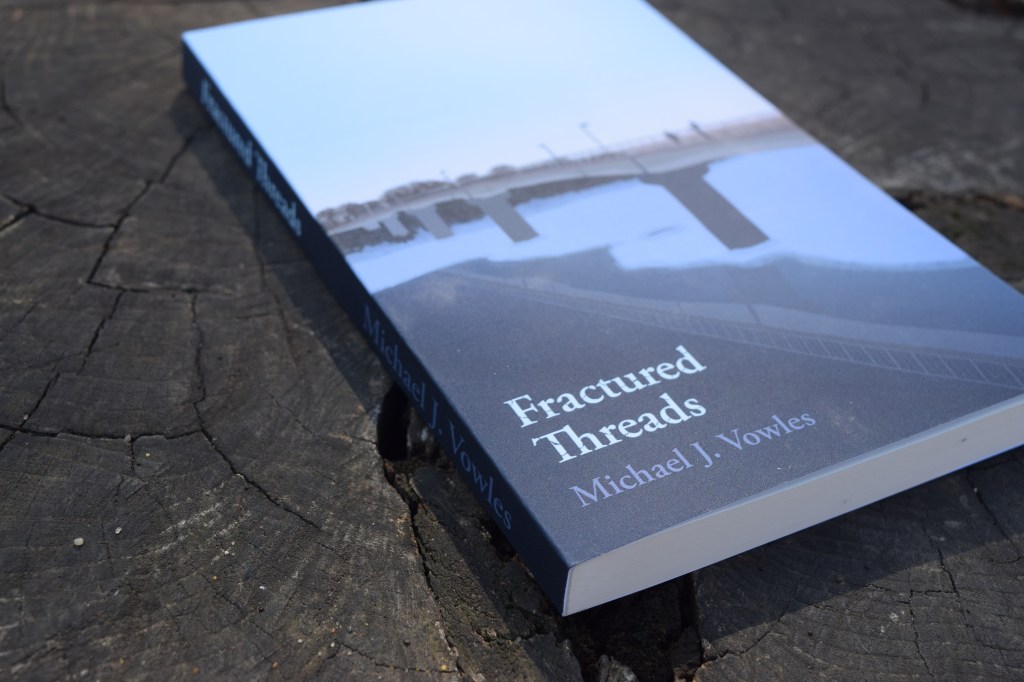
But sometimes a relative, or a teacher, or a friend might say something like “Where do you get your ideas from?”. Obviously in this case the question isn’t really about the work itself—I was a kid, so what I wrote was absolute dogwater, as you’d expect. Rather, the question is related to the enthusiasm I had for creating things. I don’t think I ever tried to answer the question—it felt innately unanswerable. I’d just shrug and get back to it. I didn’t really care where the ideas came from, so long as they kept coming. Fast-forward to 2022: I’ve published a book, realizing a childhood dream, and the question returns. The context is much the same—the question didn’t come from people who had read it, but from friends while I was writing it, promoting it, or just after I released it. It was an earnest, genuine question and I tried to answer it earnestly and genuinely. Elements of my book, Fractured Threads, had come from other books. Other elements had come from news stories, things I’d seen on social media, conversations I’d had with friends, old ideas I’d recycled from previous stories I’d written. Some had come from memories that I reimagined—scenarios playing out differently. A few had come from writing prompts online. All of these things provided little ingredients that I’d twist, knead, stretch, break apart, and remake. The kernel of an idea that’s provided by an external source, that you cultivate internally, adding so many layers that it becomes unrecognizable. None of this is done consciously. It’s not a process you really think about when you’re doing it—which is probably why it’s so difficult to explain. In the moment, it does feel like an idea just pops into your head out of nowhere.
That’s the best I can do at answering the question from my own experience. But as you can see, it’s not a simple answer. And the fact that you absorb and formulate ideas so unconsciously means that my answer probably isn’t very instructive. Story ideas aren’t something you can force by sitting there and thinking really hard. That’s a fast-track ticket to self-loathing and depression. The best you can do is live a vigorous, strenuous, vivid life—to read a lotta books, to talk with a lotta people, to stay informed about the world around you, and to throw yourself into as many unfamiliar and challenging scenarios as possible. And even that’s not a guarantee that anything will happen—but it is the best you can do.
The reason this question has been on my mind lately is because, for the past year, I’ve struggled to come up with story ideas I feel confident in writing. To follow-up on what I said in the previous paragraph about story ideas being formulated unconsciously—I’ve always found that once the external inspiration strikes, the story more or less writes itself. And ever since I published Fractured Threads last August, nothing has written itself. I’ve had scenes, characters, situations in my head, but none of them go anywhere the way they used to. It’s like I’ve had my balls chopped off. Running on an empty tank, firing blanks. I’m hesitant to use the term “Writer’s Block”, as I know its existence and legitimacy are debated, and I don’t want to make it sound like some kind of affliction. Poor him, he’s suffering from acute Writer’s Block. Get well soon. It’s just a term to describe the experience of feeling uninspired, and we should probably leave it at that.
Last summer, I had what must be the exact opposite experience. The chamber was full to bursting! A rutting billyboat! What’s interesting is that when I started writing Fractured Threads (a collection of short stories), the process was quite slow. But when summer came around, and I was in danger of failing to meet my production targets, the ideas came flooding in. If it weren’t for the fact that I was committed to the August 27th release date, I would have loved nothing more than to stay in that place forever, just adding more and more stories to the collection. When the final PDF spreads were sent off, I felt this pang of regret. I felt that I was in a good moment, that my ideas now were better than my ideas a few months prior, and I wanted more time to add new stories to replace the ones I wasn’t that confident with. I thought, “Fractured Threads could be so much better!”. But I comforted myself with the promise that I would just continue writing and release a second book as soon as possible, perhaps within 3 short months even. I’d assumed that the momentum would continue. But it didn’t, and once I stopped writing, the ideas dried up fast. It was like the more I wrote, the more ideas I got.
I can’t wait to get back to that place. It was probably the happiest I’d ever felt—certainly in terms of how happy I was with myself. I can think of plenty of happy memories in my life that occurred during periods of low self-esteem, where it felt like I was happy for a moment but not necessarily happy with who I was as a person. But this was a different flavor of happiness. I felt fulfilled and confident. I liked myself and I liked my life. As sad as it may sound, it wasn’t a kind of happiness I’d really felt before. It felt unique. And since then, it’s just been the other extreme. I’ve been frustrated, I’ve hated myself, I’ve been lacking in any kind of self-esteem. I’ve felt like I’ve just been existing, surviving, drifting through life like some kinda thoughtless amoeba. And so I’ve been obsessing over the question of where story ideas come from, so I can get back to where I want to be.

 TumbleweedWrites