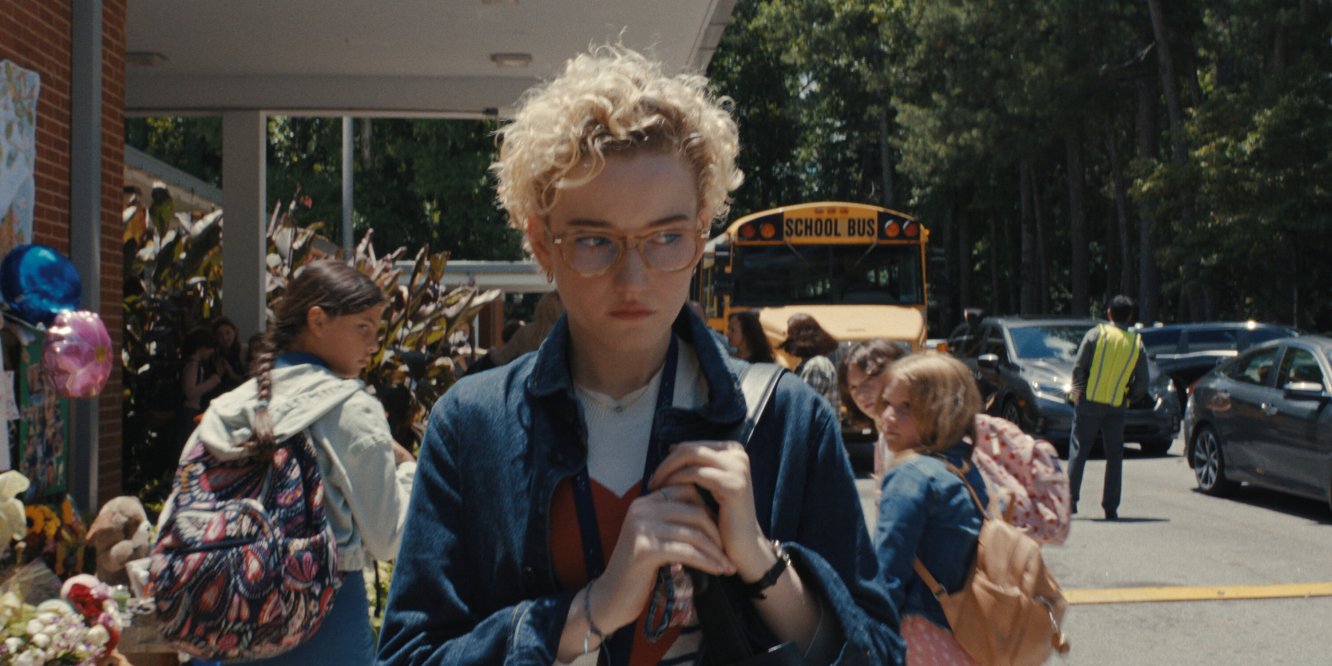
It’s that time of year again! Here’s my list of 2025’s best films, based as always on UK release dates.
Honorable Mentions
Sorry, Baby
Director: Eva Victor
Genre: Drama, black comedy
Country: United States
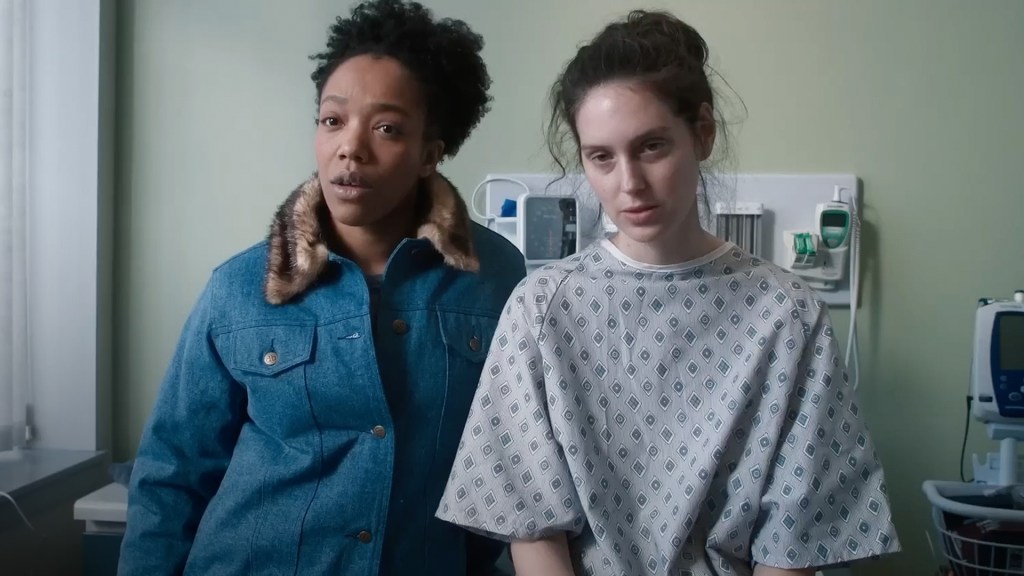
Review: I went to the BFI Southbank to take a punt on this one after not knowing much about it, and I’m glad I did. Sorry, Baby is a quiet, gently paced black comedy about a young literature professor, Agnes, at a liberal arts college in a small New England town who’s still struggling with the aftermath of a traumatic event. What’s interesting is that Agnes was a student at the college prior to teaching there—and it’s at this college where the traumatic event took place. When her friend Lydie visits for the weekend, she questions Agnes about why she wants to stay there, given that everything is a reminder of what happened. Framed by Lydie’s visit in the present, the film goes back to show us Agnes’ time as a student, with the whole film taking place over just a few years, with this one, terrible thing at the center of it all.
This isn’t a very fast-paced film, nor an especially plot-heavy one, but it doesn’t drag at all. It feels quite understated, in a way that reflects its sleepy, rural setting. I’ve seen some people say that the quirky humor didn’t land for them—and even that it made the film as a whole an annoying experience. And by humor, I specifically the way the characters speak. I’ve seen some people say they hate the way the characters talk, but think that the film is nonetheless well made. So I guess it’s very subjective. Personally, I didn’t have an issue with the dialogue, but I can see why some people would. I’m not sure how to describe the humor—I’m wondering if it’s a New York thing. It’s wordy, dry, and offbeat. Sometimes it doesn’t feel like a natural way to talk, but who knows? I think there are some people out there who probably talk like this and will really take to the humor.
I don’t think the mere presence of humor juxtaposed with a heavy subject matter is an issue at all however—a lot of films have taken this approach in recent years. And Eva Victor is a skilled enough storyteller to make it work, ensuring that Sorry, Baby never falls from the “tonal tightrope” it’s walking. I should also point out that Eva Victor is the director, writer, and lead actor of the film—and they knock it out of the park on all fronts. I thought that one time lapse of Decker’s house and the tracking shot that follows it were so well-executed. This is very much an auteur-driven film, and I look forward to seeing what Victor does next. The stray kitten was also a lovely touch.
Steve
Director: Tim Mielants
Genre: Drama
Country: Ireland
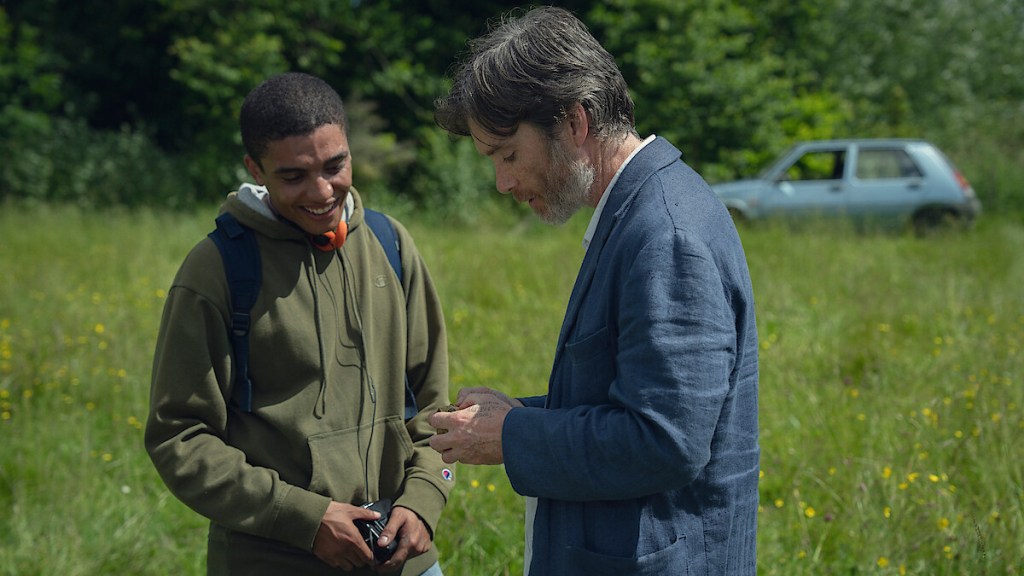
Review: I read the novel this was based on—Shy by Max Porter—during the summer, unaware that a film adaptation was just around the corner. It was one of those weird situations where it felt like the wider world was stalking me. And even when I discovered the film, I didn’t realize at first that it was an adaptation of the novel I’d just read.
Shy is a book that would be difficult to adapt faithfully to the big screen. It’s all of 100 pages long and written as a single, disjointed, non-linear poem. You spend the whole time in Shy’s head parsing between memories, conversation fragments, and stream-of-consciousness monologues. There are references to other characters—including Steve—but you really don’t get to know them. All you know is how Shy sees them.
And yet, the book’s narrow focus means that you can add so much new stuff to the adaptation while still being faithful to the source material. It sounds oxymoronic, but Shy’s journey is pretty much identical to the book. As far as his character is concerned, everything that happens is the same. But what Mielants’ film does is draw back from Shy and shift the emphasis to the school as a whole. And the novel is so focused on Shy’s interior life that it offers Mielants the blank space to build this other story around it without contradicting anything.
Cillian Murphy is excellent as this passionate yet exhausted headmaster that’s constantly on the tip of breaking point. As I said, while there is a Steve in the novel, you don’t know anything about him other than that he runs the Last Chance school for teenage boys with behavioral issues. So the Steve you see in the film is a completely original character, and the way he desperately tries to advocate for these troubled kids while battling his own inner demons makes for fascinating viewing. I thought all of the kids in this felt really authentic and I liked that we got insights into each of their lives. Another thing the film offers, that you don’t get with the book, is the perspective of the staff. It was really interesting seeing the daily challenges of these people who doggedly care about the kids while dealing with their volatile, often destructive, behavior. The mockumentary style makes you feel like you’re getting a peak behind the curtain of a real school—and the film does a good job of showing how the austerity measures of the 2010-2024 Tory governments have had (and are still having) a very real, very damaging impact on vulnerable or underprivileged people.
This one’s on Netflix and it’s about 90 minutes long, so if you live in the UK, you’ve got no excuse not to watch it.
28 Years Later
Director: Danny Boyle
Genre: Horror, post-apocalyptic science fiction
Country: United Kingdom
Review: When 2025 began, I hadn’t seen either of the preceding movies in this series. I have a distinct memory of seeing the trailer for 28 Weeks Later back in 2007 and being simultaneously fascinated and disturbed by it. At the time I didn’t think horror movies were for me, but I couldn’t get this trailer out of my head, and I remember reading the plot summary on Wikipedia. Thankfully, I didn’t remember anything when it came to finally watching it 18 years later.
In the intervening years, I’d come to realize that horror movies are very much for me, so long as the plot has more thought put into it than the average wedding gift thank you card. But I’d completely forgotten about this franchise and my brief teenage fascination with its second installment. That is, until the trailer for the third film dropped and Robin told me in no uncertain terms that this was one of her priorities for the year. She’d studied the original movie, 28 Days Later, for A-Level Film Studies and it meant a lot to her. Usually I can be lazy about getting into an established series, but Robin’s story convinced me to give it a go and get up to speed in time for the new film.
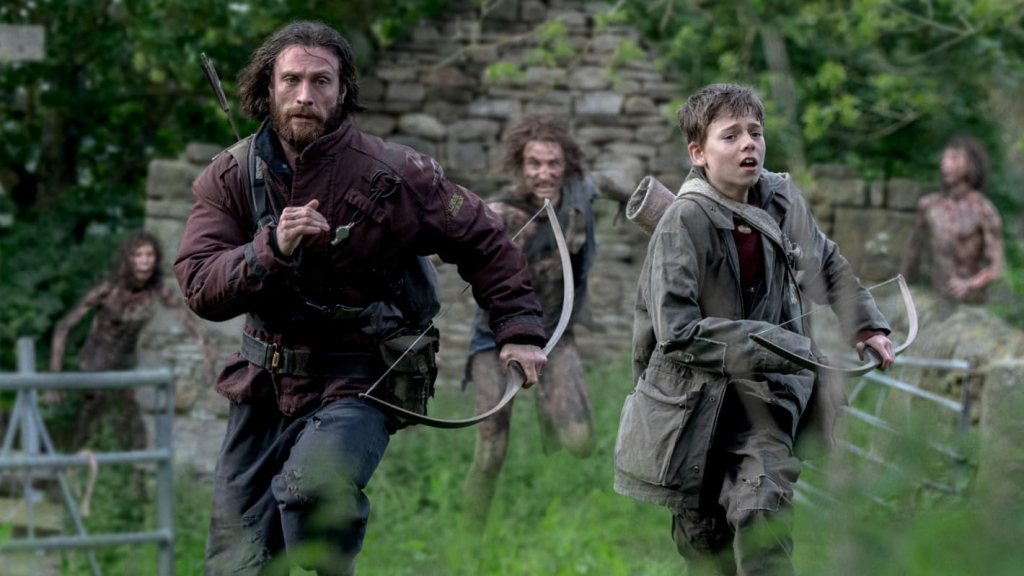
I enjoyed both 28 Days Later and 28 Weeks Later, so by the time the third film released I was just another fan excited to see what the new installment would bring. Robin and I went to see it at the Ritzy Picturehouse, a restored 1911 cinema in Brixton specializing in indie films. Overall, we liked it but it was a little different than we expected. As others have commented, it can feel more like a coming-of-age drama set against a post-apocalyptic backdrop than a true horror film. It’s definitely a less scary experience than the first two films, but there are plenty of thrills to be had. Not to mention a good amount of disturbing imagery to boot. I really liked the night-vision shots of the Infected prowling the forest at night and tearing apart the local wildlife. The bloated ones were a nice touch too. I wasn’t sure how I felt about the introduction of the Alphas—they were menacing for sure, but they also struck me as a contrived way to escalate the threat.
In terms of the story, it’s surprisingly elegiac in tone. I was expecting Ralph Fiennes to be some crazy tribal leader that leads an attack on the island or something, but he turns out to be this gentle father figure that steers the film toward quite a meditative, nuanced commentary on mortality. I mean, fair enough to be honest.
There were also a couple creative choices that I really loved in this film. I thought the fact that the Rage Virus was contained to just the United Kingdom was interesting, as it meant that the apocalypse was localized. Usually in post-apocalyptic narratives, it’s a worldwide event. I also really liked the whole island community, with all its rules and customs—and juicy internal politics.
And the ending? Well, without spoiling it, I’ll say that I didn’t mind what happened so much as how it happened.
“Huh…that was strange,” I said as we exited the theater.
“You know who they were dressed as, right?” Robin said, giving me a look.
“Holy shit!” I exclaimed when she told me.
I appreciated the dark humor and the injection of a little post-apocalyptic strangeness, but I felt that the music, the acrobatics, and the way that scene was shot added up to too much of a tonal contrast from the incredibly powerful final act we’d just witnessed.
10. Islands
Director: Jan-Ole Gerster
Genre: Drama, mystery
Country: Germany
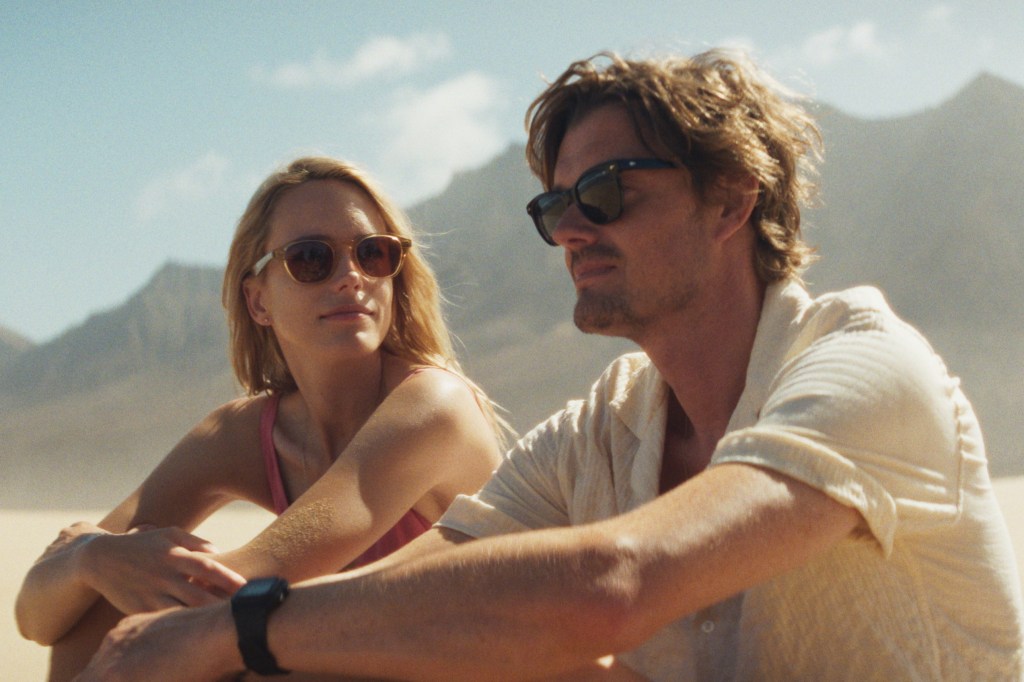
Review: I went to see this at the Ciné Lumière, which is a little two-screen art deco theater inside the French Institute in South Kensington. I’d seen a trailer for Islands when I went to watch Sorry, Baby and it really stuck with me. At that point in the year, I’d mostly experienced supernatural or fantastical narratives at the cinema (Nosferatu, Sinners, Mickey 17, 28 Years Later, etc.), so I was really in the mood for a gritty, real-world drama—especially something with a dark edge to it.
Islands scratched that itch for me. The film follows Tom, a somewhat disheveled, late-thirties tennis coach working at a hotel in Fuerteventura, where he alternates between his day job offering lessons to the guests and his nightly routine of getting black-out drunk at the local club. We don’t know anything about Tom’s past other than that he’s English and had a brief stint as a tennis pro many years ago. He lives this strange, directionless life where every day follows the same cycle and he doesn’t seem to live for anything beyond the day he’s in. You’re probably thinking it must be great to get drunk, do hard drugs, and engage in casual sex every day, but nothing in Tom’s routine is portrayed as glamorous or exciting. It’s like being on holiday is your whole life. Even the sunshine loses is luster. There’s something menacing about the dry landscape and the jagged cliffs. The permanence and immobility of everything. Guests come for a week, let loose, before ultimately returning to their regular lives. But Tom stays. His life is completely empty and without passion. He acts like he doesn’t even know what he’s living for—as though he’s trying to shut out all thought.
This was very interesting to me as a character study. What the hell was this guy running from? The inciting incident that disrupts this mindless routine comes in the form of Anne—an enigmatic femme fatale that’s on holiday with her husband Dave and young son Anton—who seems to take a particular interest in Tom. At first, Tom sheepishly resists the family’s overtures of friendship, but as things progress, he seems to need them more and more. And yes, Anne is a walking thirst trap, but Tom’s need for her goes beyond the obvious one. She and her family seem to fill a hole in Tom’s life—and potentially offer us a clue into his past.
When…someone…goes missing, the film becomes a twisty thriller—one I enjoyed very much in fact. But I enjoyed the ride more than the destination. The film leaves some questions unanswered, and I’m honestly torn when it comes to how much I’d have liked it to divulge. I’m not sure what I’d change or add to the plot, but I just know that I wanted more.
9. Train Dreams
Director: Clint Bentley
Genre: Historical drama
Country: United States
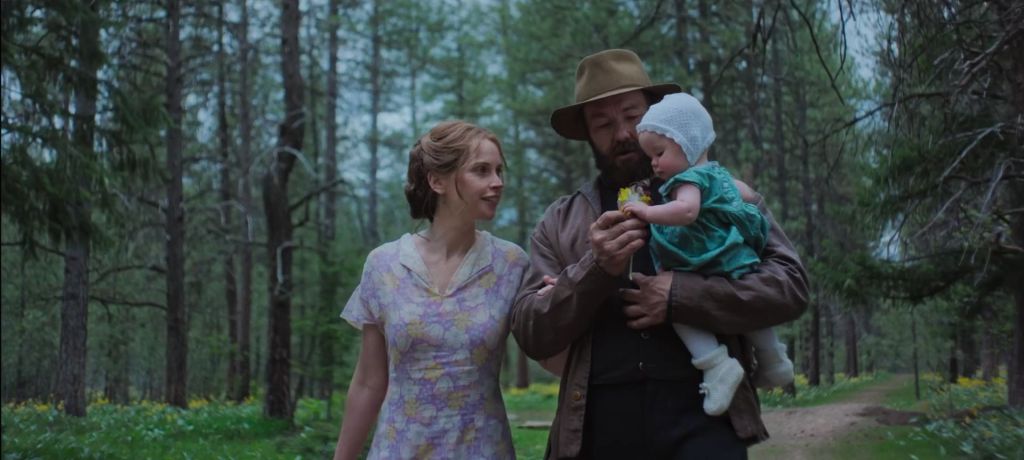
Review: I tried reading Denis Johnson’s novella Train Dreams a couple times, but I never stuck with it—which isn’t an indictment of the book, by the way. It was a long time ago and sometimes this happens with me. From what I can remember about it, however, I think that Bentley’s minimalist approach was the right way to adapt it to the big screen. This film came very highly recommended to me and I will say that it did live up to hype. Like Sorry, Baby, it’s a slow, understated, and gently paced film with a horrific tragedy at its center. However, unlike Sorry, Baby—which is quite a dialogue-heavy film—Train Dreams is a more visual narrative.
We follow 80 years in the life of Robert Grainier, a logger in late 19th and early 20th century Idaho. At first, he lives quite a directionless life, as though he can’t quite make sense of his place in the world—most likely due to his childhood as an orphan. We then see Robert find that meaning one day and the film explores how this changes him; anchoring his life and bringing with it new challenges. He experiences the highest highs and the lowest lows. On the way, he witnesses cruelty, violence, and suffering—as well as remarkable societal changes. He encounters the raw power of technology and nature in equal measure. And though a deeply unsophisticated man in many ways, in the sense that he lacks any real education and has little knowledge of the wider world, we see him ponder life’s most existential questions. Despite his hardships, he remains throughout his life a quiet, peaceful, gentle, and curious man. The people he meets—even those he’s not especially close to—leave a profound impression on him. You can tell he’s curious about their lives, their backgrounds, their fundamental otherness. I think my favorite moments were his conversations with Arn Peeples about the passage of time, and how this is reflected later in the film when Robert struggles with the new machinery and the rougher attitudes of the new loggers. You can see him coming face to face with his own mortality and contemplating his growing irrelevance, feeling just as confused by the world as he was in his youth. There’s something about that which I find really powerful—this idea that you don’t necessarily become more certain about everything, or feel more connected, with age. But rather, that the world leaves you behind and you quietly fade from it. That’s very interesting to me.
When I studied abroad in Eau Claire, Wisconsin during the fall semester of 2012, I was given a private tour of the city’s Paul Bunyan Logging Camp Museum (now renamed the Wisconsin Logging Museum). I’ve always been fascinated by the logging industry and going to this museum is one of my fondest memories from that semester. I got to see how the loggers lived, what their typical workdays looked like, what they ate, the tools they used, et cetera—and seeing this film brought it all back. But even putting my particular interest in the subject aside, Train Dreams is an exceptional picture and a deeply moving character study.
8. Nosferatu
Director: Robert Eggers
Genre: Gothic horror
Country: United States
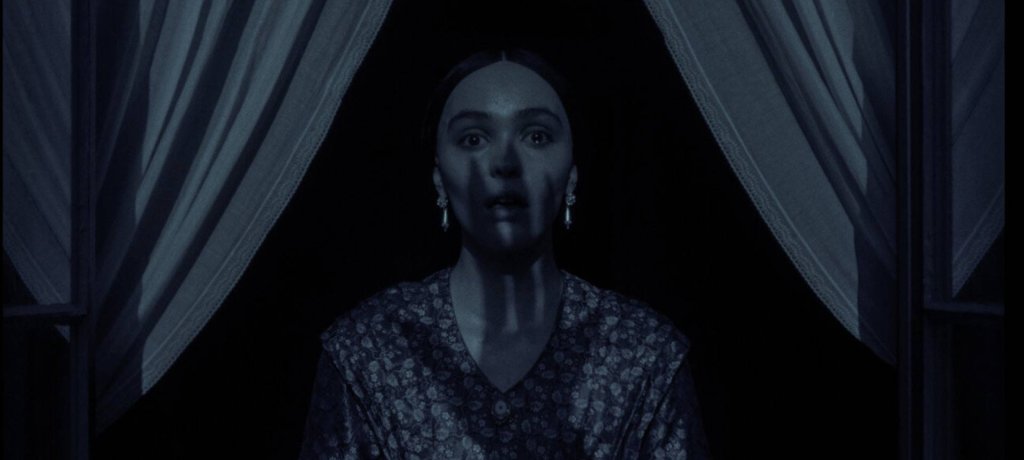
Review: This was the first film I saw in 2025—as well as the one I was most excited for. I really liked The Witch and I loved The Northman, so as soon as I got wind of Nosferatu I was pumped. Even though I haven’t really consumed much in the way of vampire-related media down the years, I’ve always liked the idea of vampires. I think the fact that they skulk about in the shadows, and are human-like but not quite human, makes them creepy. And the fact they have a very specific M.O.—biting unsuspecting women in the neck as they sleep and drinking their blood—makes them interesting. Their intrinsically erotic nature carries with it a lot of raw metaphoric potential. What I don’t like is when vampires are young, handsome, camp, or sexy. I hate the idea of them being cool or stylish in some way. I want them to be really disturbing—no sense of humor, no denim, and no American accents. Eggers’ reimagining of Nosferatu promised all of that—capturing the terror that vampires elicited in those early, traditional stories for a modern audience that’s harder to shock.
Robin and I went to see this as soon as our schedules allowed, which ended up being the evening of January 4th. I had this strong feeling, given our love for folk horror and gothic aesthetics, that this was a film made just for us. And while we did enjoy it, I think we may have hyped it too much. In terms of its atmosphere, tone, production design, and overall aesthetic, Nosferatu absolutely delivered on its promise. I felt completely immersed in Eggers’ rendition of 1830s Wisborg—a fictionalized version of Wismar, a gabled, red-brick port city on North Germany’s Baltic coast. A fascinating setting in many ways, because the industrial revolution hasn’t quite arrived yet but you can sense the approach of modernity. It’s just around the corner for a place like Wisborg, with its long history of maritime commerce as a part of the Hanseatic League. Thomas Hutter represents the urbane, bureaucratic part of this world, the part that’s leading the push toward the industrial era, in all its sophistication. This is a world caught between the push and pull of its industrialized future and its romantic past. Hutter is the ambassador of that future, who is pulled back to the old world being left behind—here represented by Transylvania. It’s interesting to think of Eastern Europe as the choice of contrast for the urbane, Protestant, and outward-looking cities of Northern Europe. Transylvania is depicted as a forgotten, mysterious, deeply forested world of medieval aesthetics and pre-modern superstitions, where religion is the center of life, not technology. Somewhere far from the Atlantic, unconnected to the wider world and untouched by the inexorable march of progress. It just intrigues me—from the perspective of our transparent, interconnected modern world—to think of Europe having a mysterious, romantic frontier. And the first third of the film, which covers Hutter’s perilous, fish-out-of-water journey into that frontier, is my favorite part.
This for me was a 10/10. I loved everything about Hutter’s trip to the castle and the depiction of Count Orlok. You’d think, realistically, that as soon as he woke up in the middle of the night at that Carpathian inn and saw the smelly villagers driving a stake through a reanimated corpse, he’d think “Oh, sod this,” and leg it back to Mecklenburg. But I interpreted Hutter’s voyage as being somewhat hypnotic in nature, as though he’s falling more under Orlok’s spell the closer he gets to the castle. Count Orlok is later explained by the Orthodox nuns as being a Solomonar—a malevolent wizard in Romanian folklore. From the point of his arrival at the Transylvanian hamlet, his journey takes on a dreamlike character, and I imagine him becoming unsure of what’s real and what’s not. Is what he witnessed in the night a dream? Is he dismissing what he sees as a product of his fear, as his unfamiliarity with the sheer foreignness of the people and land around him?
I imagine him nervously asking the innkeeper what all the fuss was about and being told “Oh nothing, we were just taking the bins out…go back to sleep…”
“But I could have sworn that—”
“You’ve had a long journey, Mr. Hutter. I’m sure it was just a bad dream.”
And then, by the time he gets picked up by the unmanned carriage, he’s so tired and delirious that he just accepts it. It’s like his subconscious is driving him forward and he’s not quite aware of everything around him. Inside the castle, he seems to completely lose track of his sense of time, unsure how long he’s been there, whether it’s night or day, remembering only his assignment to complete the sale. But every now and then, his conscious self resurfaces and he becomes terrified at what’s happening, only to lapse once more into the dreamlike haze of Orlok’s spell. That’s really scary to me, the idea that you’re disoriented and sedate, your senses dimmed, so that there’s this unsettling feeling that something’s not quite right, that all of a sudden comes into sharp focus upon waking. Imagine that you’re looking at something dangerous but your mind hasn’t really registered it; you just have this nagging sense of something being wrong or out of place, something that prevents you from achieving a deep rest, and then your survival instincts come far too late and you become suddenly and startlingly aware of what’s in front of you. Man alive! It’s enough to make even the most intrepid horror fan piss their pants.
I see all of this as reflecting a Romantic notion that there’s power in this old world, and Thomas Hutter—being emblematic of the new one—is especially vulnerable to it. That his life of bureaucracy and sophistication has made him soft and unprepared. That to embrace modernity too much is to lose touch with our primal edge. I don’t know if that’s intentional, but it’s just where my mind was going while watching it. This theme seems to continue after Hutter’s trip, with the conflict between the empirical skepticism of Friedrich Harding and the occult mysticism of Albin Eberhart von Franz. Count Orlok—revealed to be the demon Nosferatu—descends on Wisborg like a warning about the power of the world being left behind and the frailty of the world to come.
I really liked the depiction of Count Orlok as this medieval Wallachian boyar, as though he’s the last remnant of a noble dynasty that no one outside the local populace remembers. The sable furs, the hunting overcoat, the kolpak hat, it was all top notch. I also liked his long fingernails and corpselike skin, that was a good touch. I was a little surprised by the online backlash to his moustache, but I think that just reflects how entrenched the modern image of vampires is in popular culture. To me, it would look weird if the Count didn’t have a moustache. This guy’s an aristocrat from medieval Romania remember. A clean-shaven face would look just as ridiculous and out of place as a pompadour haircut or a pair of Converse All-Stars.
I also appreciated the more shocking moments, like the bleeding eyes, the horrifying seizures, or that one necrophilia scene. You need to make these kinds of stories explicit to capture the impact they had on readers at the time. It might seem funny to us, but the likes of Frankenstein, Lady Audley’s Secret, and Wuthering Heights were quite shocking when they were first published—and Eggers’ film is an intentional homage to those subversive gothic narratives.
And on an even darker, but less sensational note, Nosferatu does a really good job of showcasing that, alongside the visceral horror of vampires, plague rats, and black magic, there’s the more insidious, mundane, and psychological horror of being a woman in the 19th century. Ellen—played brilliantly by Lily-Rose Depp—unwittingly makes a deal with the devil because she’s lonely. Her isolation reflects the way women would be locked away or kept out of sight for not meeting a strict set of standards. How they were imprisoned both literally and figuratively—and explained as mad or hysterical just for being different.
This is an overtly feminist take on Nosferatu and the wider vampire tradition. It’s very much Ellen’s story. Like groomers often do in real life, Nosferatu exploits Ellen’s desire for companionship and intimacy. Like many victims in real life, Ellen’s feelings toward her abuser are complicated. And like many women in real life, Ellen is made to feel ashamed and tainted for indulging in her sexual desires.
Ultimately, I liked Nosferatu but it lands where it does in my list because I felt it dragged a little bit in the mid-to-late section. I admired it a lot, but there were other films in 2025 that engaged me more on a moment-to-moment level.
7. Companion

Director: Drew Hancock
Genre: Science fiction, comedy, horror
Country: United States
Review: This was just a damn good time. The twists, the humor, the bloody violence. The sharp feminist commentary and the cum-face jumpscare. The Sophie Thatcher of it all. As folks have said, it’s Ex Machina for the girls and the gays. In many ways though, it felt to me like it could have been an episode of Black Mirror. A bunch of friends spend a weekend at a luxurious cabin in the woods and you’re not sure who’s a sex robot and who’s not.
Without giving anything away, that’s pretty much it. This was a thoroughly enjoyable and well-executed single-location thriller where the humor really lands. At least, for me it did. And while it might not explore its themes to their fullest potential, Companion definitely makes you think about the impact technology will have (and already is having) on the objectification of women. At the moment, it’s hard imagine the existence of sex robots that are both real-looking and affordable, but the film brings to mind things like the recent prevalence of deepfake porn, advancements in AI, and the growing popularity of toys like fleshlights—as well as academic debates around the ethics of sex doll availability for potential abusers. It reminded me of a book I read years ago called The Right to Sex by feminist philosopher Amia Srinivasan, which weighed up in one chapter the arguments for and against legal, state-regulated prostitution as a means of preventing incels. The sexbot industry in Companion is essentially prostitution, in that you’re paying for sex, except in this case it’s not even with a real person. So it raises some interesting questions—does the availability of these sexbots prevent real women from being harmed? Does it mitigate the kind of sexual frustration that can spiral into abusive or violent behavior? Or does the fact of having total control over something indistinguishable from a real human in conjunction with an absence of legal consequences instead cultivate a megalomaniacal, sadistic code of behavior?
What do these sexbots mean for the future of human empathy? How do they affect real human relationships?
Companion doesn’t answer these questions, but it does get you thinking about all this stuff. I mean, statistically you (yes, you reading this) know a man that’s tried to make passionate love to a car exhaust, so it’s likely that we’ll be having more of these discussions as technology continues to progress in the future.
6. Eddington
Director: Ari Aster
Genre: Satire, neo-western, black comedy
Country: United States
Review: I’m surprised just how much I enjoyed this. I was curious about Eddington before it was released, because I really liked Aster’s 2018 film Midsommer and I’m interested in art or storytelling that explores the COVID-19 pandemic. I can understand why people don’t want to be reminded of it—and I don’t think it’s simply because a lot of people died. We lap up films about other destructive events like wars or natural disasters—because, despite how horrific their real-life inspirations were, we find them exciting. I think the COVID-19 pandemic is, by its nature, less dramatically interesting to people as a subject. Maybe that’s due to a lack of action—people aren’t going anywhere, they’re not interacting with people, they’re not engaging in cultural experiences or public events. We were all waiting it out. And waiting isn’t very exciting.
It’s quietly depressing. I think it’s the mundane character of the pandemic, rather than its morbid qualities, that makes it less palatable to audiences. People remember being bored and online. They remember feeling ashamed and embarrassed that there were fellow citizens out there selfish and stupid enough to disregard the science and go out of their way to make a bad situation worse. Who wants to relive that? Personally, I’ve always been of the opinion that it happened, and we should address it in our art. It’s a distinct chapter in our history.
Eddington tries to capture those distinctive qualities and remind us just how strange the summer of 2020 was. Of course, there were things that happened during the pandemic that had nothing to do with COVID-19, but are inextricably tied to it as a cultural event. Eddington focuses on mass hysteria more than anything else, touching on things like conspiracy theories, racial tension, misinformation, performative activism, social media, and gun violence. The titular small town becomes a microcosm of the United States as a whole; a place torn apart and driven mad by political polarization.
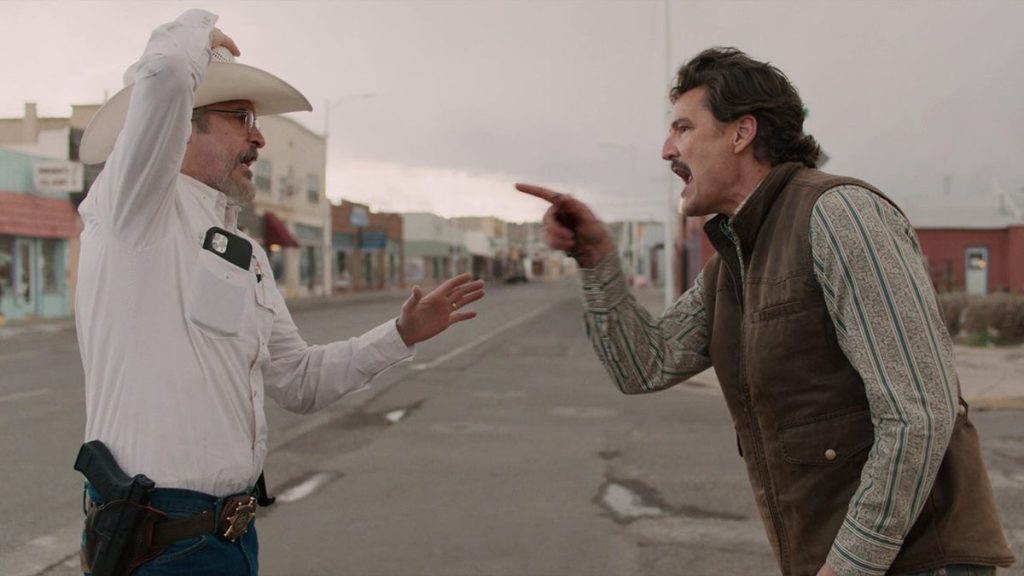
The plot, in a sentence, is about a feud between the town’s sheriff (played by Joaquin Phoenix) and its mayor (played by Pedro Pascal), and how the hysteria of 2020 fans the flames of this dispute until it engulfs the whole town. It reminded me a little of the TV show Beef, in that it chronicles a somewhat down-to-earth, ordinary quarrel that completely spirals out of control to the point of absurdity. I’ve seen some people describe this film as a slow burn, but I was hooked from the beginning and never lost my interest. It was fun watching things escalate in increasingly ridiculous ways and never knowing where things were going to go next. I thought, going in, that the sheriff and the mayor would be dual protagonists with equal screen time, but this is very much Joaquin Phoenix’s film. That said, you do still get to see the perspective of other characters than the sheriff and it is interesting to follow their stories and how they intersect with the main plot. I don’t want to say too much about what happens, other than it’s very fun.
Eddington received a mixed reaction online for seeming to not take a political stance. I can understand people saying that it’s irresponsible to tell a story about the pandemic and not make any reference to the Trump administration that contributed so much to its sociopolitical divisiveness (not to mention its death toll). But I don’t think that the film is apolitical at all—it just doesn’t have an overtly political message or a practical propagandist objective. Nor do I think that the film is sympathetic to antivaxxers, gun nuts, and white supremacists. While the film does satirize white liberal allyship in a couple memorable scenes, it doesn’t imply that they’re on an equal moral footing to violent bigots. Eddington is more interested in politics in a general sense, as it relates to the human condition, than a commentary on specific people or institutions. Aster isn’t interested in Democrats or Republicans—he’s interested in the story of humanity, and what the pandemic brought out of us. Maybe he thought that references to Trump—who is such a dominant figure in our media—might detract from that.
Overall, I really enjoyed this—it’s funny, thrilling, and unique. And Joaquin Phoenix gives a great performance, which goes some way to making up for the hot mess that was Napoleon.
5. Left-Handed Girl
Director: Shih-Ching Tsou
Genre: Drama
Country: Taiwan
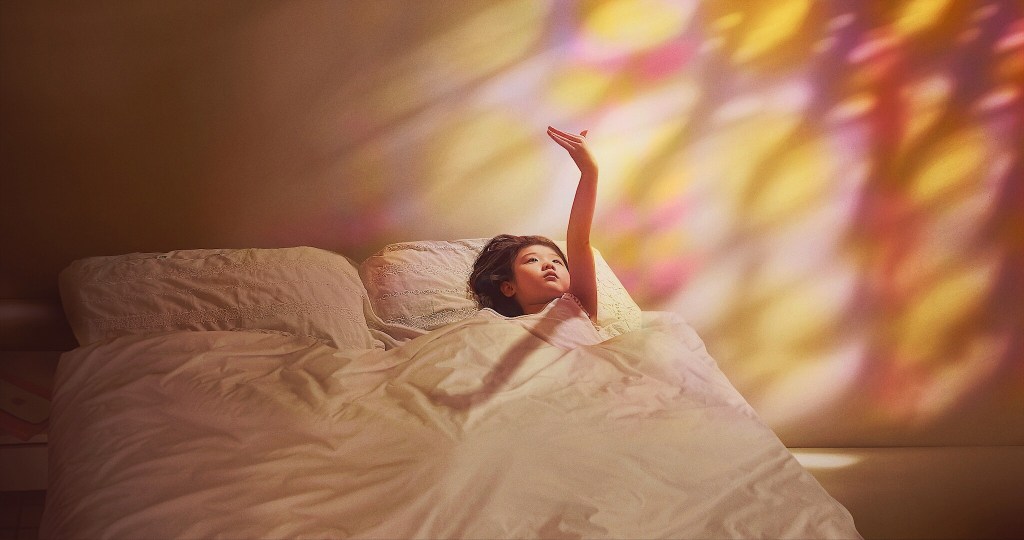
Review: I loved this Taiwanese slice-of-life drama. I’m a sucker for films about dysfunctional families, especially when there are different generations involved. I think having the perspective of children also really adds something special. And in Left-Handed Girl, we have three characters of different ages that have more or less equal screen time. The film follows a mom and her two daughters as they move to Taipei in order to set up a noodle stand in one of the city’s bustling night markets. The two daughters have a massive age gap though, so the perspective of each of the film’s three protagonists feels quite distinct.
Shu-Fen, the mother of the two girls, runs the noodle stand and works hard to provide a life for them—although things get complicated when she feels compelled to pay her dying ex-husband’s medical bills. I-Ann is somewhere between an adolescent and a young adult (I’m guessing about 19 or so). She works at a betel nut stand, selling betel nuts and cigarettes while wearing revealing clothing. She’s also fucking her boss. I-Jing, the younger sister, is five years old and the left-handed girl the movie is named for. The reason this is significant is that her miserable, superstitious grandfather believes that the left hand carries out the work of the devil. This makes I-Jing, who’s obviously deeply impressionable, feel tainted—and sets in motion a streak of troublesome behavior.
While Shu-Fen is well-written and well-acted, it’s the two sisters that stand out and make this film special. I-Ann is cold, selfish, and abrasive, but as the film goes on you see that she’s carrying a lot of shame about never going to college. She feels trapped in a life of poverty and unable to explore the possibilities life has to offer. There’s a really poignant moment where she reconnects with some old classmates and clearly feels jealous of the “normal” lives they’re living. Nina Ye, who plays I-Jing, really holds her own as an equal star of the film alongside Janel Tsai and Shih-Yuan Ma, and delivers a performance with impressive range for her age. I-Jing is the heart of the film in many ways, and her sweet nature provides a nice contrast to Shu-Fen’s stress and I-Ann’s bitterness. Their struggles feel separate at first, but the three stories coalesce nicely as the film goes on, ending with a dramatic banquet with extended family that sees a couple of shocking revelations.
This film was also edited, produced, and co-written by Sean Baker, who Western audiences will be familiar with as the director of Anora (which I still haven’t gotten around to seeing yet…). Left-Handed Girl is available on Netflix for British and American viewers, and I highly recommend you watch it if you like family dramas. It’s a real treasure—and on another day, I might have ranked it higher on this list.
4. Weapons
Director: Zach Creggar
Genre: Horror
Country: United States
Review: When the trailers for this came out, I couldn’t help but find the title unintentionally amusing. In the UK, “weapon” is a slang term for “idiot” or “fool”, comparable to other British insults like “helmet”, “melt”, or “donut”. It’s probably a derivation of “spanner”, now that I think of it. But it just seemed funny to me, watching this very serious trailer where parents were panicking over their missing kids, intercut with shots of the kids seemingly abducting themselves, before the word “WEAPONS” fills the screen. It was like the trailer was calling them all a bunch of “absolute weapons” for causing the town so much trouble.
Nonetheless, I had a great time with this one. I’ve always been a sucker for small-town America as a setting, especially if there’s a mystery involved. And all the better if there’s paranoia and tension between the residents. What I liked best about this film, however, was its narrative structure. As longtime readers know, I’m a huge fan of nonlinear, overlapping narratives with multiple points of view, where you have to go back in time and experience the same events from another character’s perspective in order to get a further clue into what’s going on. Weapons does this so well. It suits the small-town setting because we get to see how this local tragedy has affected different people from different walks of life—leading to richer world building. It also enhances the tension, because one chapter will end with something completely crazy happening out of left field, before cutting back to the beginning of a new one and leaving us wondering how it happened. It’s a method of storytelling where you can have cliffhangers within a single narrative.
In terms of genre, I’d describe this as a dark, modern-day fairy tale. The only difference between Weapons and Robert Eggers’ The Witch is that Weapons takes place in the 21st century. They appear different on the surface, but in essence they’re the same. I think when stories take place in the past, we more readily accept the fantastical elements because we’re already removed from them due to the time period. In a Victorian setting or a medieval one, we don’t ask questions if a character lost in the woods stumbles across a witches’ coven. It feels appropriate. With a modern-day, suburban setting, it feels a little more out of place because it resembles the world we actually live in—so perhaps it’s natural to want answers. For me, I didn’t need to know anything about Gladys’ origin in Weapons. It feels on brand for a fairy tale to have a malevolent entity simply showing up one day and changing the idyllic town forever.
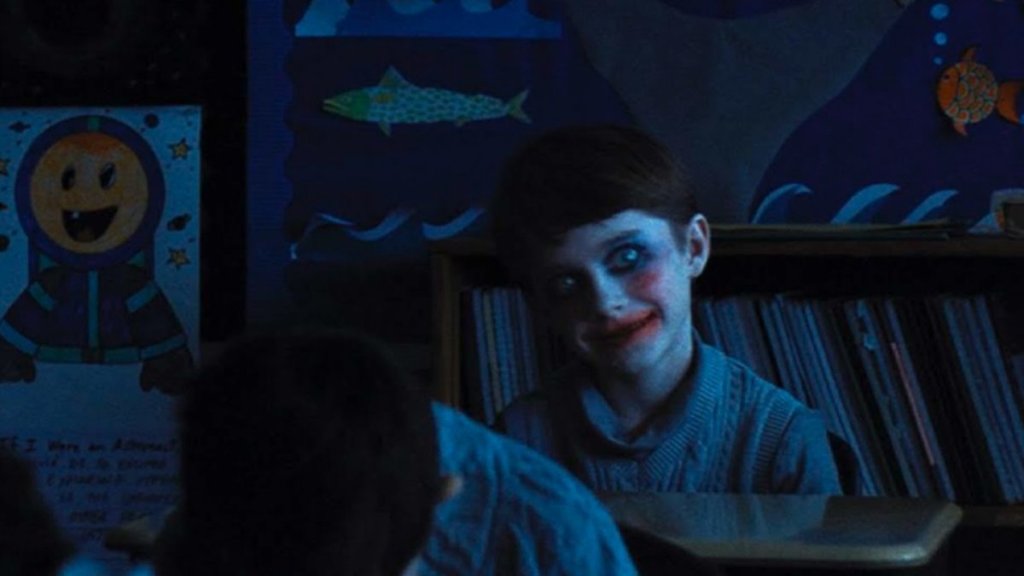
Speaking of Gladys, my god was she the creepiest villain I’ve seen in a long time. Something about her really, really didn’t sit right with me. The film doesn’t overdo it with the jumpscares but there were two occasions (both involving Gladys) where I damn near shat myself. Just thinking about her twisted smile and shotgun-blast makeup sends a shiver down my spine. And yet, despite how bloody and disturbing this film is, there’s so much well-executed humor woven throughout. They get the balance just right, so that the funny moments never feel out of place and detract from the tension. You’re having a laugh, but you still take the film seriously, which takes a lot of skill.
One thing I should point out is that the film does—in my opinion, at least—pay off the mystery. This is one of the hardest things for horror writers to do, so I feel like I have to praise it when I see it done well. Oftentimes with horror films, I get really invested in the first bit of the narrative where they’re setting up the mystery, but my interest wanes as the film goes on. With Weapons, I was engaged all the way to the end and content with the things they left unanswered. And that ending! This film had what is undoubtedly the most satisfying ending of the year for me. I would have been punching the air and cheering in the cinema were it socially acceptable. Fun, thrilling, and deliciously gory.
3. The Girl with the Needle
Director: Magnus von Horn
Genre: Historical drama
Country: Denmark
Review: Handing this the bronze feels a little unfair; the top three on this year’s list were very hard to separate for me, but one thing I do feel clear about is that they’re far ahead of the rest of the pack. The Girl with the Needle is worthy of the gold and were it released in another year, it may well have placed first on my list. This is a film I was quite excited about when I discovered it early in the year, but I didn’t get around to actually watching it until the end, when I went back to my parents’ house for Christmas. By that point, I’d forgotten what the film was about, or what drew me to it in the first place. All I knew was that it was meant to be really good.
So when it came to watching it with my parents, I couldn’t remember if it was a horror film or not. I knew it was meant to be pretty dark—but that could mean any number of things. Something that’s dark in tone or heavy in subject matter isn’t necessarily explicit or scary. I told my mom that she might not like it and the creepy faces you see in the opening sequence seemed to vindicate this decision. But she stuck around and pretty soon she was just as hooked as my dad and me. The Girl with the Needle is not a horror film, nor is it too explicit in terms of sex and violence. It’s just bleak—really fucking bleak. It holds back nothing in its examination of abject cruelty, poverty, and suffering. It explores the utmost limits of human desperation. But it’s not gratuitous in the sense of using visuals designed to elicit shock or revulsion.
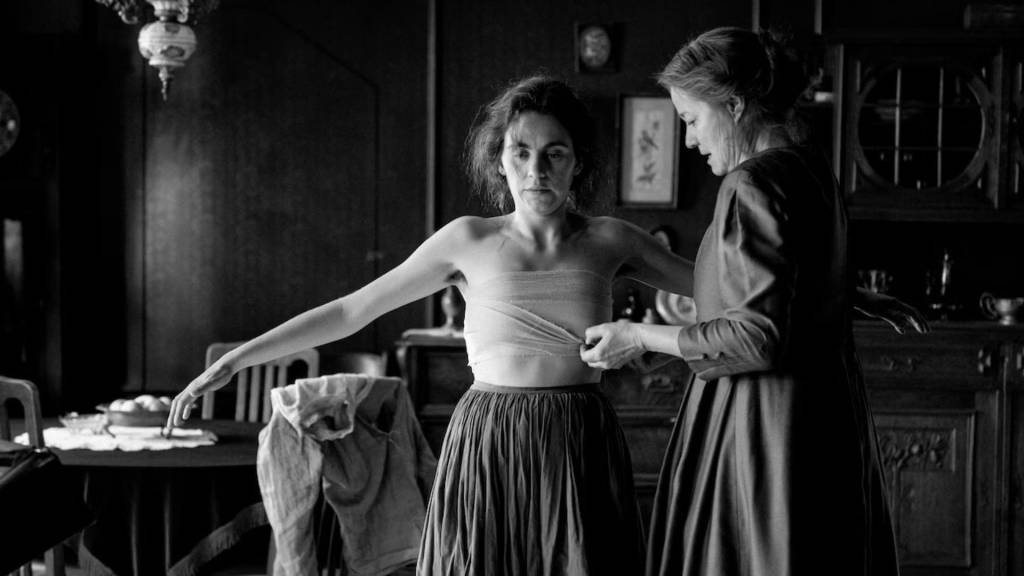
I don’t want to say too much about the plot, because this is one of those films that you’ll enjoy more the less you know going into it. In a nutshell, it’s about a young woman named Karoline living in Copenhagen in 1919. The eponymous girl with the needle (she works as a seamstress in a factory), Karoline is struggling to make ends meet; her husband went off to fight in WW1 but hasn’t come back. Nor has he written her. Since he hasn’t been legally declared dead, Karoline is unable to apply for widow’s compensation and the salary she gets from the factory isn’t enough to pay the rent. The film opens with her losing the apartment she once shared with her husband and having to live in squalor. How she navigates this—particularly in the context of being a woman in the early 20th century—drives the events of the plot.
Inspired by…something…that actually happened, the film has the tone of a grim parable. As director Von Horn put it, he conceived of The Girl with the Needle as a “fairy tale for grownups”. The film is shot beautifully in black and white, which really enhances the feeling that we’re far removed from our own reality. You feel totally transported into this gothic fable. It’s incredibly immersive. Every frame feels like it’s straight out of a particularly nightmarish storybook, with post-WW1 Copenhagen rendered as a dark, industrial labyrinth of winding alleyways, shadowed courtyards, and smoking chimneys. And not only is it breathtakingly atmospheric, it’s also so damn watchable. I was expecting a kind of horror art film, but it’s actually a gripping story. My parents and I were engaged the whole way through. I would recommend this to just about anyone, especially if you’re interested in history, womanhood, and the dark corners of the human psyche.
2. One Battle After Another
Director: Paul Thomas Anderson
Genre: Action, thriller, satire
Country: United States
Review: Even though There Will Be Blood is my favorite film of all time, I wasn’t really excited for One Battle After Another. Something about the premise and the trailer just didn’t interest me. But the reviews were too good to ignore. While grabbing dinner at a Turkish restaurant in Kingston with my close friend Emily, I was urged to go see it. I was coming around to trusting the critics at this point anyway, but Emily’s assurance that this was a genuine masterpiece sealed it for me.
“And if you watch it again, it’s one battle after another after another,” she quipped.
There was so much noise about this film that it felt like an event. And it was the first one of the year to feel this way for me. Nosferatu was special, but only because Robin and I made it special. One Battle After Another was different. It felt like I was taking part in a broader phenomenon. And so, because of this feeling, I decided to go somewhere special to see it.
That somewhere special ended up being the Odeon Luxe in Leicester Square. The mega Odeon. The flagship. Odeon final boss, if you will. I’d walked past it many times and only gone inside to take a piss. It also felt special because the theater was making a big deal about offering One Battle After Another in 35mm VistaVision. I had no idea what that meant, but Emily later explained that this was a high-resolution, widescreen format that runs the film horizontally instead of vertically. For people in the know, Emily said, this was considered the “proper” or “optimal” way to watch One Battle After Another. The inside of the theater was huge as well. It felt less like a cinema and more like a concert hall, with a grandiose curtain hanging in front of the screen before the film started.
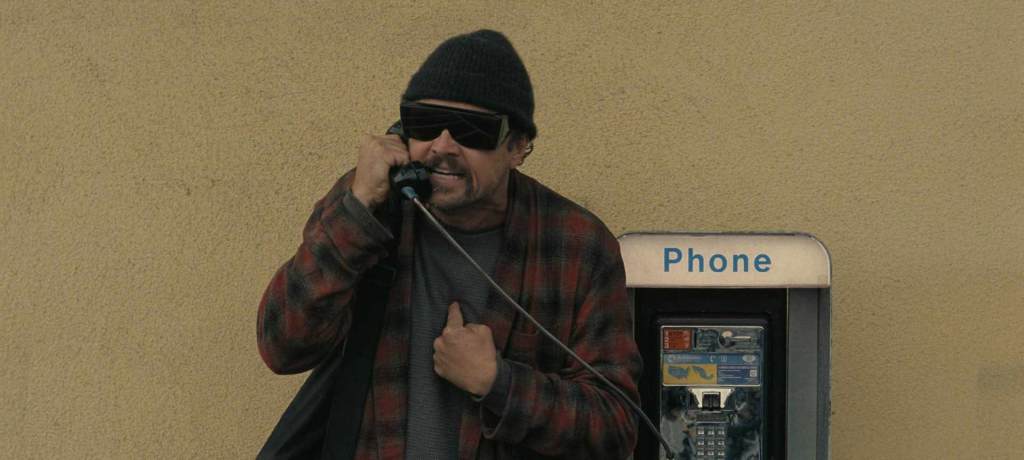
The film itself is just shy of three hours, but I felt fully engaged the whole time. More than that, I was on the edge of my seat. In short, it’s about a former political revolutionary who, after living off the grid for many years with his daughter, is pursued by a ghoulish cabal of white supremacists known as the Christmas Adventurers. As Paul Thomas Anderson said, the film—like the novel it’s based on—is about what happens when revolutionaries scatter. It’s about the long-drawn-out aftermath of revolutionary failure and the stagnation that follows—represented perfectly by Leonardo di Caprio’s Bob Ferguson. We see Bob in is youth full of passion and revolutionary fervor. He has complete clarity of purpose. You get the sense that he wakes up each morning with a sharp conviction about who he is and what he has to do. He’s so much a product of his time that you can’t imagine him outside it. In his mind, he was born for this struggle—and I think his relationship with Perfidia has a lot to do with this feeling. I can imagine there were many people who dabbled in counterculture in their youth before going on to live a more traditional lifestyle. For Bob Ferguson, however, it’s not a phase—and I think it’s Perfidia’s hot-blooded fervor and magnetic, larger-than-life personality that anchors him to the struggle. As her mother says in the film, revolutionary struggle is in her blood; something she inherited and was raised with. Bob, it’s implied, most likely got started in his early adulthood. Perhaps he was a student—as college campuses were a primary means of exposing people to new ideas in the 1960s—or maybe he was a drifter lacking in a sense of direction or identity, who found that sense of belonging in the fight against systemic injustice. Either way, Perfidia is the reason he’s all in. And when she disappears amidst the Nixonian crackdowns, he feels lost.
We find Bob many years later in a state of paralysis. Paranoid and perpetually stoned, he’s lost all his edge. He hasn’t moved with the times, pursued a new relationship, or reinvented himself. No—he’s a leftover relic from a defeated movement. You might think, when watching for the first time, that the film’s setting up an arc in which Bob rediscovers his revolutionary fire and jumps back into the fight; that his hero’s journey is to bring down the dastardly Colonel Lockjaw and save the day. But no—his true arc is to be the father his daughter Willa needs him to be. While Bob is a loving father, he’s not truly present in the active sense, because he’s trapped in the 1960s and the dream that didn’t come true. Perfidia represents the pull of the past that he’s been surrendering himself to and Willa the pull of the future—the one he’s been resisting. And so when Colonel Lockjaw does show back up more zealous and demented than ever, Bob does have to wake himself from his paralysis. He has to live in the present. And it is a hero’s journey—it’s just not the arc of an action hero. Instead, Bob is a hero in a much more subtle, everyday sense of the word. He has to accept responsibility for his past and be there for Willa.
Willa Ferguson—played excellently by Chase Infiniti—adds something really interesting to One Battle After Another; she turns it into a coming-of-age narrative. While the film is, at its core, a story about a father and daughter (and I love the simplicity of that), it’s also about…well…one battle after another. As the title suggests, there’s another narrative layer to this film—which is a story of “endless struggle”. Because while Bob and Perfidia’s fight may have been lost, the broader fight for a more just, equitable world goes on. A little like Eddington, One Battle After Another is about the human condition rather than specific political agendas, identities, or debates. While I think it’s natural (and not wholly inappropriate) to view One Battle After Another through a modern political lens, I don’t think people should be looking at this film as “taking sides” or entering into political discourse as we understand it in the everyday, contextual sense. To reduce the conflict in One Battle After Another to “left vs right” as we use those terms today not only cheapens the critical discussion around this film, but fundamentally misunderstands what it’s trying to achieve. This is art, it’s not a pamphlet. It’s not telling you what to believe. It’s about getting you thinking about human nature and how this is reflected in the institutions we build.
So is One Battle After Another about ICE and what’s been happening in the US over the past 12 months? No. This film has been in development for almost 20 years, and the book it was based on, Thomas Pynchon’s Vineland, was published in 1990. However, you can apply the themes of One Battle After Another to modern, everyday politics in the sense that the film is trying to tell us something about the story of America—and what’s happening now is a part of that story. The present and the past might not be the same, but they’re not wholly separate either. There are throughlines. And as much as One Battle After Another is about the particular context of counterculture revolutionaries and the militant character of political resistance in the 60s and 70s, it’s also about those throughlines of American history. For example, that while it has taken various forms, white supremacy is something that is embedded into American power structures, rather than just an expression of individual bigotry. I will say that what’s happening in the US recently does make the film more uncomfortable to watch, because if this came out just a few years ago, the idea of a sadistic, heavily armed paramilitary group roaming the country on a spree of extrajudicial violence would have seemed more ridiculous.
Is this my favorite PTA film? No, that would still be There Will Be Blood. But I think One Battle After Another might be his most entertaining. And it’s definitely the most thrilling film I’ve seen in 2025.
1. Sentimental Value
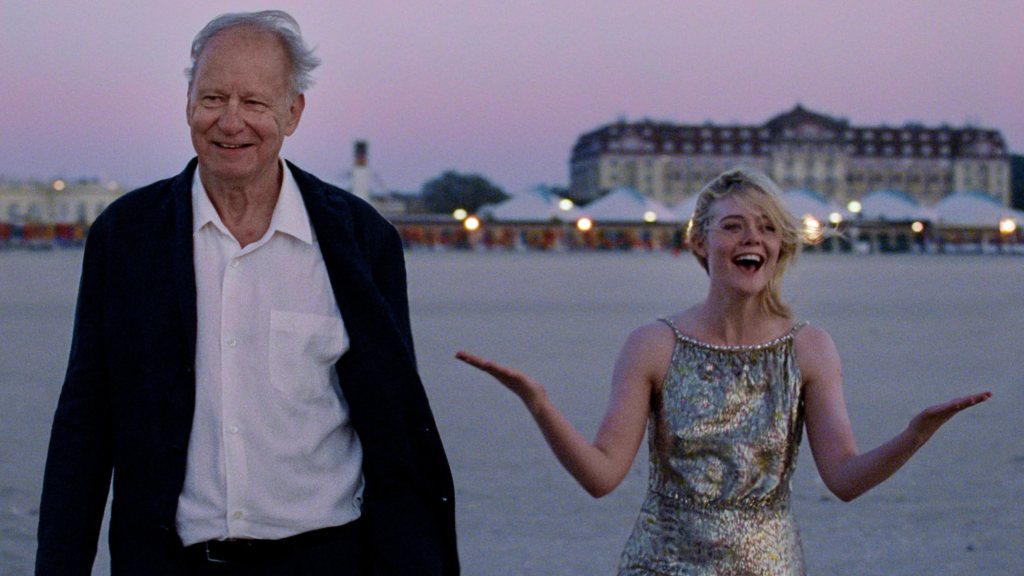
Director: Joachim Trier
Genre: Drama
Country: Norway
Review: It was hard to separate the top three for 2025, but Sentimental Value just about edges it to take home the TumbleweedWrites Film of the Year award. To my mind, The Girl with the Needle, One Battle After Another, and Sentimental Value are all equally well made, but what separates Sentimental Value is the feeling it left me with after I watched it. It explores some themes that resonate with me very deeply, such as familial relationships, intergenerational trauma, and—most significantly—the nature of storytelling. I like stories about artists and how their art reflects their personal lives. I’m fascinated by the idea that the act of creation can be a therapeutic exercise for damaged people.
For Gustav Borg, storytelling is how he relates to others and how he processes his unexpressed feelings. And this proves immensely challenging for his two daughters, Nora and Agnes. The film opens with the death of their mother, which brings the long-since estranged Gustav back to Oslo. Gustav is a well-regarded, albeit fading movie director that’s now struggling to get financial backing for his projects. Though affectionate toward Nora and Agnes, he takes little interest in their lives. Nora has built a successful career as a theatre actress, despite bouts of intense stage fright. Agnes, on the other hand, works as a historian and has a husband and son. Despite his focus on his art, it’s clear that Gustav does love his family and wants—in his own way—to be closer to them and perhaps make up for his absence since his tempestuous split from their mother in their youth. I was going to say that he wants to be part of their lives, but that’s not quite true. It’s more that he wants them to be part of his life. The inciting incident happens when he offers Nora a part in his new movie—which he is basing on his own experience of his mother’s suicide and plans to film in the family home.
Although the relationship between parent and child is obviously a very important theme in Sentimental Value, it’s just as much a film about the bond between siblings. The way Nora and Agnes have had to take care of each other in the absence of their father, and continue to lean on each other well into their adulthood, is very touching. I can’t relate to being a child of divorce, but I do have a younger brother I’m very close with—and who I lean on a lot. So the theme of adult siblings taking care of each other, helping each other navigate the complexities of the adult world and the destructive pitfalls of mental health, was something that deeply resonated with me. Agnes encapsulates this theme so well when she tells Nora that they didn’t, in fact, have the same childhood “because I had you”.
This was the last movie I saw in theaters in 2025. I went to see it on Boxing Day with my parents at the Cribbs Causeway VUE in Bristol and I’m so glad I was able to fit it in before the year’s end. In many ways it’s my favorite type of film—rich with well-written dialogue, nuanced storytelling, and deeply conflicted characters. While I admire beautiful or striking imagery, I like my films to be driven by conversations. My ideal film is one built on a backbone of tense, heavy dialogue scenes, with visual craftsmanship serving as the tissue that stitches them together. Sentimental Value is very much that type of film—and a worthy winner for my 2025 rankings.

 TumbleweedWrites