
Quick reminder—as always, this list is based on UK release dates.
Honorable Mentions
Only the River Flows – Wei Shujun
The Holdovers – Alexander Payne
Small Things Like These – Tim Mielants
Speak No Evil – James Watkins
15. Longlegs
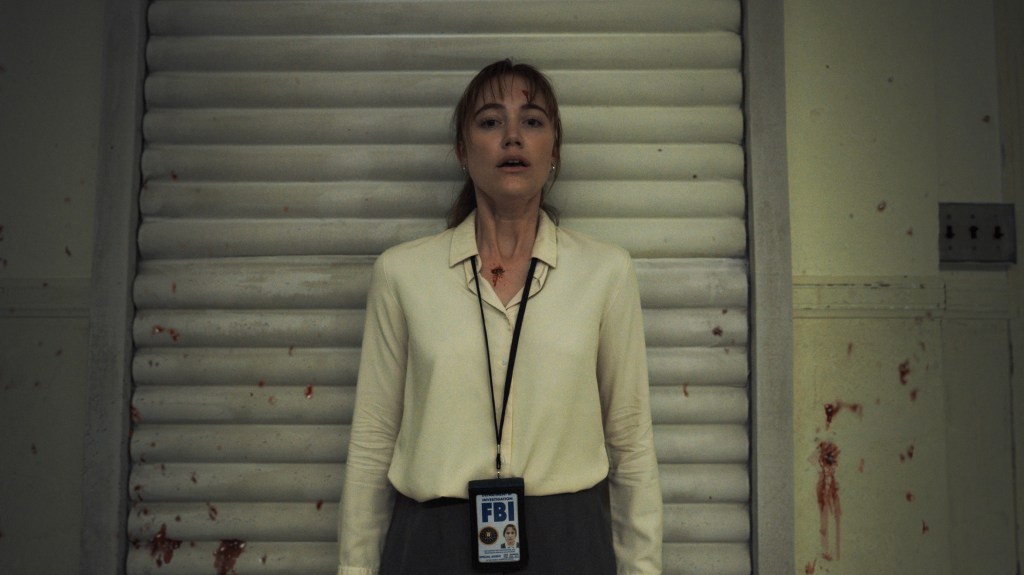
Director: Osgood Perkins
Genre: Horror, thriller
Country: United States
Review: I was really excited for this, because I both love serial killer cat-and-mouse police procedurals and atmospheric films that seek to capture a particular time or place. The marketing for Longlegs was also a massive success, with many people calling it “one of the scariest films of all time”. In fact, as the film was about to start in the cinema, a young lad a couple seats down from me leaned over and asked “Is this film scary, mate?”. I told him I’d seen the trailer and it certainly looked pretty spooky. “Aw, shit!” he whispered, kicking his feet nervously and pulling up the neckline of his sweater to his eyes. Like most of the films I saw in 2024, I went to see this with my roommate Robin, and I was curious what she would make of it, since she’s a big horror fan. In my opinion, it was scary—but not in the sense of being super gory or shocking. It’s not that what you’re looking at on the screen is especially disturbing, it’s more that it’s shot in a way that keeps you constantly on edge. Perkins does a brilliant job of imbuing every scene with this mounting sense of creeping dread. It’s unsettling, because you feel like the danger is always waiting around the corner. I thought the story was alright but the dialogue came across as a little awkward and clunky. I also thought that the film lost its edge a bit once Nicholas Cage comes into it more. No offence to him, but I don’t really like him as an actor. I also thought that his over-the-top portrayal of the titular serial killer undermined all the lovely suspense the film had built up—he just came across as silly and it was hard for me to take him seriously. A truly unnerving villain would be believable, like the serial killers you see in the TV drama Mindhunter. Someone that blends into society, but upon closer inspection acts off in subtle ways. I did like the stuff about the dolls, that was interesting. Even though I much prefer stories that are realistic, I don’t mind supernatural stuff now and then if it’s done right. I still feel that a threat that’s human is way more interesting and scary than one that’s supernatural in nature, but for what it’s worth I did think that the plot with the dolls was executed well. I especially liked the final scene. Overall I’d say this is a pretty solid film. It felt like one of those obscure, standalone X-Files episodes from the middle of the season that gives you nightmares. While I felt more engaged by the likes of Heretic and Speak No Evil, I’d say Longlegs is better from a technical standpoint. It’s beautifully shot, with every frame feeling like a 90s polaroid, and in terms of atmosphere it’s one of the best films of the year.
14. Heretic

Director: Scott Beck & Bryan Woods
Genre: Horror, thriller
Country: United States
Review: While I acknowledge that the ending isn’t very strong, and that the film probably isn’t as clever as it thinks it is, I nonetheless enjoyed the ride that Heretic took me on. I’ve always been a sucker for good dialogue and films that could be plays. And Heretic could easily be a play, with its single-location setting and small cast. I like the premise of a guest that’s in danger. It’s a trope that’s always interested me, and I think the United States is the best setting for a story where a protagonist unknowingly stumbles upon a monster hiding in plain sight. In this film, that monster is none other than Hugh bloody Grant of all people. I’d say that the trailer more or less tells you what’s going to happen—you know going in that these two naïve Mormon girls are going to be trapped by Hugh Grant in his house against their will. It’s not really surprising in any way, and I wouldn’t say the film left me with anything to take away, but it was just simply enjoyable to watch it all play out. The performances are great, as is the script, and I felt engaged the whole way through. I’d say the film peaked for me early on, before it’s all out in the open that they’re prisoners in his house. The second half of the film is fine, but it doesn’t live up to the mystery and tension built up in the first. I loved Hugh Grant in this—why he hasn’t exploited his stammering, awkward charm in the role of a sadistic villain before this, I simply don’t know. It’s clearly the role he was born to play.
13. The Zone of Interest

Director: Jonathan Glazer
Genre: Historical drama
Country: United Kingdom
Review: I went to check this out at my local Curzon after seeing the near-ubiquitous praise it was getting from critics. I thought the premise of a Holocaust film where you never see the genocide taking place in order to highlight the banality of evil was a genius idea. And Glazer executes that idea to perfection. As far as I know, we’ve never had a Holocaust film like this before. We follow real-life Auschwitz commandant Rudolf Höss, who lives with his wife Hedwig and their five children in an idyllic house literally the other side of the wall from the concentration camp. We never see inside the camp, but during the scenes in the garden where the kids play and Hedwig tends to her flowers, we hear muffled screams and gunshots that go completely unacknowledged by the Höss family. It’s like they’re so used to the sounds of industrial-scale murder that it no longer registers. The film explores the most disturbing idea about the Holocaust, which is the unsettling realization that otherwise good people are capable of committing horrendous things—through a combination of denial, paranoia, and conformity. That the right circumstances can result in people carrying out the worst, most inhumane cruelty possible and yet go home to be loving husbands and doting fathers. I found the surreal dream sequences really interesting, and I’d like to see an analysis of them somewhere if I can find it, because at the time I wasn’t sure what they meant, but they stuck with me. The Zone of Interest is a film everyone should see—a Holocaust film that’s no less unsettling for its visual omission of its horrors.
12. Didi

Director: Sean Wang
Genre: Coming-of-age drama
Country: United States
Review: I watched this on Christmas Eve with my parents. It was a film I’d known about for a while but was on the fence about watching. When I see a movie listed as a comedy, I always end up assuming that it’s going to be silly, with whacky characters and unbelievable plotlines. But I’m starting to realize now that the term “comedy” is applied in a much broader sense than I’d assumed. Didi feels more like a drama, but with comedic moments throughout. It covers a summer in the life of a 13-year-old Taiwanese-American boy, Chris, who lives with his mother, sister, and paternal grandmother while his father supports them through remittances sent from Taiwan. In many ways it’s quite a simple film. As the summer unfolds, we see old friendships fade and new ones emerge. Chris’ sense of personal inadequacy and internalized racism put a real strain on his relationships—both at home and in his social life. What makes all this so compelling, however, is the way it plays out against the backdrop of social media in its infancy. This is far and away the best film I’ve seen at capturing those early days of social media. It’s a time that interests me especially, because—like Chris—I came of age in tandem with social media in the mid-2000s. And so much of what happens in the film felt relatable to me. The way Chris interacts with AIM, Facebook, and MySpace felt so typical of the time period, and watching those scenes was like seeing an intimate reflection of some of my most vulnerable moments. I liked the way the film showed how everyone back then would get so consumed with their own insecurities, that they became blind to what others were going through, and how this would lead to all sorts of tension and miscommunication. It also showed how everyone grows at different rates and is driven by different priorities. At the start of the film, Chris and his mates upload silly videos to YouTube and have a very juvenile sense of humor. But when they start becoming interested in girls, they quickly try to distance themselves from it to prove their maturity, leaving Chris feeling alienated, wondering why everyone’s suddenly changed. And when Chris later tries to impress some older kids he’s hoping to befriend, he hurriedly deletes all his immature YouTube videos. All of it just rang true—from the way Chris would check his crush’s interests on her MySpace page in order to flirt with her to the way he would take his family for granted in the pursuit of wanting to seem “cool”. Didi captures mid-2000s male adolescence so well, and like any good coming-of-age movie it’s equal parts heartwarming, funny, and poignant.
11. The Beast

Director: Bertrand Bonello
Genre: Science fiction
Country: France
Review: A little slow in some parts, but undoubtedly one of the most interesting films released in 2024—particularly in terms of its narrative. Beautifully strange, The Beast is an adaption of Henry James’ 1903 novella The Beast in the Jungle in the loosest possible way. The Beast takes the book’s central theme of a protagonist consumed with the idea that an unknowable existential catastrophe is lying in wait for them, and adapts it into a completely new story—channeling James’ idea of “endless loneliness” into a time-sprawling, post-modern science fiction narrative with arthouse horror aesthetics. I’d like to see more adaptations like this, where filmmakers take a single concept from classical literature and use it to tell a completely original story. The possibilities are endless! The Beast is set in a near future where total control of the job market has been given over to AI, and humans are deemed useless due to their emotions. However, in order to find work, people can undergo this process where they “purify” their DNA by revisiting their past lives, which enables them to get rid of their emotions. Don’t ask me how it makes any kind of sense. Our protagonist is Gabrielle, who’s stuck in a dead-end job and wants to purify her DNA in order to get work that’s more fulfilling. When she visits the purification center, she meets a man named Louis, who’s also seeking treatment to improve his job prospects. The two are instantly drawn to each other. As Gabrielle undergoes the purification process, she revisits her past lives and we see how she and Louis have met time and again throughout history, but never consummate their connection. In every timeline, they feel alone and believe that the other is the key to ending that loneliness. We see Gabrielle as a pianist married to a successful doll-maker in 1910 Paris, and Louis appears one day as a man she met in Naples, who tries to initiate an affair with her. Once that storyline is concluded, we move to 2014 Los Angeles, where Gabrielle is working as a model and aspiring actress, with Louis appearing this time as an incel that becomes obsessed with her. These visits to their past cause the Gabrielle and Louis of the present to question whether they want to complete the surgery to fully remove their emotions. Yes, it’s weird, but it’s the good kind of weird, like The Substance and Poor Things, rather than the bad kind of weird, like Kinds of Kindness. I really like Léa Seydoux—and not just because her portrayal of Lady Margot Fenring in Dune: Part Two left me feeling some kind of way. She’s fantastic in this, where she’s essentially playing three different characters. Each has the same existential angst, but they’re different people nonetheless. I’d say I felt a lot more engaged during the more self-contained stories of the past than I did during the overarching story that took place during the present. I found myself wanting her to get back to the treatment center so we could continue the stories set in 1910 and 2014. I really liked The Beast though, and thought it was very well done, but it was a little slow sometimes, which is why it’s not higher on my list.
10. The Substance
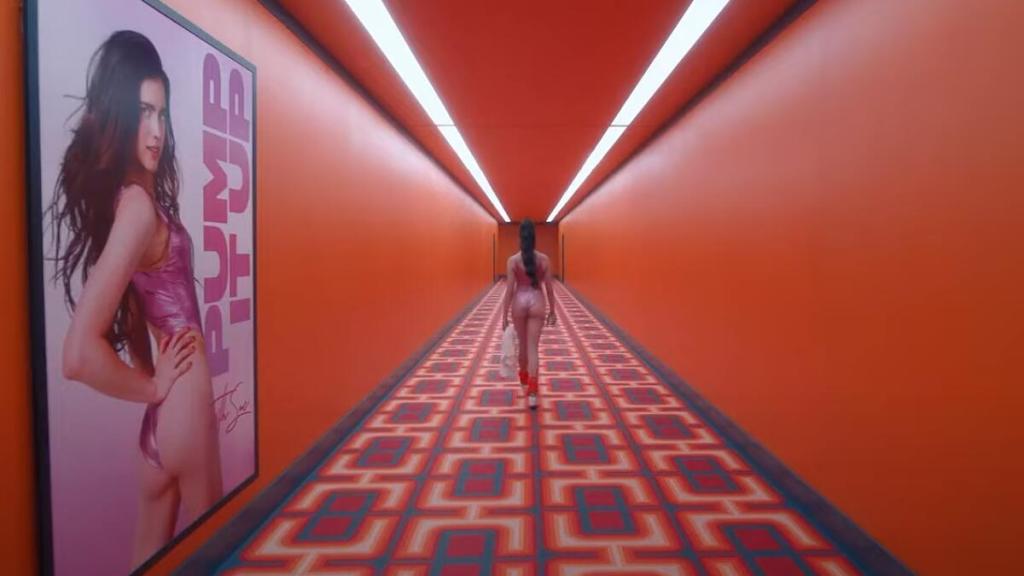
Director: Coralie Fargeat
Genre: Science fiction, satire
Country: United States
Review: When this film came to my attention, my first thought was that it sounded exactly like one of Karl Pilkington’s mad ideas. This notion of there being two selves. About twenty or so years ago, Karl shared several of his ideas about the future with Ricky Gervais and Stephen Merchant on the radio. Some of these were predictions, some were pitches for film ideas, and others were simply hypothetical scenarios. Each and every idea was laughed out of the room, and Karl was ridiculed as “crazy” or “insane”. But now, years later, the likes of The Substance and Black Mirror are bringing stories to the screen very much in the style of Karl’s ideas—and no less crazy. The Substance is sci-fi, but it’s soft sci-fi. The black-market serum from which the film takes its name is never explained, nor is it limited to the realm of the believable. Going into the film, I didn’t think that Demi Moore would separate into two people; I thought she’d take a pill and shapeshift into her 25-year-old self, and that this would last for a week before reverting to her real appearance. My thinking was that, if such a bonkers product was available, then almost everyone would be tempted by it. I know I’d use it for sure. So it was a shock for me when Margaret Qualley crawled out of Demi Moore’s back. Wasn’t expecting that! I think I forgot to keep in mind that they’re the same person while I was watching it. I kept thinking of Demi Moore as “the original” and Margaret Qualley as “the clone”, which made me wonder why anyone would sign up for the product in the first place. I wouldn’t want to watch a clone of me having the time of his life while I had to hide away consuming daytime television and living in my own filth. But then, looking back on the film, I realized: Margaret Qualley isn’t a clone. They’re literally the same person. A clone is a copy of something, built in the likeness of an original. But it’s still a separate entity. In The Substance, we have one person being split into two. So that must mean that the mind was also split into two, meaning that Margaret Qualley still has all the same memories. So when I think about it like that, the motivation makes a little bit more sense. You’ll still feel the difference. But there’s this other you now, that doesn’t feel the difference. Don’t try and make sense of it beyond that. It would be an understatement to say that The Substance is a unique film. I loved the commentary on ageing, beauty, gender roles, and how these tie into societal misogyny. While these themes have been explored before on screen, they’ve never been done quite like this. What makes The Substance great is the way in which it tells its story. I can’t understand anyone saying they didn’t get the film, as the film doesn’t leave any other way for you to interpret it. It’s about as subtle as a pregnant freight train ploughing through a brick shithouse. And I think it’s this lack of subtlety that makes it all the more effective. The Substance is a scathing, razor-sharp feminist satire that—to quote from one of my favorite critics, Megan Cruz—shows that “the beauty that we all admire so much is inseparable from the horrors of trying to reach it”. There’s no world, in any lifetime, where women are free from indignity, where they’re not made prisoners of their own bodies. All there is to hope for is temporary validation. Even Sue (Margaret Qualley’s character), despite her beauty and her success, endures a pitiful existence, where she’s completely dehumanized. While you could undoubtedly make a subtle, tasteful drama film about an ageing Hollywood star fading into obscurity, or an equally subtle, equally tasteful film about a beautiful young star exploited for her looks, and make them quietly powerful, neither would shock you and drive the point home like Coralie Fargeat’s body horror extravaganza does. Just when you think it can’t get weirder, or more gross, the film takes things up a notch. Personally, I found all of the food scenes the hardest to stomach. Blood, I’m fine with. But close-ups of people eating gets a visceral reaction out of me. Shit, the very first frame of the movie made me want to puke. But don’t let me put you off watching it. Like I said, making you uncomfortable is very much the point. It makes us complicit, and encourages us to consider the possibility that maybe the human race is just cursed, that we’re all disgusting pieces of shit unworthy of redemption (Happy New Year by the way).
9. All of Us Strangers

Director: Andrew Haigh
Genre: Paranormal drama
Country: United Kingdom
Review: This one is easily the film that made me the most emotional in 2024. All of Us Strangers is a beautifully written, beautifully acted, and beautifully tragic drama that I think will become a classic of British cinema. In some ways it felt like it could be a Black Mirror episode, though I can’t really say why without spoiling it too much. Infused with this kaleidoscopic visual style that blurs the lines between reality and fantasy, All of Us Strangers follows lonely screenwriter Adam, who has a chance encounter with his enigmatic neighbor, Harry, which forces him to confront a deep-seated childhood trauma. It’s quite an intense film, driven by some stellar performances from its small cast. Andrew Scott deserves all the acclaim he’s gotten—he really is magnificent in this—but I’d be remiss not to mention how great Paul Mescal, Claire Foy, and Jamie Bell are as well. My favorite scenes in the film were the ones with Adam and his parents. Even though I haven’t experienced anything like what the character of Adam goes through, I found myself relating to him a lot and thinking about my own mom and dad. It has to be down to the acting and the writing. I really felt for him and wanted him to be okay, to find some kind of peace. I left the theater feeling in need of a hug myself. If you haven’t seen it yet, you owe it to yourself to watch this tender, quietly devastating instant-classic.
8. La Chimera

Director: Alice Rohrwacher
Genre: Period drama, comedy, magical realism
Country: Italy
Review: It’s only now that I’ve sat down to write this list that it’s occurred to me what a great year 2024 was for anti-capitalist cinema—and I think Rohrwacher’s La Chimera might be the most cutting of the lot. Set in rural Tuscany during the 1980s, Josh O’Connor plays a disheveled British archaeologist who falls in with a motley crew of tombaroli (“tomb raiders”), who loot Etruscan graves and sell the artifacts on the black market. O’Connor’s character, Arthur, possesses a psychic ability to locate these buried ancient tombs using a dowsing twig—but it’s clear that while the rest of the gang are only interested in fencing the loot for profit, Arthur has a deeper connection to what lies underground. A dark cloud hangs over him from the outset, in stark contrast to his happy-go-lucky companions. We quickly learn that prior to the events of the film, Arthur was in love with a local Italian girl, Beniamina, who somehow went missing. We don’t know what happened to her, or in what context Arthur last saw her, and while I desperately wanted answers, the film seems to leave her fate ambiguous for a reason. I couldn’t tell if Arthur genuinely had no idea what happened to her, or if he pretty much knew but was refusing to accept it. Had she run away? Had she been murdered? Was there an accident? That mystery was the most interesting component of the film for me, and you get the sense that Arthur’s excavation of these old Etruscan tombs is connected in some way to his search for Beniamina. Not a literal search, but perhaps a subconscious one, a spiritual one, or simply a metaphorical one. There’s a deliberate parallel to mythical stories of journeys undertaken to the underworld to reunite with a lost love. I really liked the motif of the scarlet thread, and the ending scene was particularly well done. So well done in fact that I felt jealous—I wish that I had written it. Overall I really liked this movie, but it could be a little slow sometimes. The only reason it’s not higher on this list is because I wasn’t super emotionally invested in it, beyond my interest in Arthur’s connection to Beniamina. While in many ways La Chimera feels like a better film than those I’ve rated higher on this list, my rankings often come down to how intense my reaction was to a given movie.
7. The Settlers
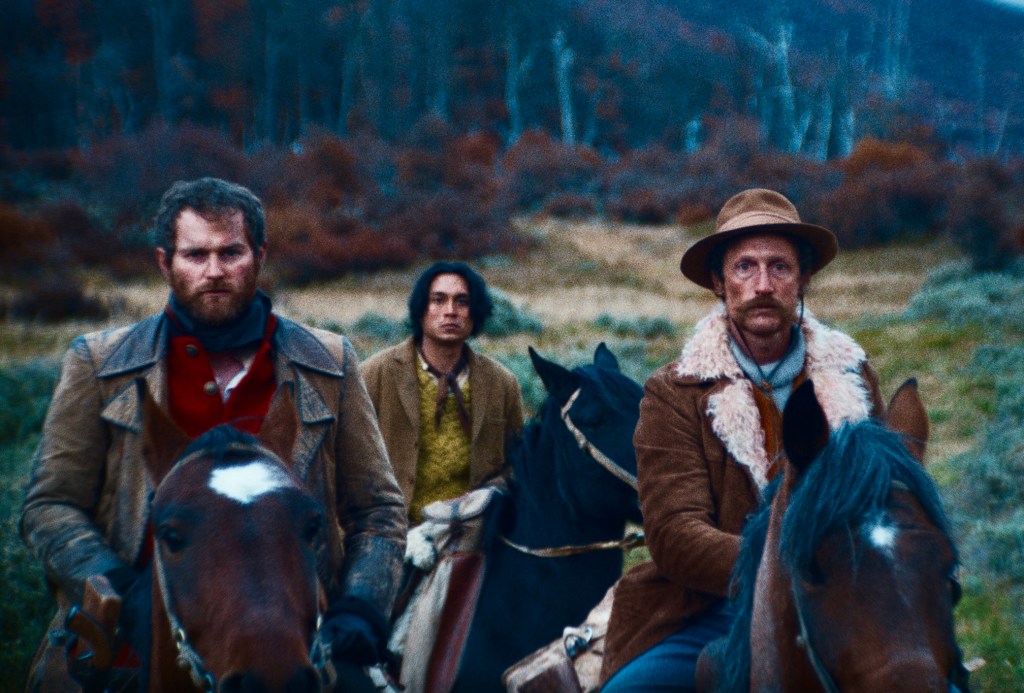
Director: Felipe Gálvez
Genre: Western
Country: Chile
Review: I went to see this one at a tiny theater hidden away in the back of The Institute of Contemporary Arts, an art gallery off Trafalgar Square I hadn’t known existed until some googling told me that it was the only place showing The Settlers that I could reasonably get to. I had a strong feeling that I’d like this film—and I was right! Set in Chile at the close of the 19th century, The Settlers is a brutal anti-capitalist western that depicts the horrors of the Selk’nam genocide, in which Chilean and Argentinian livestock companies displaced the indigenous peoples, who were subsequently hunted down and exterminated by ranchers, soldiers, mercenaries, and gold miners looking to secure the material interests of the Tierra del Fuego. It’s here, at the southernmost point of Chile, where our film takes place. In 1893, a wealthy landowner sends three horsemen out east to mark out the perimeter of the extensive lands that the government has granted him and open a route to the Atlantic Ocean. Although ostensibly an administrative expedition, it’s understood that the horsemen’s real objective is to clear out the native Ona people, who are trying desperately to maintain their traditional way of life. What follows is a dark, harrowing odyssey through the Patagonian wilderness, told from the perspective of Segundo, a Chilean mestizo and one of the three horsemen employed by the landowner for the expedition. He’s joined by Bill, a colorful but deadly American mercenary, and MacLennan, a sadistic war veteran from Scotland. Segundo’s complicity in Bill and MacLennan’s increasingly depraved actions takes center stage and his guilt at being made to take part in the erasure of his people makes for a compelling internal conflict. I loved the anti-capitalist subtext, the beautiful cinematography, and the film’s evocative musical score. It felt very reminiscent, stylistically, of classic Hollywood westerns—but with an added freshness from its relatively unknown subject matter, its unflinching portrait of colonialism, and its intriguing setting. This isn’t a film for the faint of heart. It reminded me a little bit of the 2019 film The Nightingale. Like that film, The Settlers is one that will shock, upset, and disturb you. But that’s good, because you should be shocked, upset, and disturbed by it.
6. Challengers

Director: Luca Guadagnino
Genre: Sports drama
Country: United States
Review: I really enjoyed this sweaty, sexy, adrenaline-fueled sports drama from Luca Guadagnino. Challengers follows a love triangle that develops between three tennis players—Art, Tashi, and Patrick—which takes place over several years. I’m not sure I’d categorize it as a romance, since it never feels like we’re meant to root for any particular pairing. Nor does it feel like the film is interested in who ends up with who. To me it feels like a story about three flawed, damaged characters and the dynamics between them. There are lots of films about relationships, but not all of them are classified as romances. I’m happy to be proven wrong about this, so let me know in the comments what you consider the criterion to be for stories to fit that genre definition. It’s difficult because so many films from so many genres will feature romantic/sexual relationships in some capacity. For me, tone has a lot to do with it. Challengers feels a lot closer to quintessential sports dramas like Hustle, Raging Bull, and The Wrestler, because the tennis is front and center. It’s the story of how tennis shapes their relationship to both one another and to themselves. Art and Patrick are best friends, with the former being more anxious, cautious, and repressed, and the latter being carefree, playful, and confident. Patrick has more raw talent, but Art makes up for it with his greater work ethic and self-discipline. Art hasn’t fully accepted or confronted his queerness, whereas Patrick is open and comfortable with being a queer man. Then you have Tashi, a tennis prodigy driven by an all-consuming, borderline-psychotic obsession with the sport. For Tashi, everything in life is about tennis. Sex is all about tennis. Love is all about tennis. It’s how she relates to other people and how she defines herself. She’s grown up with the knowledge that she has this incredible gift, and the enormous weight of that gift informs everything she does. She can’t waste it. But when Tashi suffers a horrific career-ending injury while at college, her entire universe comes crashing down. All of the characters are fascinating and well-written, Tashi most of all, but I’d say the characters in this film are a lot stronger than the plot. It’s told in this nonlinear structure, which is great, but I remember feeling that the intervening years between Tashi’s accident and the titular challenger match were somewhat underdeveloped. By that, I don’t mean that we should have gotten an expanded plot or anything—I just wish the connective tissue between the past and the present had been handled better. I didn’t understand why Tashi and Art hated Patrick so much and cut him out of their lives. I can see how Tashi might have been angry in the moment, just given the shock of what she’s processing, but it felt out of order for Art to scream at his lifelong friend to fuck off. And then after that, they seem to regard him with complete disdain, like he’d wronged them in some great way. That made no sense to me, and it just left me feeling angry throughout the rest of the film. Art was a complete snake—and I can understand his jealousy, but he would have been so much more interesting if he showed some regret for the way he treated his friend. That would have made him so relatable. I’ve said and done things I regret, especially in my school and college years, and whenever I think of it now, I shudder. It’s painful to think I could have ever treated people badly. I’d have loved Art if he’d shown similar pain. Tashi too, for that matter. There was no reason for either of them to treat Patrick the way they did once they reconnect with him in the present. So with that said, I wish that the film had either made Patrick do something really bad in the early timeline to justify such a response, or that Art and Tashi had been given a more nuanced, empathetic character development. As it was, I was rooting for Patrick so hard in that challenger match, I tell you that. But even with this minor criticism of mine aside, Challengers remains one of my favorite films of the year. The tennis sequences are absolutely electrifying. The pulsating techno soundtrack in conjunction with the frenetic camerawork made for possibly the best sporting action I’ve ever seen on film. I could watch those final, ferocious rallies a thousand times. After we excited the theater, all Robin and I wanted to do was play tennis. Tennis tennis tennis. It might be the best sport out there for raw metaphoric potential. Which brings me to my last point—this is horny cinema at its absolute best. Between Poor Things, Love Lies Bleeding, All of Us Strangers, and Challengers, 2024 was an incredible year for films that embrace eroticism as a method of storytelling and reject calls for our media to be sanitized. I like to think these films represent a collective middle finger to the plague of anti-sex, anti-art puritans that pollute online film discourse—a phenomenon I’ve always found unsettlingly dystopian, that seems part of a wider trend of anti-intellectualism in the past ten years that’s connected to the rise of Trump, populism, excessive nostalgia, and social-media-driven, black-and-white echo chamber thinking. Challengers offers a nuanced treatment of sex that enhances character development, that isn’t there simply to titillate, that’s never there for its own sake. Patrick dragging the stool that Art’s sitting on closer to him was probably the most erotic moment from cinema in 2024.
5. Perfect Days

Director: Wim Wenders
Genre: Drama
Country: Japan
Review: It’s hard to describe the plot of this film without making it sound quite boring. Perfect Days follows a week in the life of an old man, Hirayama, who works in Tokyo as a public toilet cleaner, covering the upscale Shibuya district. He lives by himself in a small home in a modest neighborhood somewhere else in the city, and abides by a strict sense of routine. Each day blurs into the next. But it’s not a routine based on self-discipline or anything like that; you get the sense that Hirayama finds comfort in these small repetitions. He doesn’t have any family or friends, but he takes great pleasure in simple activities like reading, music, and photography. Even just getting the same drink from the vending machine outside his home every morning feels like something that brings him happiness. He also takes great pride in his work, even though his effort goes completely unacknowledged and unrewarded. Even though the film is slow and relatively uneventful, I didn’t find it boring. It was interesting to see the little interactions that add small variety to his days, like playing anonymous tic-tac-toe with a stranger across a period of several days, or the scene where he plays shadow-tag with a man given a terminal cancer diagnosis that he’s just met. I think the reason I was so engaged was that I simply liked Hirayama and enjoyed watching an intimate look at his life. The film peaks when his niece turns up on his doorstep having run away from home, and we get some hints into the life he left behind. This was a film where I felt deeply connected to the protagonist. While All of Us Strangers was the film that made me the most sad while watching it in 2024, Perfect Days was the film that left me with the strongest emotional takeaway after watching it. I kept thinking about what my own life might look like when I’m old, and I thought about myself being completely alone like Hirayama. It seemed like a real possibility. When I walked home that day, I felt like I was on the verge of tears—the film’s ending scene did something to me that I just couldn’t shake. And it’s an absolutely masterful scene—Koji Yakusho…wow. I’ve never seen a final scene performance like that. Magnificent stuff. I’d also like to shout out the short dream sequences that connect each day—I thought those were really well done. Wim Wenders is an incredible filmmaker.
4. Evil Does Not Exist

Director: Ryusuke Hamaguchi
Genre: Drama
Country: Japan
Review: What makes this film different to the others on this list—and in fact, to most other films out there—is that its characters feel in many ways like they hold secondary importance to everything else that’s going on. They don’t really have arcs of their own, so much as they stand in where necessary to help the overarching story get where it needs to go. Coming out of the film, you’re not thinking about them. You’re thinking about what the film as a whole is trying to say. And now that I think about it, I’d kinda gotten this impression before watching it in the cinema. Drive My Car, Hamaguchi’s last film, was very much a character-driven story. And it’s resolutely one of my favorite films of all time. So I was excited when I first learned that he had a new film coming out, but my excitement was tempered a little bit when I read the premise. The emphasis was very much on the film’s themes rather than its characters—Evil Does Not Exist was described as an “eco-parable” about the impact of a glamping real estate development project on a small, rural village outside of Tokyo. It sounded like the premise of a documentary rather than a film. But I trusted in Hamaguchi and I’m so glad that I did! Evil Does Not Exist has a slow start—perhaps intentionally slow, I think, so as to ground the film in the quiet, unhurried pace of life in the countryside—but things pick up once the company arrives and pitches their idea to the local community. After that, I was hooked, and I didn’t want the film to end. While the film may not be super character-driven, the characters are nonetheless well-written and entertaining to watch. In fact, all the characters in this were played by non-professional actors, which really lent the film this naturalistic effect that I think suited the setting and story quite well. The dialogue was excellent, and the eerie, enigmatic score by Eiko Ishibashi (who did the music for Drive My Car) encapsulates so well the sharply anti-capitalist narrative of modern civilization slowly encroaching on nature. I can understand why this film is referred to as a “fable”. The final 30 minutes or so is pure allegory. This might sound pretentious, but it feels like a visual poem. Don’t come at me because that’s genuinely the best way I can think to describe it. No words are necessary; everything is driven by Eiko Ishibashi’s score. And what’s the music driving us to exactly? I’m still not entirely sure. Evil Does Not Exist has one of the most cryptic, metaphorical, and puzzling final acts of any film I can remember. I couldn’t stop thinking about it. It’s beautifully crafted and thoroughly mysterious. If I were judging the films on this list by their endings alone, Evil Does Not Exist would be number one by a country mile.
3. Poor Things

Director: Yorgos Lanthimos
Genre: Science fiction, dark comedy
Country: United States
Review: Of all the years I’ve been doing these posts, this is the first time I’ve found myself in a situation where I can’t really separate the top three. I like them pretty much equally, and all of them are worthy of the number one spot. But I’m not gonna pussy out and crown them joint winners, so I’m giving Poor Things the bronze medal mostly down to my emotional attachment to the other two. Poor Things was the first film I saw in 2024 and what an incredible ride it was! A darkly comic, postmodern reimagining of Frankenstein, Poor Things tells the story of Bella Baxter, a woman that’s created in a lab by an eccentric scientist using the corpse of a pregnant suicide victim and her still-living unborn fetus. What follows is a surreal voyage of self-discovery and sexual awakening through Victorian Europe. We see the world through Bella’s eyes, who’s both an adult and a child, and yet neither at the same time. This is evident in the way the world looks—the entire movie was filmed on sets, rather than real locations, and all of the sets are imbued with this dreamlike surrealism that reflects Bella’s unique perspective. We see her run away with a mustached Mark Ruffalo, go ballroom dancing, eat Portuguese custard tarts, work as a prostitute, and learn about socialism from her lesbian lover. We see her transformed from this naïve, optimistic blank slate to someone that has to very quickly digest the cruel side of human nature—but who, crucially, never loses her sheer zest for life. Despite everything, she still believes in love and she still believes in kindness. She’s left smarter, rather than jaded. As much as she learns from those trying to help her and those trying to exploit her, so too does everyone around her learn about themselves and the world they live in due to the way her unique perspective cuts through social mores and established ways of thinking. The film looks breathtaking, and it’s absolutely hilarious to boot. The scene at the beginning where she playfully yanks the dead man’s flaccid penis up and down like it’s an elastic stretch-toy had me, Robin, and just about the whole damn theater laughing. And every scene with Mark Ruffalo was solid gold. My favorite moment in the whole movie was the one where Bella rambunctiously takes to the dance floor, and he hurriedly tries to get her to dance respectably—to no avail, of course. It’s so funny. I’ll never tire of that scene. This was a wonderfully weird, gothic sci-fi romp with an excellent lead performance. Emily Stone, the woman you are!
2. Dune: Part Two

Director: Denis Villeneuve
Genre: Science fiction
Country: United States
Review: I’m not sure what more I can say about this one. Water is wet, circles are round, cats go “meow”, and I love Dune. Some things are true by definition. Dune: Part Two could easily take home the gold because it’s the film closest to my heart and it’s almost certainly the one on this list I could watch again and again and again and never get bored. However, I’m putting it in at number two on account of the fact that there were a couple things it could have done better. None of these nitpicks took away from it being a masterpiece, but they were at least things I thought about when leaving the movie theater. In many ways it comes down to the fact that I thought the first movie was as perfect an adaptation of the first half of the novel as could be made, and the sequel was never going to live up to that because the second half of the book is a lot more complicated. Difficult decisions had to be made in terms of characters and timelines, and no option that Villeneuve had was ideal. What we ended up with was a staggering cinematic achievement that married big-budget spectacle and high-concept storytelling. It’s been almost a year since I saw it in IMAX and ever since I’ve felt myself in a kind of post-coital depression. A new generation of Dune fans has well and truly been established. The camp, cringe-inducing fever dream of the 1984 movie and the low-budget albeit well-intentioned early-2000s miniseries could never take the franchise beyond a niche following. Now, though, we finally have an on-screen Dune that we can take seriously. That’s the difference, I think. It’s finally been presented to mass audiences in a way that’s refined, in a way that actually reflects the tone of the books. If you’re interested in a detailed breakdown of Dune: Part 2, you can check out my full review here.
1. Monster
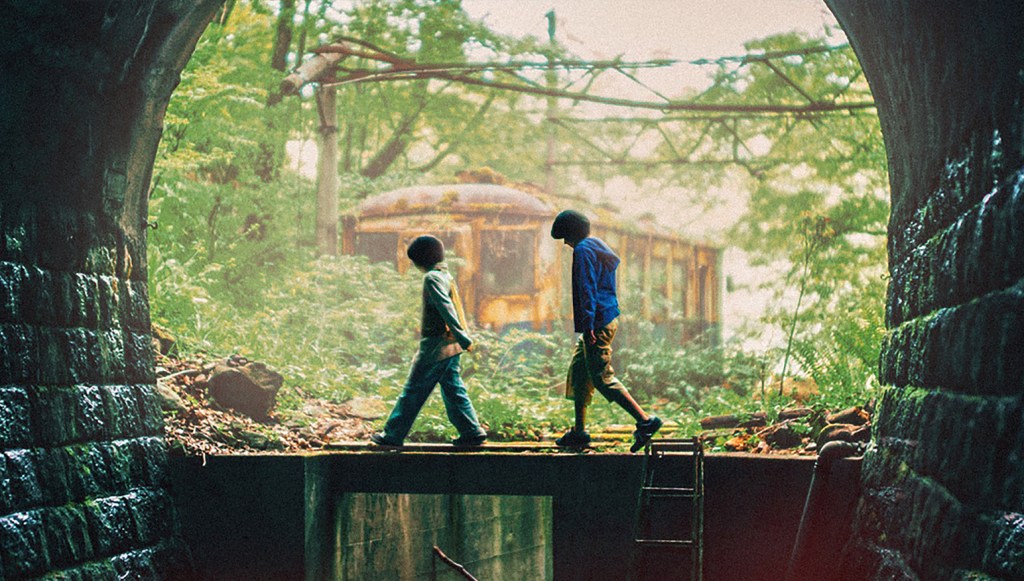
Director: Hirokazu Kore-eda
Genre: Drama
Country: Japan
Review: Alas, the much-coveted TumbleweedWrites Film of the Year Award goes to Hirokazu Kore-eda’s latest masterpiece, Monster. This guy only does bangers, and he does it year after year. As I’ve said before on this blog, Kore-eda is not only my all-time favorite director, but one of my favorite storytellers full stop. Even though I enjoyed Broker more, Monster is undoubtedly the more interesting and thought-provoking piece of cinema. In short, it’s about a young boy who exhibits disturbing behavior at school, which leads to his concerned mother confronting one of the schoolteachers, whom she believes is abusing him. But what makes Monster really interesting is it’s Rashomon-esque narrative structure, with the film divided into three parts that cover the same events from alternate perspectives. It’s long been one of my favorite storytelling devices. I liked it in the Simpsons episode “Trilogy of Error”, I liked it in The Last of Us Part 2, and I bloody well like it now. I don’t really know what I can say about what makes it special without spoiling it, so I’ll just leave you with a simple recommendation. This is a masterfully written story that touches on many themes—from growing up to parenting and masculinity to Japanese culture. It’s another classic from a guy that only makes classics, and you can expect the same subtle approach to storytelling and the same nuanced exploration of the human condition that has won Kore-eda so much praise.

 TumbleweedWrites
One Reply to “My Top 15 Movies of the Year – 2024”