
It’s been just over three weeks since I saw Dune: Part Two at the BFI IMAX on opening day and it still lives rent-free in my head. Hans Zimmer’s haunting, grandiose synths have become the soundscape of my life, echoing in the background as I proofread marketing copy at my desk or portion food from my slow cooker into Tupperware boxes. I’ve always loved Frank Herbert’s universe, but Denis Villeneuve’s particular interpretation of that universe has kicked things into overdrive for me. If Dune were a fine powder I’d snort that shit until my head exploded. That said, I’ve always been a big believer in being critical of the things you love. Even my favorite pieces of art have aspects about them I wish had been done differently—and I’ve never found that engaging in criticism has soured my enjoyment.
In today’s post, I’m going to cover what I liked about Dune: Part Two, what I didn’t like, how things compare to the book, and what my takeaway is from parts one and two as a whole (since they’re one story). Obviously, there will be spoilers from Dune: Part One, Dune: Part Two, and Dune (the novel). But I won’t go beyond that and say anything about the sequel books. I’m planning a separate post where I’ll go into my thoughts and predictions for the next film, and the challenges involved with adapting Dune Messiah. So if you’ve only seen the two Villeneuve films you’re safe here! And if you haven’t seen them, then honestly—what are you doing with your life?
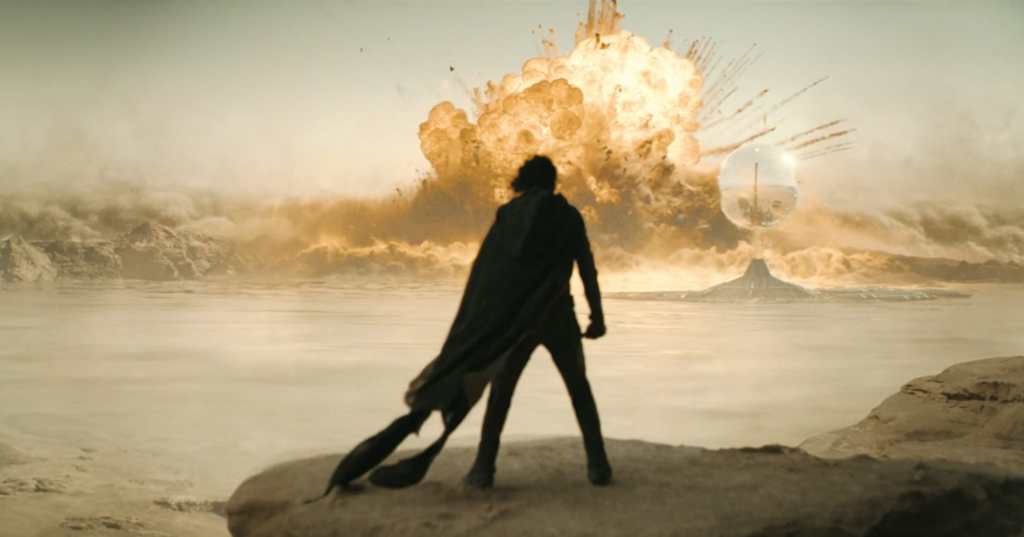
So let’s go through everything, point by point.
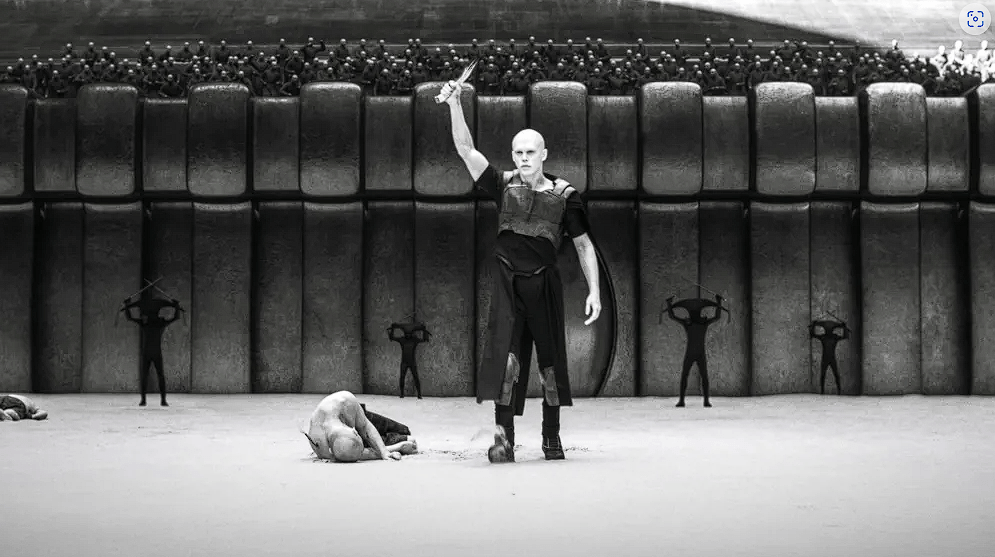
- We have some really important characters introduced in Part Two and I think the casting was excellent. In the first movie, I loved Villeneuve’s decision to make the Harkonnens scary. In the book they’re obviously disturbing, but in Villeneuve’s adaptation they feel genuinely frightening. Austin Butler continued this interpretation of the Harkonnens with his fantastic performance as Feyd-Rautha. I think it made sense to exclude him from the first film, but I’d be interested to know what people who haven’t read the book thought of a new villain being introduced in Part Two. I love the way Butler captured the voice of Stellan Skarsgard—everything about his mannerisms, the way he spoke, his expressions, just added to this sense of menace. His performance is probably my favorite of the whole film actually; you can’t take your eyes off him.
- Florence Pugh as Princess Irulan was also perfect. It’s quite a restrained, understated performance—especially in contrast to the aforementioned Feyd-Rautha—but she embodies Irulan’s quiet intelligence and cunning quite well. They went for a more nuanced portrayal of Irulan than we see in the book. In the novel, Irulan narrates the epigraphs at the beginning of each chapter, but you don’t really see her until the end. She gets a lot more interesting in the next two books, but in Dune she doesn’t do much—her role in the plot is pretty much just a way for Paul to marry into the imperial family. She has Bene Gesserit training but she’s not considered an especially adept or important Bene Gesserit. If anything, she’s described as haughty and lazy. In the film however, they describe her as Mohiam’s “best student” (her best student is actually Jessica—by far). I liked this change though, and seeing her portrayed as an active player in all the scheming and strategizing made her way more interesting. Pugh’s Irulan served as a nice contrast to the Baron, the Emperor, Feyd-Rautha, and Mohiam, who are all quite sinister and grim characters. They’re all single-minded, whereas Irulan seems conflicted, like she’s carefully considering everything that’s going on. Put simply, she’s a lot more human and relatable than the other antagonists in the film, and that made for a more interesting, believable story.

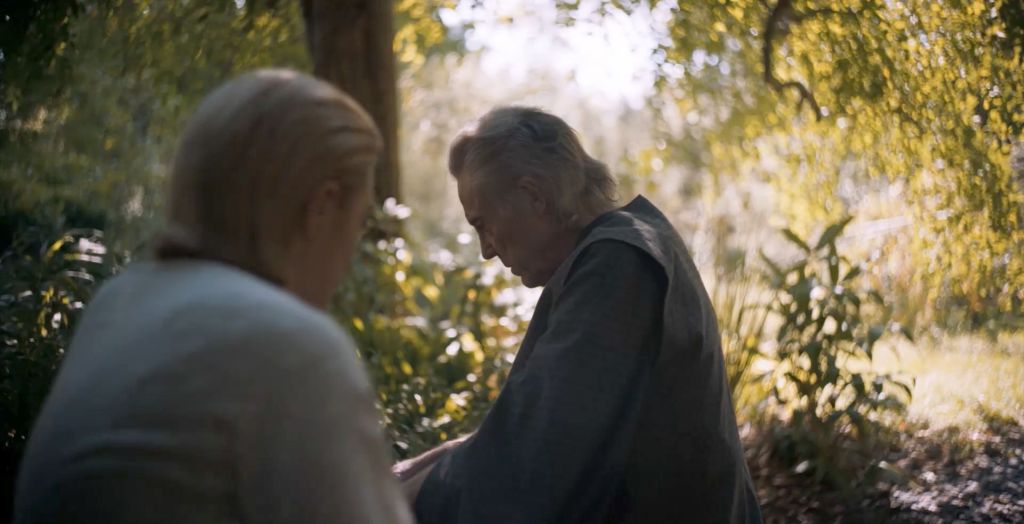
- As for Christopher Walken as Emperor Shaddam IV, I liked his casting and performance too. I know some people didn’t like him as the Emperor, chiefly on the basis that they can’t see him as anything other than his real-life self. Perhaps the reason this casting didn’t bother me was that I’m not too familiar with Walken (I’ve seen him in one or two films but he’s not overly familiar to me). I know he’s considered something of a walking meme by a lot of people, but I didn’t see anything that took me out of the film. I thought he captured the aura of the Emperor quite well; he commanded this powerful sense of presence, but was also clearly driven by paranoia, pride, and jealousy. I thought he was able to convey all of that in quite a measured, understated way. Would he have been my first choice to play the Emperor? Probably not. I would have said Christopher Plummer, but he passed away a few years ago. My ideal casting for Emperor Shaddam IV would be Denzel Washington, but obviously if you had him, you wouldn’t be able to have Florence Pugh as his daughter. But in an alternate universe where Pugh was unavailable, I think Washington would have done a great job. The Emperor isn’t in the story for very long, but I really believe in having him portrayed by an older, well-known actor with a strong stage presence—the more Shakespearean, the better. And what I want isn’t accurate to the book, by the way. In the novel, the Emperor is very old, but he has the appearance of a man in his thirties due to his consumption of spice. It’s a great bit of world-building, illustrating the decadence of the Corrino regime and the wider Imperium, as well as the many ways the mélange is used. So physically speaking, a Christopher Walken or a Denzel Washington aren’t accurate casting choices, but they’re the kind of changes that I personally like, as I’d rather an actor that embodies Shaddam IV than one that looks like him.
- Moving on from casting, I was a little disappointed that we didn’t see more of Kaitain and the Imperial Palace. This is the absolute tiniest of nit-picks—it’s not an important location at all, but I just feel that even one or two establishing shots would have helped convey the decadence of House Corrino and the Imperium. It would have served as a nice contrast to the harsh landscape of Arrakis, and gone some way to showing how the wealth of its natural resources are spent lavishly on faraway Kaitain. My ideal introduction to Kaitain and House Corrino would have been a scene with Shaddam IV holding court. We’d have him speaking with members of the Landsraad and assuring them that the flow of spice is under control—perhaps he would even be questioned on the fate of House Atreides by fellow houses concerned at Harkonnen aggression (House Atreides were very popular with the other houses). We’d see Shaddam IV maintaining a pained smile and this would give us a sense of the balance of power in the Imperium (the Landsraad collectively form a counterweight to House Corrino’s Sardukar). We’d see Irulan watching on with concern, maybe exchanging a look with her father. This would then segue into a scene of the two of them walking down a corridor or something, and this would essentially be the same conversation we see them have in the film’s chess scene, only with that extra context. I think the balance of power between the Imperium’s various factions is really important for understanding why things happen the way they do in the story—why the Emperor, nominally the most powerful person in the universe, has to disguise his liquidation of House Atreides for example.
- I thought the portrayal of Giedi Prime was really cool—which is why I wish just the tiniest characterization had been given to Kaitain in the film. Giedi Prime, with just a small effort, was leant a really distinctive character. I loved the way they portrayed the planet’s black sun as rendering the outdoors in black-and-white, with the indoor scenes being in color. That was a nice touch.
- In the book, Liet-Kynes is Chani’s father—and his death is something she and Paul bond over, with he having just lost his own father in Duke Leto. It obviously gives Chani even more reason to resent the Harkonnens and the Imperium as well. In the first film, the character of Liet-Kynes is portrayed as a woman, which is absolutely fine. Gender isn’t important to the character of Liet-Kynes at all. So why couldn’t we make Liet-Kynes Chani’s mother? It wouldn’t change anything from the books, and it would help the audience sympathize with Chani, as well as making the accelerated romance of the film version more believable. My guess is simply that they were already trying to trim the film to a reasonable length for a theatrical release, and little things like this were probably seen as surplus to requirements. Admittedly, the actress that played Liet-Kynes in Part One doesn’t look too much like Zendaya, but I personally wish that they had established her character as Chani’s mother in Part Two.
- In a similar vein to the above point, I wish they could have found a way to include Harah, the widow of Jamis, even if it were in a reduced role. In the books, Harah is Jamis’ wife. When Paul arrives at Sietch Tabr for the first time and she learns that he killed Jamis, Harah expects Paul to take her as his wife. Paul is flustered by this. Fremen custom dictates that he either marry her or take her as a servant. Paul chooses the latter, which wounds her pride, but she grows to respect him and she becomes a stalwart ally. Jessica later chooses Harah to become nurse to Alia, due to her strong maternal instincts. Since Alia isn’t born in the film, I’m guessing this is why they cut her out. So I do understand the omission. I just really liked what they did with Jamis in the first film, so I would have loved to see Paul come face to face with Jamis’ widow and children. It would have added a nice layer of world-building and made the introduction of Sietch Tabr more interesting.
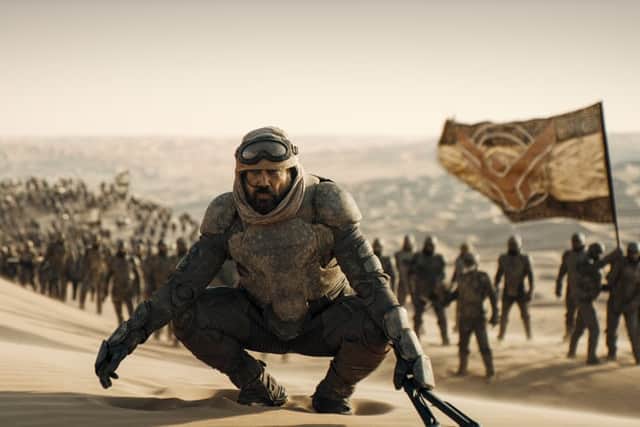
- In the film, Denis Villeneuve chose to divide the Fremen into northerners and southerners, with the idea being that the northerners live closer to Arrakeen and therefore have more of an understanding of the Imperium, and the southerners live in harsher, more remote regions of the desert which naturally give rise to religious fundamentalism. I didn’t mind this, as it shows that—just like real life—not everyone in a particular culture or society thinks the same way. Divisions make the Fremen seem more real and believable. We don’t want the Fremen to be the donkey and Paul the tail. The reason Villeneuve made this change, in my opinion, was probably to ensure that the Fremen didn’t come across too passive. In the books, we don’t see divisions among the Fremen until the sequels Dune Messiah and Children of Dune. It’s well known that Frank Herbert was disappointed that people read Dune and viewed Paul as a savior, and so he wrote the sequels in part to drive home the thesis statement of the whole series—which is a warning against charismatic leaders. I think Villeneuve brought forward some of this nuance from the sequels to assure modern audiences that this really is an anti-imperialist narrative. The fact that Paul has to overcome these divisions among the Fremen also makes the film more interesting. It reminded me a lot of Genghis Khan. Think about it; the Mongol steppe is a harsh, punishing environment, just like Arrakis. Its many tribes are divided. And then Temujin is able, somehow, to unify these warring clans under one banner and the Mongols burst forth from the steppe to conquer the known world. The Fremen being similarly disunited makes Paul’s challenge all the greater, and the plot is more compelling for this change.
- Let’s talk about the biggest change from the book: the omission of the time jump. In the novel, there’s a time jump of about 3 years after Paul and Jessica join the Fremen. Paul and Chani have a baby named Leto, and Jessica has given birth to Alia, who is now a toddler. This works well in the book because it makes Paul’s assimilation into the Fremen society more gradual, more believable. The same holds true for his romance with Chani. I think part of the reason we didn’t have this time jump in the film is because Villeneuve wanted to cut Alia from the story. I have to admit, I was worried about the whole Alia situation. Even though she doesn’t bother me too much in the book, I was kinda hoping she would be cut from the film. Again, this comes back to the point that my ideal adaptation of a book isn’t necessarily one that’s faithful. Due to Lady Jessica chugging the Water of Life (the bile of a drowned sandworm), Alia is born with the powers of a Reverand Mother and access to ancestral memories. What this means, superficially, is that we have a four-year-old child with the maturity and intellect of an adult. That’s difficult to film. It was done faithfully in the David Lynch version but it just came across as creepy and silly. I think an accurate Alia is something most audiences wouldn’t take seriously, and I wonder if Villeneuve thought they’d feel disengaged from the film. I think using AI on an infant actor would only make things weirder, so I’m not surprised they didn’t do that. I think making Alia, say, 8 or 10 years old might have worked, but then you’ve got quite a big time jump to handle. That probably would have been okay and not affected things too much, but I can see why Villeneuve decided against a time jump altogether. I’m ok with the omission of the time jump, but I’ll admit it’s less than ideal. It contributed to the events of Part Two feeling a little rushed. In the novel, Paul spends years in the desert before striking back to avenge his father. I feel like his showdown with the Baron and the Emperor therefore has more of an impact in the book. They thought they’d gotten away with it, that Paul was dead, and then their sins come back to haunt them. It also makes Paul’s struggle seem like more of an ordeal, given that his revenge was years in the making. In the film, things happen really fast. No sooner have Paul and Jessica escaped than they’ve rallied the Fremen and struck back decisively against the conspirators. So, unfortunately, the showdown did feel less impactful for me—but I understand why things were done the way they were.
- Alia isn’t absent from the film entirely, however. We see her speaking to Jessica as a fetus in the womb, which I thought was a good compromise—it wasn’t too difficult to understand, nor was it so weird that it was alienating. It felt in-keeping with the spirit of the book. We also see an adult Alia in one of Paul’s visions, played by Anya Taylor-Joy—which I think is perfect casting.
- I would have liked just a little more insight into the Harkonnen oppression of the Fremen and how their governorship of Arrakis contrasts sharply with that of the Atreides. I understand that the reason we don’t get these insights is related to the above point about the timeline being condensed. But it did sort of feel like from the very beginning of the film until the end, the Fremen just wreck the Harkonnens. The opening scene is beautiful from a filmmaking point of view, but maybe we could have had the Fremen experience some casualties? Maybe we could have had scenes later in the film where Rabban tortures some Fremen into revealing the coordinates of the sietches, segueing better into the scenes where the Harkonnens attack the Fremen where they live? I think just few more scenes showing the Fremen suffering would have added some much-needed context; scenes showing them grieving the loss of their loved ones, being displaced from their homes, being frightened.

- There are also Fremen in Arrakeen just trying to get by. Some shots of them in the city reacting to Harkonnen occupation would have been nice. In the books, Glossu Rabban is beheaded by the Fremen population of Arrakeen during a riot. I love that. I always like it—especially in fantasy, sci-fi, or historical narratives—when we have scenes involving ordinary people and the collective power of the masses. It shows that, just like real life, those in power aren’t actually all-powerful—and it’s Rabban’s reckless brutality that results in his demise. Again, I understand that the film has to be a reasonable length and can’t include everything. That said, I wish we had some scenes where word of Muad’dib reaches Arrakeen, and we see it being discussed by the Fremen living there. I’d have liked to have seen Rabban punishing people discussing this new prophet, leading to the later riot scene being full of religious fervor. It would have been a neat way to show how far Lady Jessica’s propaganda has spread, all the way across the desert from Sietch Tabr to Arrakeen. I didn’t mind Rabban facing off against Halleck, although I felt like the scene was way too rushed. Don’t get me wrong, I didn’t want some crazy duel or something—just an extra 20 seconds or so, perhaps with Rabban getting the upper hand in the beginning. That would have been fine—but as I said, I would have much preferred seeing him beheaded by the rioting masses in Arrakeen.
- I loved the architecture in this film (as well as Part One). That’s part of the reason I wanted more scenes of Kaitain. All of the interior scenes fascinated me; the rooms, the layouts, the roofs, the lighting, the furniture. The aesthetic felt futuristic and otherworldly, yet understated and minimalistic.
- Léa Seydoux absolutely slayed as Lady Margot Fenring. I really enjoyed her scenes on Giedi Prime because they served as a good illustration of how the Bene Gesserit operate. It’s part of the reason, I think, that the Imperium is a feudal society with the few wielding power over the many; it’s easier this way for the Bene Gesserit to control bloodlines and ensure that those in their breeding program inherit positions of power. Everything the Bene Gesserit do is to advance their breeding program and produce a Kwisatz Haderach—or better yet, a Kwisadtz Haderach that they can control. Paul is just one product of that breeding program, and he scares them because they can’t control him. Feyd-Rautha comes from a bloodline with equal potential, with just as much time and effort put into it than the Atreides one. His abilities are never in question, but they lament his “psychotic” nature as a result of his Harkonnen cultural upbringing. Nevertheless, through Lady Margot, they realize that they can control him and preserve his genetics for a future Kwisatz Haderach. That’s why she goes to inspect him, gives him the gom jabbar test (the same way Paul was tested when he came of age at the beginning of Part One), and then fucks him for his precious semen. That whole chapter in Giedi Prime is a more or less standard operation for the Bene Gesserit.
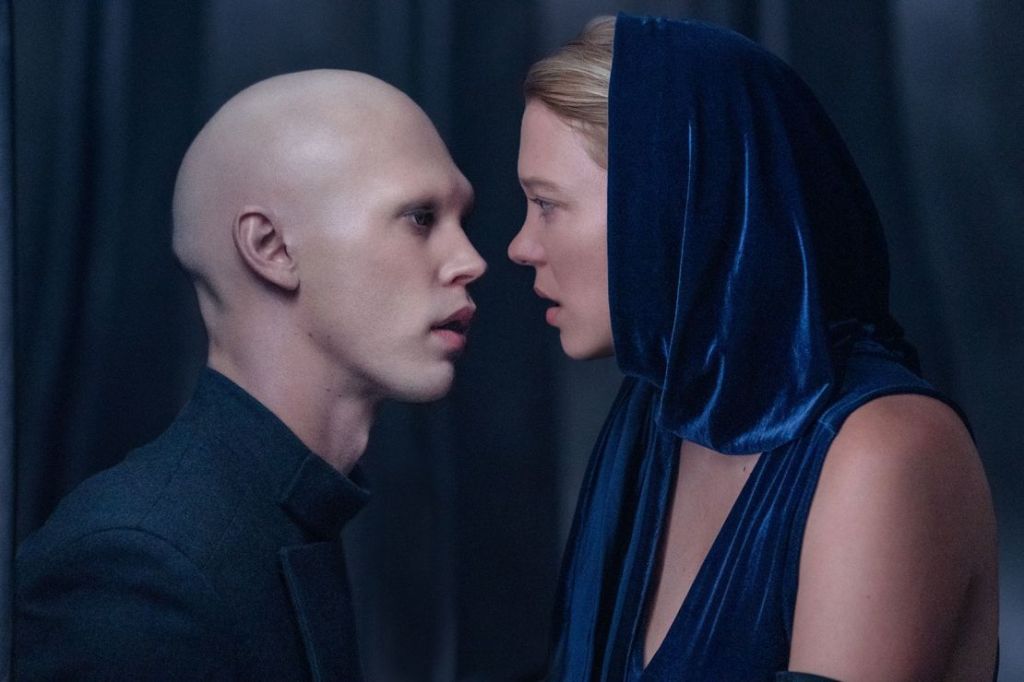
- As I said in the last point, the Kwisatz Haderach breeding program isn’t magic—think of it like a millennia-spanning scientific endeavor of trial and error; one that’s tested and refined, that’s not even fully understood or controlled by the ones conducting it. In the book we see a character that’s a product of the breeding program and who was once estimated to be a potential Kwisatz Haderach. And while his abilities proved exceptional, he ultimately fell short. I’m talking, of course, of Count Hasimir Fenring—the husband of Lady Margot. I can see why they cut him out, because he doesn’t really do anything in the book. He’s there but he doesn’t affect events. I wish there was a way he could have been included, even in a limited capacity, simply because his presence adds a nice layer of world-building. But I totally understand his omission. Villeneuve doesn’t want to dump exposition on viewers. The novel is there for those that want to go deeper. If Count Fenring had been included, I’m guessing he would have just been hanging around in the background. There’s the scene at the very end of the book where the Emperor instructs the Count to kill Paul and the Count refuses, on the basis that it would have been a waste of Paul’s genetics and the Kwisatz Haderach project that he himself proved a failure of. To someone that hadn’t read the book, they’d probably find such a cameo underwhelming. It’s a shame, because he’s an iconic character in the book, but with a film you have to consider people that are unfamiliar with the source material. I’m guessing Count Fenring is the character that Tim Blake Nelson filmed scenes for. I feel bad that his scenes got cut, and I’d have loved to have seen them.
- In a similar vein, I understand why they cut Thufir Hawat. I think the omission of Hawat is more of a shame than Count Fenring, especially as we already had Hawat in Part One. He’s also a much more active character than Count Fenring, getting captured by the Harkonnens and trying to play the Baron and Feyd-Rautha against one another. I get that the whole plot involving Hawat in the second half of the novel was probably too much for the film, but I would have liked one or two brief scenes acknowledging him in some way. I think we could have kept the trimmed version of events in Part Two but worked in a scene on Giedi Prime with Feyd-Rautha torturing Thufir Hawat. Maybe they could have made him one of the prisoners in the arena?
- I liked the decision to make Lady Jessica more sinister. I think they did it to further emphasize that she and Paul aren’t saviors, but it works well enough. Ultimately, Lady Jessica is still driven by her love for her son. She’s still that same person, but unlike Paul she struggles less with the morality of what they’re doing. Even though she’s a maverick Bene Gesserit, she still believes in their breeding program and the need for a Kwisatz Haderach to guide humanity. Jessica Ferguson, once again, was absolutely incredible in this role. And I like dark storylines, so this change is one I was quite happy with!

- At first, I wasn’t sure about Stilgar’s comic relief. Dune has a very serious tone, so you sort of have to be careful with the humor. That said, it could do with a few laughs. Ultimately, I didn’t mind it, because we got some fantastic memes out of his scenes. When I was reading Dune as a teenager, it would have blown my mind to think that one day the franchise would permeate the popular culture the way it has. I think it’s good for the film and it’s important for dark films to have little moments of comic relief like this.
- On the subject of tone, part of me wishes this had been a little more explicit. I know that makes me sound like a psycho, but my ideal version of this film would be a lot less sanitized. I understand why there’s no blood though; they want this to be a major blockbuster and appeal to a wide audience. So this isn’t really a criticism of the film on my part, so much as a little comment about my own selfish desires for its potential.
- I’ve spoken a little about the missed opportunities for world-building in this post, but I should mention the aspects I really enjoyed. Getting to see Jessica’s spice agony, the Fremen guerilla tactics, the creation of the Water of Life (drowning the infant sandworm), and Paul riding the sandworm were all incredible on the big screen.
- My favorite scene in the film is the one where Paul gives his speech to the southern Fremen. The tension in that sietch was palpable. You could feel him walking a tight line. These people have been waiting for the Lisan al-Gaib for millennia. They live a difficult, harsh life, and the belief in a prophet that will begin terraforming Arrakis into a green paradise is central to their lives. It’s the most important thing to them. And that’s why Paul has to go all-in here in manipulating them and exploiting the Bene Gesserit propaganda—if he’s anything less than absolutely convincing, then he’s gonna get knifed. It’s a rousing speech but laced with tragedy; we know that he doesn’t want to exploit them, but he feels as though it’s the least-worse option available to him. He does genuinely care about the Fremen, and he’s aware as he’s giving this speech that what he’s doing is morally wrong, but he does it anyway. Make no mistake—Paul isn’t a hero, but he’s not a villain either. From the moment he was born (as one of the many products of the Bene Gesserit breeding program), his options are limited by these larger forces that have been ongoing for thousands of years. That’s what makes this story so great. You can sympathize with the position he’s in, while still being horrified by his actions. This also reflects my absolute favorite thing about Dune: Part Two, and that’s Paul’s character arc. We see him at the beginning of the film vowing to stick to his principles, only to later abandon the idealism of his father in acceptance of realpolitik. It’s a coming-of-age story in the purest sense. His father lived by a strict sense of honor and it got him killed. Paul realizes that in order to succeed, he has to abandon his personal code of ethics.

- So what about Chani? As I said earlier, I liked the decision to show divisions among the Fremen. And so I liked the decision to make Chani a sceptic in contrast to Stilgar. In the book, she’s supports Paul’s decisions and doesn’t oppose his exploitation of the Lisan al-Gaib prophecy. At the end, when Paul marries Princess Irulan, she understands that it’s just a political marriage to secure his legitimacy as emperor. That’s not to say it doesn’t distress her. She understands the marriage but it does make her uncomfortable, and Lady Jessica comforts her in the very last paragraph of the book. I liked Chani’s skepticism in the film though. I think the addition of tension to her relationship with Paul makes it more nuanced and interesting. She hates the prophecy that surrounds him, but she loves him for his personal qualities—chiefly his courage and his sincerity. By the end of the film, she (rightly) sees that he’s no longer the man she fell in love with. As I said in the previous paragraph, Paul has to compromise his personal morality for the greater good. He has to exploit the Fremen’s religious fundamentalism. And so he’s no longer sincere. Chani sees that, and that’s why she leaves at the end. Paul’s pretty chill about it because he can see the future and knows she’ll come around. But yeah, I have no issue whatsoever with how they portrayed Chani in the film. The push-pull dynamic between them adds a layer of tension to the film and increases the stakes; it’s important for there to be personal stakes to Paul’s actions as well as the larger, existential stakes.
- One change I didn’t like—or perhaps simply didn’t understand—was that moment at the end of the film where the other houses refuse to recognize Paul’s ascendency as emperor. They could have done a better job of illustrating the delicate balance of power in the Imperium. You’ve got the Emperor, the Bene Gesserit, the Landsraad, CHOAM, and perhaps most importantly—the Spacing Guild. All of them check each other’s power. The spice is central to the Imperium’s way of life. Without it, interstellar travel cannot be achieved. By the end of the film, Paul has complete control of spice production—if the other houses try to land their armies on Arrakis, he can just nuke the spice fields and plunge the entire galaxy into a dark age. They can’t bombard Arrakis from above, because the spice is way too precious. They’ve got no card to play (at this point, at least). This is why, in the book, the Spacing Guild step in and state simply that “the spice must flow”. Everyone has to begrudgingly accept Paul as emperor, however much they may not like it. So I really don’t get why the other houses refuse to recognize Paul and we see the Fremen boarding ships to go fight them.

- As far as pure spectacle goes, this film had some great action set pieces. The Fremen raid on the Harkonnen spice harvester, the Harkonnen arena scene, Rabban’s botched assault on the Fremen, the Battle of Arrakeen, and Paul’s duel with Feyd-Rautha were all breathtaking. I thought the Battle of Arrakeen could have been just 60 seconds longer to give it a greater impact. I felt like the moment the Fremen attacked the Sardukar didn’t show us much more than what we got in the trailer. I guess it’s a pet peeve of mine when certain things are hinted at in trailers and not kept back for the finished product. As for Paul’s duel with Feyd-Rautha, I felt like they made it more evenly matched for the sake of tension. In the book, Feyd-Rautha has to rely on tricks to keep up with Paul. Having him almost win was a little cheap, I thought, but overall I enjoyed it.
I think that’s everything I wanted to say regarding book changes, specific plot points, and stylistic decisions. Overall, I really enjoyed the film and thought it succeeded in what was a very difficult task. What makes Dune “unfilmable”, as it’s been called down the years, is largely to do with the second half of the book—which is what this film covers. You need to have the film make sense without just dumping exposition on the audience. Dune really is a story that works best in the medium of fiction, but it has those cinematic moments which make adapting it to screen so irresistible. I think Alia, the many subplots, the motivations of the various factions, the presence of ancestral memories, and the nature of the Missionaria Protectiva are among the most difficult elements to adapt. I thought Denis Villeneuve handled these creative challenges well, and crafted something that stayed true to the books while also being a coherent, entertaining movie that newcomers could understand.
Let me know in the comments what you did or didn’t like about the film! I have more Dune-related content in the works, so stay tuned.

 TumbleweedWrites
One Reply to “Dissecting Dune: Part Two”