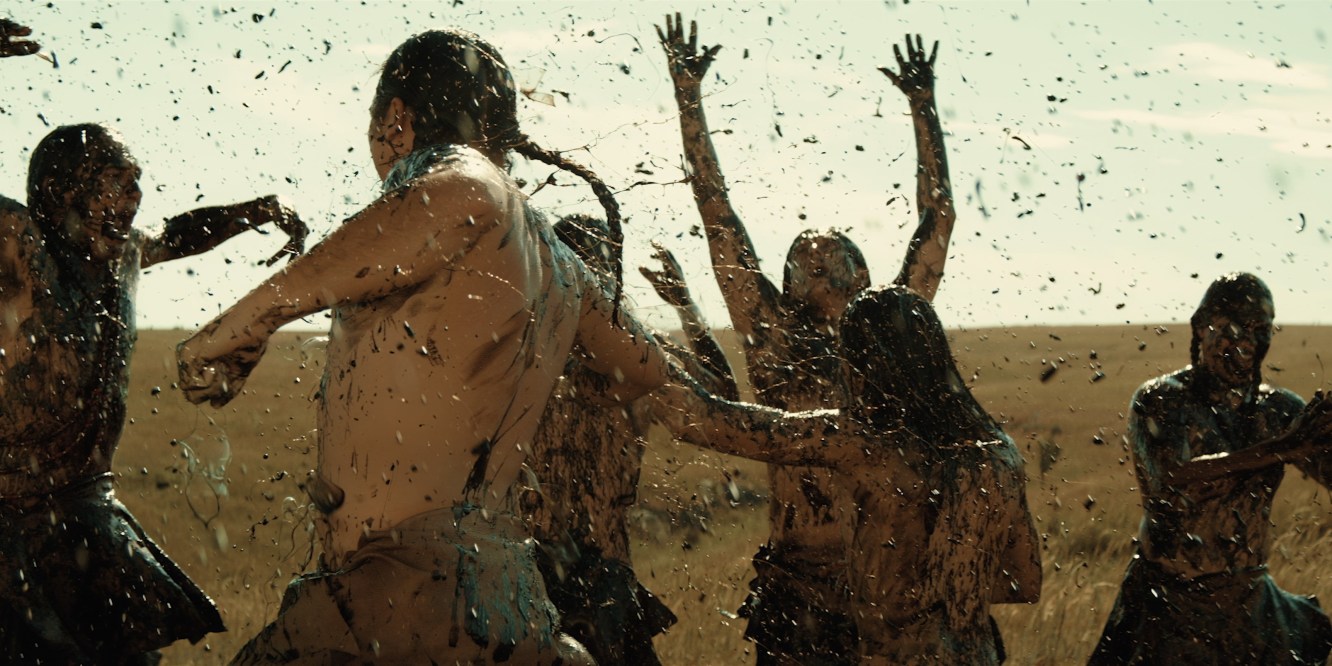
2023 had a solid lineup of films overall, with plenty of great films but only a couple that I’d describe as “masterpieces”. Before we get into the list, I’d like to give a special shout-out to Ridley Scott’s Napoleon as the recipient of the TumbleweedWrites’ Lifetime Achievement Award for Complete Godawfulness, and this blog’s first ever dishonorable mention!
Honorable Mention
The Killer

Director: David Fincher
Genre: Thriller
Country: United States
Review: Fincher is always worth watching, and The Killer is no exception. In short, it’s about a hit man whose most recent contract goes tits-up, and the fallout of this unprecedented failure. The first 15 minutes or so are quite slow, and there’s no dialogue outside of Michael Fassbender’s monologue—but when the action kicks off with the inciting incident it doesn’t let up for the rest of the film. I have a feeling the slow start is intentional, and that it’s trying to make a point about the isolation and boredom inherent to the titular Killer’s line of work—but nonetheless it might lose some viewers. Michael Fassbender does a great job in his portrayal of this hit man that lives by a strict routine, who ends up breaking a lot of the rules he sets for himself throughout the course of the movie. There’s not a lot in terms of substance or characterization, but this thriller is super entertaining and well worth a watch.
10. Love Life

Director: Koji Fukada
Genre: Drama
Country: Japan
Review: This is one of those movies that I was really excited for and yet, while still good, it didn’t quite live up to the hype. I watched it at the BFI Southbank, which is always a nice treat, because it’s a cinema that operates like a theatre—no entry is permitted after the film begins, there are no snacks, and you get given a printed-out program of the film as you enter. The trailer for Love Life put me in mind of the work of my all-time favorite director, Hirokazu Kore-eda, which often explores the nuances of family life in contemporary Japan. Love Life is about a happily married woman, Taeko, whose life changes in the wake of a devastating tragedy and the subsequent reappearance of her former husband, who is deaf, homeless, and unwell. While this film isn’t on the level of Kore-eda’s work—in fact, it’s quite different, though there are echoes of it in the naturalistic way the opening birthday scenes are shot—it’s a very interesting and well-made picture in its own right. It kept me engaged from start to finish, but it wasn’t a film that I thought much about after seeing it.
9. May December

Director: Todd Haynes
Genre: Drama
Country: United States
Review: I can’t understand the way this film has been classified by some as a comedy. It might have a couple of funny moments, but humor can exist in any genre. For it to be a comedy, it would have to have a comedic structure. The plot would set its characters up for humorous situations. We’d see the comedy in the camerawork, in the performances, in the overall tone of the movie. That’s the same for black comedies and parodies as it is for slapstick comedies and rom-coms.
May December doesn’t feel like it sets out to be a comedy—but in some aspects, particularly its memorable ending, it does feel like a satire of sensationalist entertainment and our appetite for scandal. But I wouldn’t say that theme runs through the whole of the film. At its core, May December feels like a character-driven melodrama, with three protagonists that are all equally fascinating. Natalie Portman plays Elizabeth Berry, a sharklike method actor visiting Gracie Atherton-Yoo, the woman she is due to play in a film. Gracie, played by Julianne Moore, was the subject of a scandal 20 years ago in which she (then 36) seduced a 12-year-old boy, Joe Yoo, and had his children while in prison. Despite her prison sentence, Gracie and Joe remained a couple and got married after her release. The film begins when Joe is about the same age as Gracie was when they got together. She’s now in her late fifties and their kids are getting ready for college. They insist on being a perfectly normal family, and welcome Elizabeth into their home (presumably so that they can influence the film to show them in a positive light). But despite Gracie’s desperate attempts to maintain an image of normalcy, we soon learn that their family is anything but normal.
What I liked best about this film was that it had many interesting angles. You’ve got the impact of the scandal on the Joe and Gracie’s marriage, their kids, their extended family, and the wider community. We see how the course of all these people’s lives have changed due to what happened. Then there’s Elizabeth and her ruthless determination to inhabit Gracie’s headspace by any means necessary. We see the effect of her celebrity on the family and the local community as she goes searching for information and inspiration. All of the characters feel nuanced and compelling, with some strong performances to bring them to life. You can’t take your eyes off Natalie Portman as Elizabeth, but it’s Charles Melton’s portrayal of Joe, a man who never got the chance to grow up, that steals the show.
8. Oppenheimer

Director: Christopher Nolan
Genre: Biopic
Country: United States
Review: Generally speaking, I’m not really into biopics, but something about this one drew me in. The biopics I don’t like are the ones where a really well-known public figure—invariably a politician or a singer—is caricatured by an equally well-known A-list actor, where the tagline on the poster is always “[actor’s name] is [movie title]”, and you can tell they’re already preparing their acceptance speech at the Academy Awards. Maybe I was swayed by the fact that Oppenheimer isn’t a household name. This isn’t Winston Churchill, Freddie Mercury, or one of those people whose face and mannerisms are widely familiar—and therefore easily impersonated as a cheap shortcut to an Oscar. And a story about a bunch of physicists, rather than a story about artists or politicians, feels a lot less sexy as a film subject. The history also intrigued me, and given the good reviews and Barbenheimer marketing sensation, I ultimately decided I ought to give it a chance.
I’m glad I did! I’d say for the first twenty minutes or so, I struggled to feel engaged. The beginning felt like a long montage and I was worried this would indeed be another biopic trying to showcase the inevitability of someone’s greatness. But once we got through all the set-up, and felt grounded in the present with the Manhattan Project, I was enjoying myself. I loved all the politics that surrounded it, and how you really get the perspective of the people living in that moment, who obviously don’t have the benefit of hindsight and are taking no chances when it came to national security. The film did a great job of showing how all these moving parts affected the Manhattan Project and, ultimately, contributed to things turning out the way they did. Cillian Murphy was absolutely fantastic in the lead role—there was so much emotional range in his performance, and his Oppenheimer is up there with Lily Gladstone’s Mollie and Sandra Hüller’s, uh, Sandra as my favorite 3 performances of 2023. You couldn’t take your eyes off him! I like how they didn’t show the bombings of Hiroshima and Nagasaki. You expect to see them, but ultimately this isn’t a story about the bombings and the poor people that lost their lives in them. This is Oppenheimer’s story, and by not showing the bombings, you get a real sense of how surreal it must have been to know that somewhere, on the other side of the world, hundreds of thousands of people had lost their lives because of something you created. For so long, the project was simply ideas, calculations scrawled in chalk on a blackboard that may or may not mean anything, and then suddenly it’s real. It’s real and it works, and it’s no longer in your hands. It must have been terrifying. So I think it was more effective to omit them and give us Oppenheimer’s perspective. The scene where the crowd were cheering him and he was imagining the screams of those in Hiroshima and Nagasaki was really well done.
7. Barbie
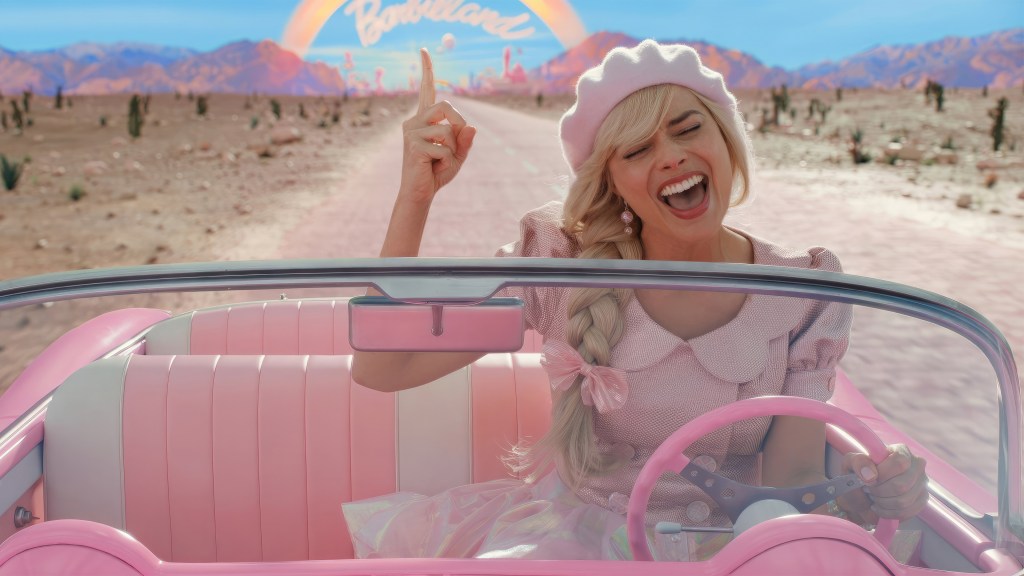
Director: Greta Gerwig
Genre: Surrealist fantasy/comedy
Country: United States
Review: I wish I’d seen this in cinema, but I only got around to it fairly recently. It would have been fun to go with friends, see everyone dressed in hot pink, and experience laughing at the jokes along with the rest of the audience. The marketing for this film will be studied for years, I think. Somehow, the film became a cultural event. And the relationship this film had with Oppenheimer due to the tonal contrast between the two films is absolutely fascinating. It really speaks to the power of marketing. I think it’s great that so many people went to see these two films that otherwise wouldn’t have.
As much as I love Margot Robbie, I wasn’t sure if the film was for me. I never played with Barbie dolls as a kid and I don’t know anything about the franchise, other than that there was a song (I’m guessing it must have been a jingle for a TV commercial?) and boys back at school would humorously change the lyrics to it as they sang it. How would a film about a range of toys work? Was it going to be like Toy Story where they come to life? As it happens that’s sort of the case, in a roundabout way. I really liked the relationship between Barbieland and the real world; how the former is essentially a physical manifestation of the imaginative games that kids play with their dolls. The Barbies are aware that their existence is split between two entities, that they began as dolls in the human world, and being played with by children results in them having a second, autonomous body in Barbieland. The symbiotic relationship between the Barbies and the children in the real world was really interesting to me; the Barbies never see the children but they know they’re inextricably tied to them.
And the world of Barbieland reflects the innocence of children. It’s camp and colorful and wholesome all the time, because perfection is possible in the realm of imagination. They assume that the real world must mirror their own, because their experience is limited by the games of children who haven’t themselves discovered the harsh, nuanced realities of life yet. I liked the way the story served as an inverse of the creation myth. The Ken doll was created specifically as a companion for Barbie, mirroring the way Eve was created from one of Adam’s ribs as a companion for him in the Garden of Eden. And just as Eve introduces sin to the Garden of Eden, so too does Ken introduce it to Barbieland when he imports the patriarchy. I thought that was really clever.
Margot Robbie and Ryan Gosling are both wonderful in this film, the songs are brilliant, and the writing is whip-smart. The concept of a movie about a popular kids’ toy could so easily have been utterly vapid, but because Greta Gerwig was given the creative control to make the film she wanted to make, we get something that’s original, auteur-driven, and full of substance. This is definitely one of those movies that could only happen the way it did because of the specific people at the helm (as opposed to the sexless, committee-designed popcorn-flicks that Marvel and Disney churn out).
6. War Pony
Director: Riley Keough & Gina Gammell
Genre: Drama/coming-of-age
Country: United States
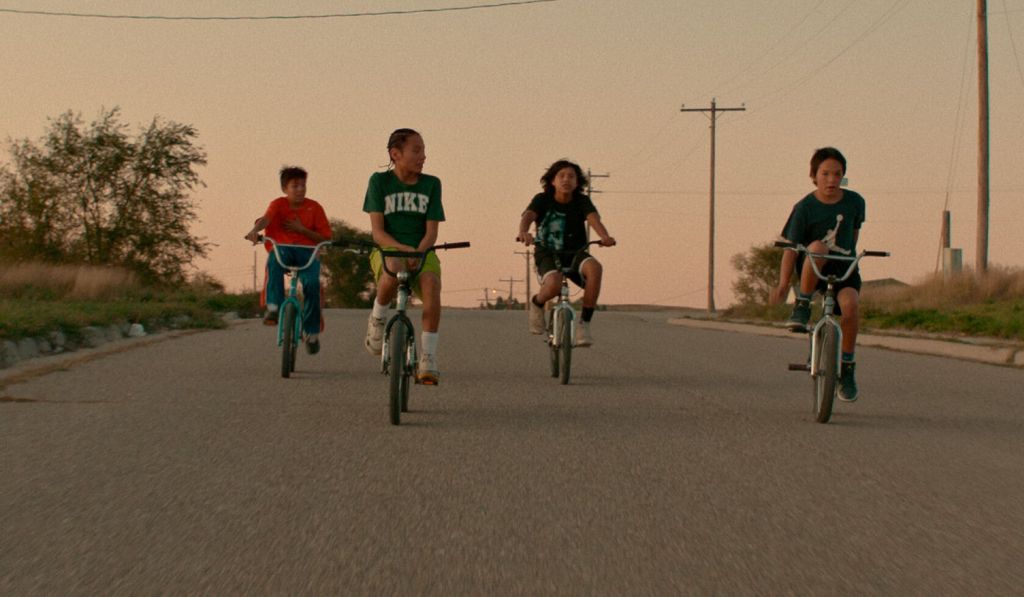
Review: I love a good coming-of-age drama. War Pony follows the lives of two Lakota boys living on the Pine Ridge Indian Reservation, situated in the Badlands of South Dakota. What’s interesting is that the film has two parallel narratives that don’t overlap until the very end. Matho is about 13 or so, and his story is about him falling further and further behind his peers due to the circumstances of his difficult home life with his abusive father. The other boy, Bill, is about 19, and his story is revolves around his moneymaking scheme to breed a poodle and sell the puppies for profit. The two are obviously at different stages of their lives, which gives us a broader overview of the challenges facing young men in communities such as Pine Ridge. I think having these two stories illustrates the various ways the economic hardships of life on the reservation impacts the trajectory of young men’s lives. While the plotlines themselves are separate, they have common themes that together tell a wider story—one in which people’s lives are dictated by socioeconomic forces beyond their control. The two boys have a lack of options available to them, which means they have to be creative and entrepreneurial in order to get by. For Bill, that means trying to forge useful connections outside the reservation and for Matho that means turning to a life of crime. What you get is a sense that the odds are so heavily stacked against them that their fates are predetermined—that the events of their youth will decide the rest of their lives. I’ve seen this before in films like this and I think it’s very effective to frame stories about economic inequality through the lens of young people. Young people have dreams. And coming of age in communities like the Pine Ridge Reservation is typically the story of those dreams being lost.
In conclusion, War Pony is a poignant, devastating insight into the modern Native American experience, on top of being just a really engaging movie. There are a couple of films on this list that don’t quite get their endings right, but this is a film that absolutely nails it.
5. Eileen
Director: William Oldroyd
Genre: Psychological thriller
Country: United States
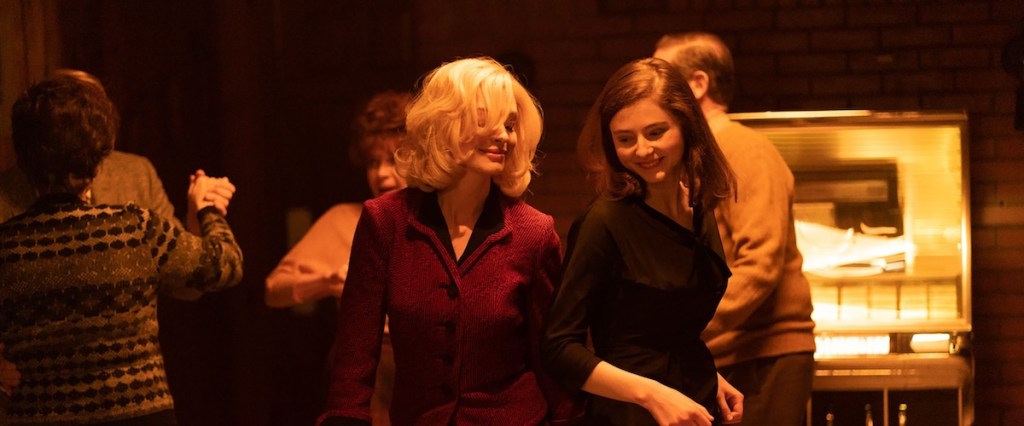
Review: I’ve long been curious about Ottessa Moshfegh’s books but never curious enough to actually buy them. From what I hear, she specializes in “fucked-up shit”, which isn’t something I’m opposed to, but the truth is there are just so many other books on my TBR that are a much bigger priority for me. Set in Massachusetts in 1964, Eileen follows a young secretary who works in a prison and lives a pretty bleak, unexciting life. At first you really do feel for her. Her only family is her drunk, emotionally abusive father. Aside from enduring his insults, Eileen has to take care of him, ensuring that he doesn’t hurt himself or others. She’ll come back from her shift and find him either passed out or screaming at the neighbors and brandishing a gun. At work, Eileen is ostracized by the older secretaries, and outside work she doesn’t have any friends either. Alone and unloved, Eileen spends what free time she has consumed with her sexual fantasies, driving out to lovers’ lanes and watching couples have sex (in the UK we call this dogging). Her father belittles her for not having any friends or love life of her own, and makes a comment to the effect that there are people who are the star of the movie, and there are people like Eileen, who just exist in the background. Again, you can’t help but sympathize with her—just like when she goes dogging, she’s always observing, never involved. It’s like other people are living life and she’s just watching them do it, rather than living her own. But then one day, a new counselor arrives at the prison that changes Eileen’s life forever. Played by Anne Hathaway, she’s powerful, magnetic, mysterious, sophisticated, unconventional, and seems to live life on her terms—damn what anyone thinks. She’s the exact antithesis of Eileen. And so she herself is the inciting incident—she represents an alternative way of life for Eileen that proves irresistible.
What follows is a dark, unsentimental tale full of twists and thrills, underpinned by intelligent writing, a moody, unsettling score, excellent characterization, and some nice camerawork to boot. As I left the theater, I heard some people making confused noises, so perhaps it could have been clearer what we were meant to take away from the ending. I thought the ending worked well enough, but I can understand audiences feeling like it sets them up for a “bite” that doesn’t really come. Perhaps the book makes the ending feel more significant than it does in the film. Overall I really enjoyed this—I was engaged the whole way through, sympathized deeply with the protagonist, and I felt like I never knew what was going to happen next.
4. Saltburn

Director: Emerald Fennell
Genre: Satire/psychological thriller
Country: United Kingdom
Review: This is another film on this list that I hesitated on watching—but my goodness, I’m glad I did! Even though it had great reviews, I was put off by all the Tory accents in the trailer. I knew the film would probably be a satire of the upper classes, but I was nonetheless unenthused. I don’t like stories about posh people in manor houses. So I almost missed out on this gem, until my roommate Robin mentioned going to the cinema together before we each went home for the holidays. I told her I was umm-ing and ahh-ing over this Saltburn thing, and she pointed out that there was every chance the film might show Tories having horrible things done to them. And wouldn’t that be lovely?
I’d dillydallied over Saltburn for so long that I’d almost missed it’s theatrical run. Robin and I went to see a 9pm showing at our local Odeon and, to my surprise, there was still quite a big turnout considering the film had been out for a while at this point. Having a sizeable crowd there made the film so much more enjoyable though. It really felt like a communal experience, all of us laughing at the funny bits and all of us groaning, gasping, and exclaiming at the shocking ones. But what’s the movie about?
I want to avoid spoilers as much as possible here, because I think the film is best experienced going in fresh. I want everyone to watch this film and I want everyone to have the experience I had when watching it. So I’ll just give you a brief premise: the film is about Oliver, a poor student who goes to Oxford on a scholarship in the early 2000s, and his infatuation with handsome, charismatic, and exceedingly wealthy Felix—a fellow student he has a chance encounter with one day. Oliver, bless his heart, is head over heels for Felix, and Felix feels a genuine sympathy for Oliver’s difficult home life and social isolation at Oxford. Moreover, Felix is drawn to Oliver for the opposite reason that Oliver is drawn to him; unlike everyone else in Felix’s life, Oliver feels “real”.
Throughout the film, we’re introduced to a slew of eccentric characters, all of them well-written, well-acted, and full of their own memorable scenes. I thought Richard E. Grant was absolutely hilarious! Rosamund Pike was a slay as per usual. Carey Mulligan only makes a brief appearance, but she’s good too. The same with Ewan Mitchell—all of his scenes were very funny. Archie Madekwe is great as the slimy Farleigh and Alison Oliver brings so much range to her intense performance as Venetia. And then we have our two leads, of course. Jacob Elordi is really convincing as this princely, magnetic, Byronesque hunk that everyone is drawn to—and he’s able to pull it off without it coming across as a caricature, which could easily have happened given the darkly humorous tone of this film. We take him seriously, and I just feel like if the script weren’t as good, and if Elordi wasn’t as good, then we probably wouldn’t. Barry Keoghan absolutely kills it as the meek, obsessive Oliver, despite the Scouse accent not really sounding too authentic.
I had no idea where this film was going and I was on the edge of my seat the whole way through. I’d say that of all the films on this list, this one was probably the one that engaged me the most, but the reason it doesn’t rank higher on this list is because I’m not sure what we’re meant to take from it. I’m not saying it doesn’t have substance, I’m just not sure that it conveys its message that well. With a film like this, you’re expecting this grand, biting finish that leaves you feeling a certain kind of way. I’m thinking of great movies like Parasite, for example. Even if you can’t articulate it, or understand all its nuances, you feel at the end of Parasite that you know what it’s trying to do. And for some reason, the ending of Saltburn just fell short when it came to wrapping up everything it built up to and leaving us with something profound. It ranks where it does, however, for just being so thoroughly entertaining. And while the ending as a whole didn’t satisfy me, the final scene itself was perfect. It couldn’t have been more fitting, and ever since I left the theater, all I’ve wanted to do is reenact it!
3. Anatomy of a Fall

Director: Justine Triet
Genre: Courtroom drama
Country: France
Review: I loved this Hitchcockian, psychological courtroom drama. Set in the French Alps, Anatomy of Fall follows German writer Sandra Voyter, who comes under suspicion after her husband is found dead outside their isolated mountain chalet. The central question: did he fall, or was he pushed? And the only witness is their blind son, whose testimony the judge seeks to protect from both sides as much as possible. In the absence of conclusive evidence, the trial becomes a ruthless autopsy of Sandra’s troubled marriage. For this reason, the film has been compared to the real-life trial of Amanda Knox, where the lack of evidence resulted in her character being put on trial. I think an even better comparison can be made with the trial of Michael Peterson (the subject of The Staircase documentary series). In both cases there’s a fall that may or not be accidental, the defendant is a writer, and the trial becomes dominated by the defendant’s personal life and secrets (particularly their sexuality). And like The Staircase, Anatomy of a Fall gives us an intimate view of the emotional toll the case has on the defendant and their family, which makes for fascinating viewing. Sandra Hüller delivers one of the most powerful performances of the year as Sandra Voyter, and she’s aided by a really excellent script from Triet and Harari. And it’s for these two reasons that the dialogue feels so raw and authentic, as real and intimate as a documentary like The Staircase.
2. Past Lives

Director: Celine Song
Genre: Romantic drama
Country: United States
Review: This was one of my most anticipated movies of the year, and it absolutely did not disappoint. In short, it’s about two 12-year-old schoolkids in Seoul, Na Young and Hae Sung, that have a very strong, intimate connection. They walk to and from school together every day, and eventually their parents take them out on a date. Each of them is the center of the other’s universe. But shortly after their date, Na Young’s family leaves South Korea behind and emigrates to Canada. The film then follows their lives over the next 24 years and keeps coming back to that diverging point as they wonder: what if Na Young’s family hadn’t left Seoul?
When I first saw the trailer, I thought of Sally Rooney for some reason. I’ve always been drawn to stories that romanticize ordinary lives—and the narrative journeys of childhood sweethearts through the years is something I’ve always found endlessly compelling. I was a good halfway through Normal People at the time I went to see this, so perhaps I was reading Marianne and Connell into the trailer. I love stories that span many years, especially stories that focus on a particularly strong connection between two people, and what that connection means to each of them as they go through life.
I ended up going to see Past Lives at the Odeon in Greenwich with my friends Minako, Lucia, Hilde, and Sigrún, and all of us loved it. When the credits rolled at the end, Minako was crying. I think a lot of people cried at this film, and part of the reason might be that the plot doesn’t surprise us. There are no twists. You see everything coming—and yet I felt engaged the whole way through. It’s not so much the story that makes this film great as the way it’s told. Everything, from the gorgeous cinematography to the intelligent dialogue, was executed flawlessly. Every shot was framed like a painting, and so many conversations seemed to take place in the foreground of wide camera angles against the backdrop of some beautiful vista. It was as though Song wanted to give us a sense of all these bustling, busy lives going on in the background, each of them as emotionally complex as Na Young and Hae Sung’s.
I’d recommend this film to anyone because it explores something so universal, which is our obsession with the road not taken. Who among us hasn’t looked back on an event beyond our control and agonized over the question of how our lives would have turned out if things had been different?
1. Killers of the Flower Moon

Director: Martin Scorsese
Genre: Crime drama/Western
Country: United States
Review: This was an easy pick for the number one spot! The 2023 TumbleweedWrites Film of the Year Award goes to none other than Killers of the Flower Moon. Just like The Irishman, I went to see it with my family at The Everyman in Bristol around my birthday. And just like The Irishman, I felt overwhelmed with gratitude that Martin Scorsese and Robert de Niro are still making films together. We’re so lucky to have them. Obviously, we’ll have to see whether this is their last film together, but if that does indeed prove to be the case, then what an incredible picture to leave us with.
Killers of the Flower Moon tells the story of a series of murders that take place in Oklahoma’s Osage reservation in the 1920s, told through the lens of the marriage between Ernest Burkhart and Mollie Kyle. It’s a really interesting way to frame the story; originally the film had been conceived as police procedural that followed the perspective of the FBI agents investigating the murders of the Native American Osage people. Instead, we get this tense domestic drama that reflects the wider tragedy unfolding around it. The result is a story that’s intense and character-driven. Either way, the story would have been tragic, but I think we feel the weight of that tragedy much more by getting that up-close, behind-closed-doors perspective. This is about as intimate a perspective of what happened as we can get without the story being told by the Osage themselves. But the Osage were heavily involved in the making of the film and you can really feel their contribution in this texture of authenticity that runs through every scene. Scorsese even acknowledges his limitations in telling this story; his cameo at the end serving to remind us that this isn’t the full picture, that the totality of what happened can’t really be conveyed outside of the Osage Nation.
One of the most interesting aspects of the film is the relationship between Ernest and Mollie—specifically from Ernest’s side. There’s been a lot of discussion about whether Ernest loves her or not. I don’t think it’s so black and white. I’ve noticed that a lot of media breakdowns on the internet tend to be framed in absolute terms. Part of this might be that we have a growing awareness (especially in the last 20 years or so) of how damaging media can be when it reinforces negative stereotypes or handles sensitive subjects poorly, and that naturally makes us worried—meaning that we overcompensate for this worry by searching for moral purity. Alternatively, it could be that the internet—by its very nature—constitutes the antithesis of quality control, and the democratization of critical discussion in our post-Roger-Ebert world results in a surplus of lazy thinking and shallow hot takes. In my opinion it’s a bit of both. Personally, I want stories that are dark and uncomfortable, with damaged, problematic characters. I think that’s why I’ve always liked Martin Scorsese’s films—he’s known for stories that are told from the perspective of bad people. And with Ernest Burkhart, I feel like he does love Mollie in his own way. It makes us uncomfortable to think that he loves her, after he causes her so much physical and emotional suffering, because this isn’t what love should look like. It’s not a healthy love, but I feel like in his own twisted way, he does love her. He’s just not very emotionally intelligent. Actually, he’s not very intelligent full stop, and I find his stupidity quite interesting. He’s more aware than Hale and the others that what he’s doing is wrong, and you get the sense that he’s always close to fully comprehending the depth of what he’s wrought, but he can’t bring himself to accept it. You can see it written on his face that somewhere deep down, he senses that he’s responsible for something truly evil. And that’s fascinating to me.
I was really excited to see this film and it somehow exceeded my high expectations. The run time is challenging, but that’s down to its sheer length rather than the pacing. The pacing is excellent, and I felt engaged the whole way through. It didn’t feel like a three-and-a-half-hour film—but nonetheless it is. I went to the restroom right before it began, and yet for the last 45 minutes or so I was busting for a piss. I didn’t want to miss anything though—in fact I’ve never gone to the restroom during a film! As soon as the final credits started to roll, I jumped up from my seat and sprinted for the exit like a kangaroo with a firework up its ass. I took the stairs three at a time in great, bounding leaps and by the time I was at the urinal, face-to-face with posters of French New Wave movies, my goodness was it the sweetest release I’d ever known! All this is to say, you might want to consider streaming this one.

 TumbleweedWrites