
It’s been a while since I’ve done a “roundup” post like this, and over the past few months there have been a few TV dramas that I’ve wanted to write about. There are no major spoilers here, but I do allude to plot events, so if you want to go in completely fresh then consider yourself warned! So without further ado, here are 5 rapid-fire reviews for TV shows I’ve seen recently that I’ve really enjoyed.
House of the Dragon

When the marketing campaign for House of the Dragon got underway, I didn’t know how to feel. The ending for Game of Thrones was so disappointing—so horrifically awful on every conceivable level—that I didn’t want anything to do with the ASOIAF universe after season 8 concluded. There was a time when I loved that show, but overnight every memory of it became as nauseatingly unpleasant as a particularly stubborn kidney stone lodged in my urethra. When the first trailer for the prequel dropped, however, I knew it would be good. Emotionally, I didn’t want anything to do with Westeros. But on a rational level, I knew that the main factor for the sharp decline in quality for Game of Thrones was the writing of Benioff & Weiss, who weren’t involved this time around. So I watched the trailer and sure enough it was good. It was strange, because everything looked well-acted, well-shot, well-written and exciting, but I couldn’t get hyped about it. I thought about how excited my previous self would have been watching this trailer. The quality was undeniable, but the memory of Game of Thrones season 8 tainted everything ASOIAF-related. So I felt confused. HBO was still clearly a cut above the rest, and given that Benioff & Weiss’ creative decisions weren’t the fault of the network, I hoped that once I actually started watching House of the Dragon, I might forget about Game of Thrones and be able to enjoy Westeros again. And that’s sort of what happened—for the most part. I did enjoy being back in Westeros, and I loved how gritty, immersive, and—above all—human the show felt. Sure, there were dragons flying around, but the fantastical elements felt so trivial—just a part of the window dressing. The story and the characters remained completely unaffected by prophecies, special powers, or instances of magic. Everything that happened, happened because of human decisions—because of flawed, unremarkable people looking out for their own interests. House of the Dragon felt noticeably more realistic than Game of Thrones, which was already quite gritty and nuanced in its own right. The setting felt familiar, but tonally House of the Dragon felt quite different, and that gave it a real freshness. It wasn’t rehashing the same beats; rather, it was telling a new story in a familiar setting. Whereas Game of Thrones was an epic, apocalyptic conflict featuring multiple factions across many locations, House of the Dragon felt a lot a more focused—the story of one political dynasty and its downfall. I’m under the impression that this story might broaden out come season two, but for season one at least, it felt like a distinctly political story centered on one family in (mostly) one place. I loved the emphasis on institutional dynamics, as well as the way the powerful Targaryan royal family suffered from things like leprosy or fatal childbirth just like the commoners might. The best character (and performance) by a country mile was Paddy Considine’s King Viserys. It’s easy to create a sadistic king, a brave king, a benevolent king, or a weak king, but with Viserys we get a nuanced ruler that’s imperfect but tries his best. Sometimes he’s strong, sometimes he’s indecisive, but more so than any of the leaders we saw in Game of Thrones, he feels true to real life. He also has what is easily the show’s greatest scene in episode 8—and if it doesn’t give you chills then you simply do not possess a soul. The series wasn’t perfect though, and there were a few notable instances of twists seemingly happening for the sake of it. Larys ruining his potential for a nuanced character arc by turning inexplicably evil for no reason at the end of episode 6, Criston Cole killing important people with no repercussions, and other immersion-breaking moments where characters do things that don’t make sense in context, but provide a cheap shock. Poorly-executed battle scenes where deus ex machina armies appear out of thin air at the last possible moment. As for the story taking place over many years, I had mixed feelings. I applaud the ambition, and the pacing makes for another interesting difference to Game of Thrones. It was a very difficult task and it showed in the execution, with some characters looking like they hadn’t aged a day in twenty years. I’d seen this once before in a TV show, with the similarly-themed Ancient Rome drama Domina. But in that, there is only one time jump. In House of the Dragon there are multiple time jumps and recastings, so it can feel a little messy. Overall, it didn’t spoil my enjoyment though. Each episode had me gripped from beginning to end. The instances where they tied it to the main series by referencing the “Prince That Was Promised” and the “Song of Ice and Fire” did sour my enjoyment somewhat—but that wasn’t the show’s fault. I actually thought the idea of this secret being handed down monarch-to-monarch, and how it affected the succession crisis, was really good writing. The sourness I felt came from knowing that it wouldn’t be paid off later down the line. As for the opening credits, I wish they had come up with an original theme rather than recycling the same one from Game of Thrones. I also thought that visually it was a mess. What made the Game of Thrones opening credits so good was that it helped people understand the geography of the show, and the distance between its many locales. The idea of an opening credits displaying the Targaryan family tree is good in theory, but in practice the average viewer wouldn’t be able to understand much from what we got. So that’s a thumbs-down from me. But for the series as a whole, it’s a big ol’ thumbs-up. If I could sum up the show in a nutshell, it’s like I, Claudius but with better wigs—and what more could you want than that?
Andor

With each new piece of Star Wars media released under Disney’s watch, the more disappointed I feel. And with each one, the less I feel like a fan. I was pretty emotionally-detached from the franchise when I gave Andor a go last year—but I did nonetheless give it a go. The trailer had looked pretty good and it was a prequel to the one Disney era piece of media I genuinely loved—Rogue One. Perhaps the distance that the premise had from the Jedi-Sith dynamic and the Force also served as part of the reason I ultimately took a chance on it. Maybe I was just bored, and needed something to replace the House-of-the-Dragon-shaped hole in my evenings. Either way, I’m glad I did. While I was curious about Andor after seeing the trailer, I wasn’t convinced it would be good. But boy was I pleasantly surprised with this one! Andor fulfilled something I’ve long wished for with Star Wars, which is the introduction of more mundane elements to its stories. As a kid I was always intrigued by the glimpses we got of ordinary folk in Attack of the Clones. We get a diner where a fry cook in a stained wifebeater scratches his arse, we see drug dealers in a shady nightclub outfitted with flatscreens showing droids playing American football, and there’s that scene where Anakin and Padmé travel incognito aboard a cramped transport freighter among thousands of desperate refugees. Ordinariness was there, but it flitted by in our periphery, leaving us to wonder about the daily lives of average joes probably unaware of the larger-than-life, grandiose adventures of the heroes and villains rushing past them. With Andor, we no longer have to wonder. What I love about Andor is that it gives importance to the lives of ordinary people, and it shows that their lives matter and can have an impact on the galaxy. There are no chosen ones, no special powers or abilities, no magical MacGuffins. Just normal people trying to eek out an existence and improve their lot. So in terms of recommending Andor, I think I’d have to first be honest and admit that the reason I like it is because it caters to my specific wishes for the Star Wars franchise. If you’ve ever been curious about whether the people of the Star Wars galaxy brush their teeth, file their tax returns, or take a chance on releasing a fart that turns out to be much, much more than they bargained for, then you’re in luck. If not, that’s fine—the 6 movies of the Skywalker saga aren’t going anywhere (yeah, you read that right). So what makes Andor worthwhile? Ultimately there are two stories. There’s the story of the title character, Cassian Andor, and how he goes from being an apolitical, self-serving thief to someone that dedicates his life to something much bigger than himself. And then there’s the second story, which is the story of the formation of the rebellion in a more general sense. I say this because even though the show is named after Andor, he’s not the only POV character. We’re treated to every perspective of the rebellion, from the haves to the have-nots, from the idealists to the opportunists, from the sadists to the martyrs, from the apathetic to the inspired, from the establishment to the proletariat. It shows that the rebellion was not a sure thing, as though it were the donkey and Luke Skywalker the tail. Rather, it was a grassroots movement contingent on no small amount of risk, luck, and compromise. We see all these disconnected resistance cells with very different motives, morals, and ideologies. We see distinctly immoral acts being done for the greater good of opposing the Empire, blurring the line between freedom fighter and terrorist. In fact, this is the darkest Star Wars has ever been on screen. In Andor’s 12 episodes we see torture, suicide, prostitution, depression, one-night stands, loss of sanity, and more than a few cold-blooded extrajudicial killings. It’s the first time the Empire has really been made to feel like a dystopia—because we see how it affects the lives of everyday people and their decisions. It’s like The Battle of Algiers mixed with the creeping paranoia of The Conversation and the kitchen-sink realism of Sally Rooney. And it’s far better than The Mandalorian in my opinion, which has some entertaining set pieces (okay, and Katee Sackhoff) but otherwise leaves much to be desired. Andor is by no means perfect though. While I did appreciate how human the story was, I wish it had been a little less human in the literal sense. Star Wars is full of countless interesting species, but almost all the characters are human beings. It seems strange to say that the absence of aliens made the story somehow less realistic, but given the established precedent of this galaxy being such a melting-pot of different species, it becomes noticeable that everyone—even the extras—seem to be human. I don’t see why we couldn’t have had a few more aliens; given that the Empire is already a human-first institution, surely the non-human races have all the more reason to join the resistance? On the whole however, this was a show I really enjoyed and I hope Star Wars continues to produce stories for an adult audience in the future.
The Lying Life of Adults
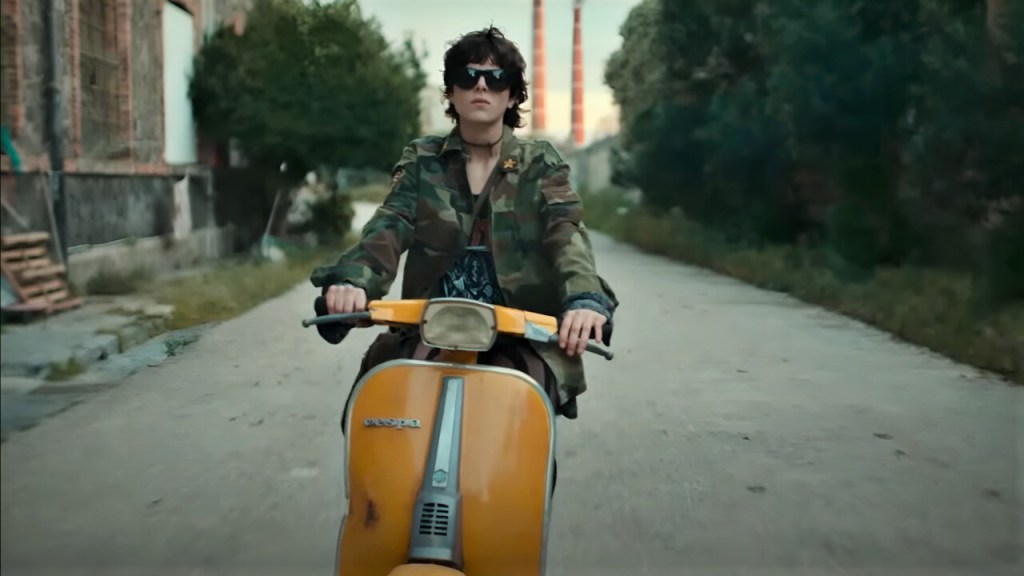
The Lying Life of Adults, published in 2019, is one of my favorite novels of the 21st century. It also convinced me that Elena Ferrante is my favorite living writer. So when I saw that it was being adapted into a Netflix series, I was absolutely stoked. In a sentence, it’s about a teenage girl from a bourgeois Neapolitan family who one day overhears her father describing her as ugly, and everything that transpires in the wake of this one, seemingly careless incident. What I loved about the novel—and this holds true for the TV series as well—is that there always seemed to be something interesting happening. Nothing feels wasted. Everything pure muscle, no fat. And this reflects just how well the show adapts the source material. A few things are changed to suit the medium of TV, but what makes a good adaptation isn’t the fidelity of superficial details. It’s all about how well it captures the essence of the thing. And Netflix’s The Lying Life of Adults does this so incredibly well. The casting was absolutely perfect. I especially loved the casting for the characters of Vittoria, Corrado, Rosario, and Andrea. They all look and behave exactly as I had imagined them when I was reading the book. Especially Rosario, who has such a distinctive face. Andrea really had the presence of this proud intellectual and patriarch that escaped his humble beginnings. Vittoria contrasts with him so well, and the two—Andrea being so elegant and Vittoria being so vulgar—encapsulate the class divide of Naples in such a compelling manner. Corrado is suitably sleazy but not unsympathetic—and all the many characters I haven’t mentioned are also very interesting. Standout moments for me are the flashback scene where the actress of Giovanna plays a young Vittoria and the chaotic aftermath of the carnival in episode 5. Both scenes had this dreamlike quality that reminded me of a play, and I thought it suited the story so well. All of the TV shows on this list are good for different reasons. The Lying Life of Adults might not be as thrilling as House of the Dragon or as addictive as Beef, but I think that out of the 5 shows on this list, it’s the most well put-together and the most consistent in its quality.
The Last of Us
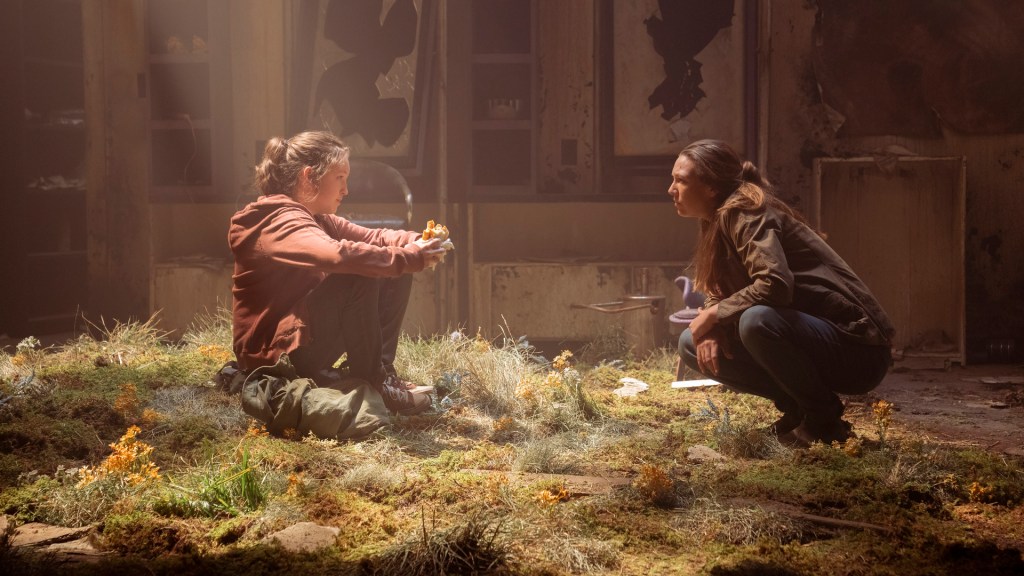
This is another adaptation I was eagerly anticipating. Generally, adapting video games to screen is quite difficult, because the mediums are so fundamentally different. How do you adapt the long gameplay sequences where little in the way of dialogue or character development happens? Sequences that are designed primarily to be fun challenges to be played? There’s also the suspension of disbelief aspect of it too—in a game we accept certain things because the medium demands it, but on screen it would break our immersion to see a single person continuously fighting through waves upon waves of generic enemies. It also wouldn’t be very entertaining. In a game, violence serves a function as the moment-to-moment test of your muscle memory, reflexes, and coordination. Violence is the “Primary Gameplay Loop”. In a movie or TV drama, violence has to be implemented with restraint or it has no impact. The Last of Us handles this challenge very well, and part of the reason it succeeds where other video game adaptions failed is that the source material is already very cinematic. When The Last of Us was released in 2013 it was a landmark moment in gaming—not for its gameplay, but for the way it presented itself. It represented a shift in the medium (for better or worse) that blended the interactive with the cinematic. The game was celebrated for its photorealistic graphics, complex characters, and emotional storytelling, winning multiple game of the year awards. Therefore, I always felt that The Last of Us would translate well to TV—a feeling that somehow actually tempered my excitement. My thinking was that The Last of Us was already so cinematic, that an adaption to film or TV would almost be redundant. Unless it expanded on the source material, I feared it would just be a lesser imitation of what we already had. In retrospect it’s interesting that I had this feeling, because it both did and didn’t come true. I think The Last of Us started very strong but seemed to run out of steam in the latter half of the season. Some changes I loved, like the expansion of Sarah’s storyline on outbreak day, the Jakarta flashback, and that scene at the Massachusetts Statehouse at the end of episode 2. As for episode 3, I had mixed feelings. In and of itself, it was a great episode and fulfilled what I wanted for the series—which was to expand upon the source material. But in retrospect, I think that episode 3 detracts from the season as a whole. I also preferred the darker tone of the original storyline, which establishes the brutal world of The Last of Us so well and has Bill serve as a warning for the kind of loneliness that awaits Joel if he doesn’t allow himself to love again. Overall, there’s nothing bad about the show—it’s entertaining, beautifully-shot, and well-acted. But the last few episodes do start to feel like shot-for-shot imitations of the source material that lack the intended impact. The last episode in particular feels quite rushed, and you don’t feel the weight of Joel and Ellie’s journey the way you do in the game. Part of this is because the game is obviously longer, and you really feel the weight of everything they’ve been through from all the gameplay sections. But part of it is also due to the fact we had two flashback episodes and a rushed sense of pacing in the finale. I definitely don’t think they should have given Left Behind a whole episode. While it covers a significant moment in Ellie’s backstory, it’s DLC—something that supplements the base game rather than being integral to it. Devoting all that time to Riley’s surprises felt like fan service—and if there’s one thing I can’t stand it’s appealing to fan nostalgia. I do think the events of Left Behind should have been included in the show, but in a much more abridged fashion—either intercut with a longer version of David’s storyline, or perhaps even dispersed throughout the season. Despite these little critiques, I nonetheless enjoyed the show from start to finish. One thing that really stuck out to me was the cinematography—you can tell it was made by the same guy that created the hauntingly beautiful Chernobyl (my favorite show of 2019 as a matter of fact!). From what I’ve seen, the cinematography was one of the things that impressed a lot of people—seeing a video game being rendered onscreen with the kind of artistry you expect from award-winning films like The Revenant, Dune, or Roma. That’s the Craig Mazin Effect right there. You don’t expect TV to get that kinda treatment—let alone an adaptation for a video game. Some of the shots—like the one of the downed airplane, or the Boston skyline—were so beautiful, and they really accentuated the sense of post-apocalyptic emptiness. If you didn’t know about the game, you’d probably think this was an A24 remake of The Walking Dead as directed by Denis Villeneuve.
Beef

With the other four shows on this list, I had a lot of expectations going in, as they were all adaptations of, or expansions to, existing media. Beef is something entirely new. I took a chance on it after stumbling across a Tik Tok (credit: @jstoobs) that described it as “millennial rage incarnate” and how it touches on the issues that characterize that generation. My generation. I also love stories that begin with fairly innocuous inciting incidents that, later down the line, have these catastrophic, outsized impacts on the lives of the characters involved. In Beef, that inciting incident is an episode of road rage that occurs between the characters Amy and Danny, and how this single, tiny, petty event spirals into this operatic blood-feud that changes their lives forever. I love that everything that happens—and a lot of crazy things happen—can be traced back to this one incident. The “millennial rage” angle comes from the fact that we quickly learn Amy and Danny were both on the verge of snapping before they met on that ill-fated day in the parking lot. Everything they hate about themselves they take out on each other, and over the course of the season we see the two of them forced to confront these inner demons. I’d say after I finished the first episode, I wasn’t yet hooked, but I was sufficiently intrigued to continue. I still couldn’t gauge at that point whether this was just a comedy or something more. So if you’re considering giving Beef a chance, it’s worth it to keep going after episode one. Because by the end of episode two, I was hooked. Of all the shows on this list, Beef was the one I found the most addictive. You just never know where it’s going to go next. All of the characters are flawed but sympathetic, and I love the way the side characters are so fleshed out. From the brother going through a quarter-life-crisis to the church leader with retrospective jealousy, and the stay-at-home mom that feels invisible to the sculptor living in the shadow of his famous father, all of them are memorable. And more importantly, all of them suffer the consequences of Amy and Danny’s feud. There are no detours in this story—everything that takes place relates to the decisions, actions, and struggles of our two leads. And I love that.

 TumbleweedWrites